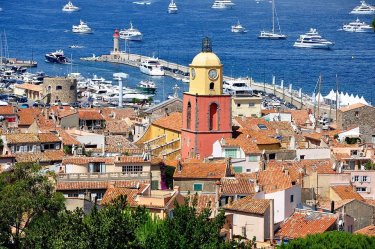
Eglise Notre-Dame-de-l'Assomption
Eglise Notre-Dame-de-l'Assomption de Saint-Tropez is a baroque church in Saint-Tropez, Var, Provence. Built in the 18th century, it stands on the site of a previous church and is one of the city’s emblems.
Eglise Notre-Dame-de-l'Assomption de Saint-Tropez is a baroque church in Saint-Tropez, Var, Provence. Built in the 18th century, it stands on the site of a previous church and is one of the city’s emblems.
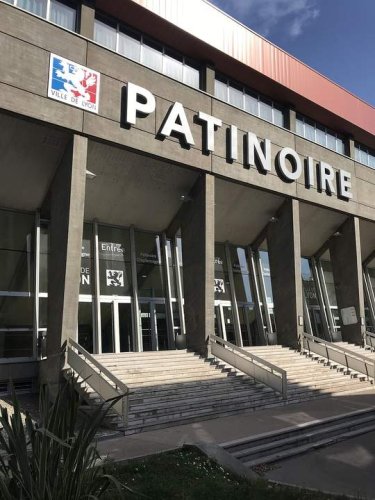
Patinoire Charlemagne is an ice rink in Lyon, France, in the Confluence quarter of the 2nd arrondissement. It hosts figure skating, hockey, and curling, and serves as the home venue of the Lyon Hockey Club and the Club des Sports de Glace de Lyon.
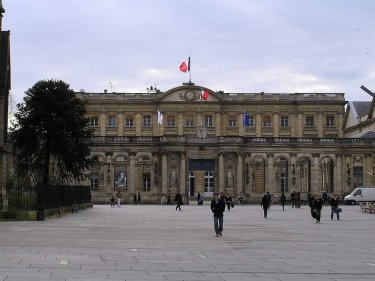
Palais Rohan is a palace in Bordeaux built for Archbishop Ferdinand-Maximilien-Mériadec, prince de Rohan, between 1771 and 1784. It later served as a prefecture, imperial and royal palace, and city hall.
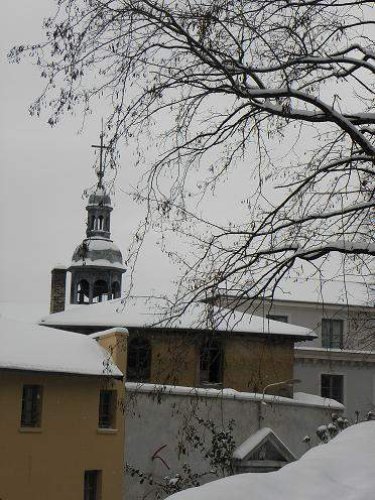
Antiquaille Hospital is an ancient hospital in Lyon, located on the site of l’Antiquaille. It occupies a former convent of Visitandines and includes parts built in the 18th century. The site is registered as a historical monument.
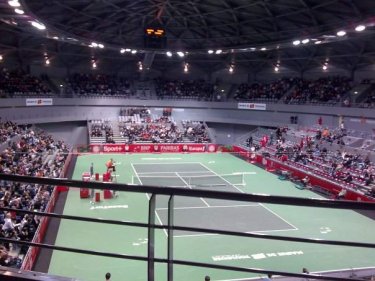
Palais des sports André-Brouat is a multi-sports hall in Toulouse, opened in 2006 on the site of the former Palais des sports. It is used by several local clubs and hosts occasional national team matches and major sporting events.
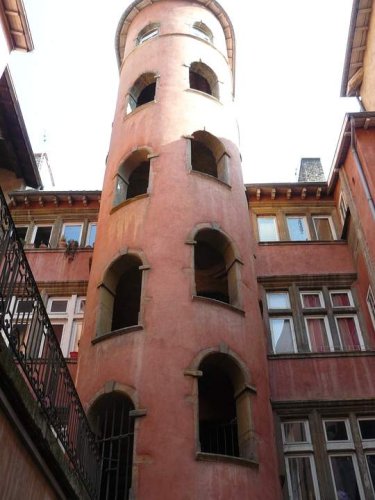
Maison du Crible is a historic building at 16 rue du Bœuf in Lyon’s Vieux Lyon (Saint-Jean) district. Also called the Tour Rose, it is noted for its ochre color, staircase tower, and status as a historical monument since 1937.
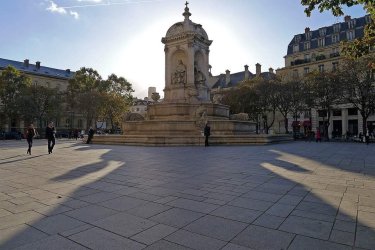
Place Saint-Sulpice is a square in the center of Paris’s 6th District. It has an approximately rectangular form and is bordered by the Church of Saint Sulpice, Rue Bonaparte, and several streets from its corners.
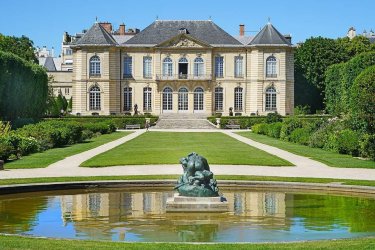
Hôtel Biron is an 18th-century hôtel particulier on Rue de Varenne in Paris’s VII arrondissement. Built between 1728 and 1731, it stands within three hectares of grounds and has housed the Musée Auguste Rodin since 1919.
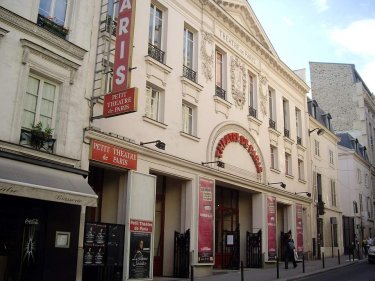
Théâtre de Paris is a theatre building in Paris with a layered site history. The location began with a theatre built in 1730, later became Folie-Richelieu, and was rebuilt through successive 19th-century developments.
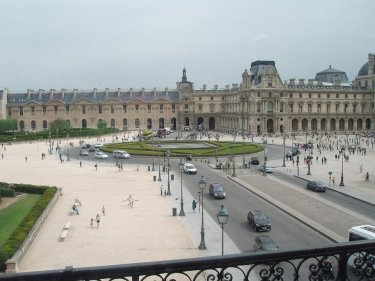
Place du Carrousel is a public square in District I of Paris, located at the open end of the Louvre Palace courtyard. It stands between the museum and the Tuileries Garden and marks the garden’s eastern end.
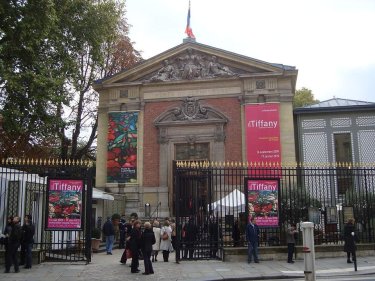
The Luxembourg Museum is an art museum in Paris, located in a wing built perpendicularly to the orangery of the Palais du Luxembourg on rue de Vaugirard. Since 2000, it has been under the supervision of the French Senate.
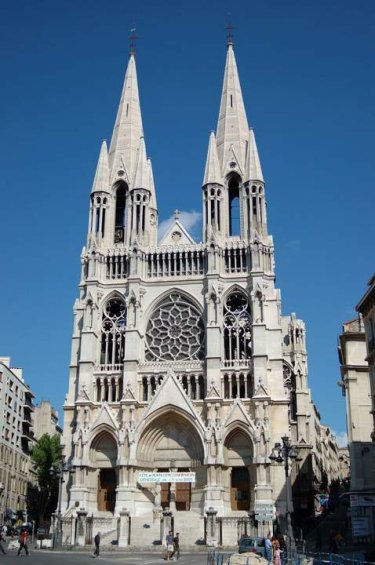
Église Saint-Vincent-de-Paul is a church building in Marseille’s Thiers neighborhood, at the top of the Canebière. Locals call it église des Réformés, a name linked to the site’s earlier chapel history.
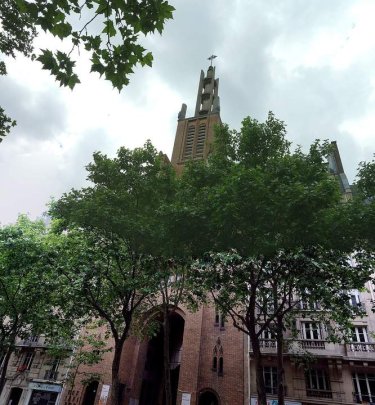
The Church of the Holy Spirit is a Catholic place of worship in Paris, located at 186 Avenue Daumesnil in the 12th arrondissement. Built in reinforced concrete, it was completed in 1935 and has been a historical monument since 1979.

City of Space is a scientific culture center in Toulouse devoted to astronomy and astronautics. It was created through an initiative of the Toulouse city hall with several partners and presents major space-related exhibits and thematic displays.
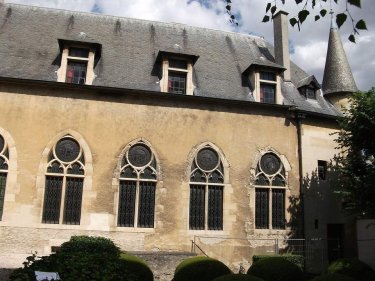
Musée Le Vergeur is a museum-hotel in Reims made up of two building sections. Its oldest part dates from the 12th century, and the complex was heavily restored after the First World War.
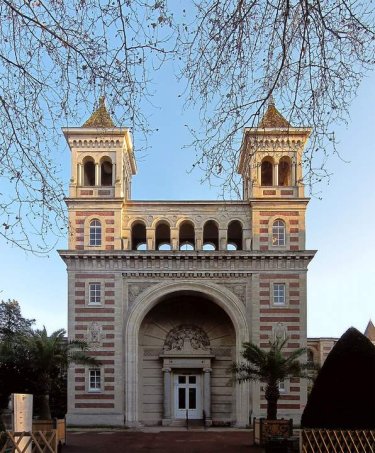
Palais Rameau is a building in Lille designed by architects Auguste Mourcou and Henri Contamine. It features a facade with two bell towers and a circular cast-iron horticultural greenhouse, combining traditional brick and stone with Moorish-style orientalism.
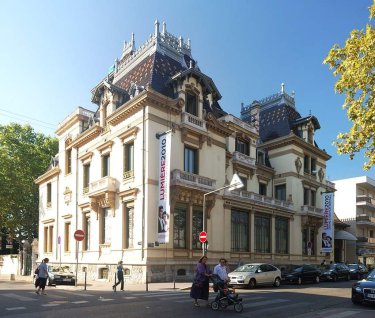
Institut Lumière is an association founded in 1982 in Lyon’s Monplaisir district. Dedicated to the diffusion and conservation of cinematic heritage, it occupies the former Lumière factory site at 25 rue du Premier-Film.
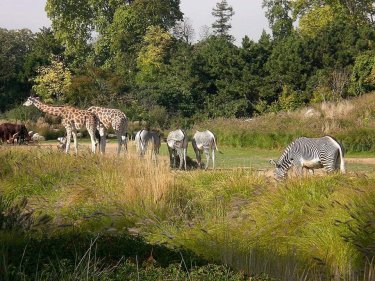
The Jardin zoologique de la ville de Lyon is a municipal zoological park in Auvergne-Rhône-Alpes, located within Lyon’s Parc de la Tête d’Or. Created in 1858 under Rhône prefect Claude-Marius Vaïsse, it presents more than 300 animals of 66 species.
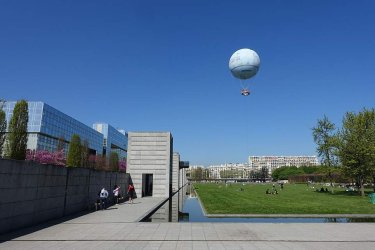
Parc André Citroën is an urban park in the 15th arrondissement of Paris, created on the former Citroën factory site in the Javel district. It slopes gently toward the Seine and combines vegetation, water features, greenhouses, and themed gardens.
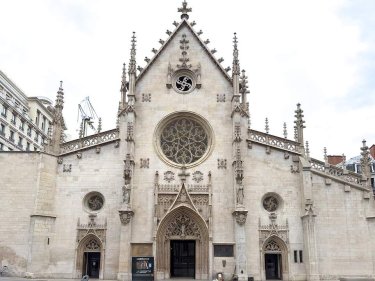
Saint-Bonaventure Basilica is a Catholic church building in Lyon’s Presqu'île, in the Cordeliers district. It is the only medieval building remaining in the north of the 1st arrondissement and has been an urban sanctuary since 1971.
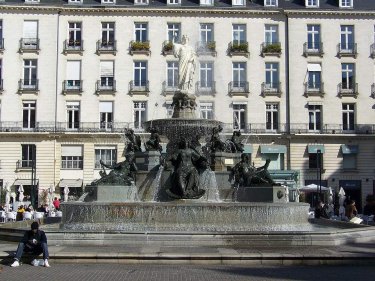
Place Royale is a square in the city center of Nantes, France, designed by Mathurin Crucy in 1786 and developed in 1790 after the destruction of medieval ramparts. It remains a commercial and civic gathering place.
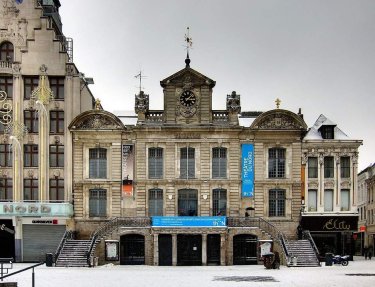
Théâtre du Nord is a theatre building on Lille’s Grand'Place in France. It is installed in the former guardhouse known as the Grande Garde, whose facade is listed as a historical monument.
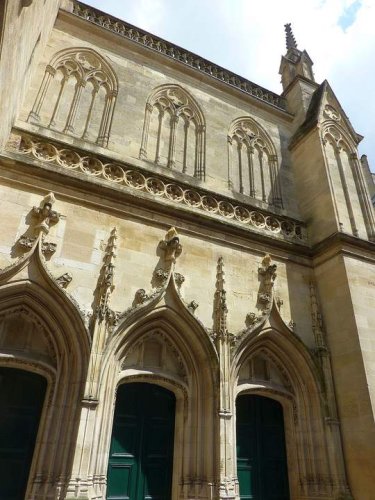
Église Saint-Éloi is a historic church in Bordeaux, Gironde, set against the porte de la Grosse cloche. Once the church of the Jurade de Bordeaux, it is classified as a monument historique.
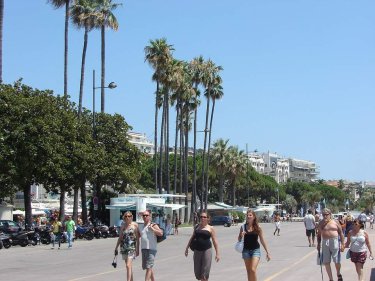
Promenade de la Croisette is a waterfront promenade in Cannes, on the Bay of Cannes. It forms part of the boulevard de la Croisette, which runs along the beaches and is lined with hotels, luxury shops, and vacation residences.
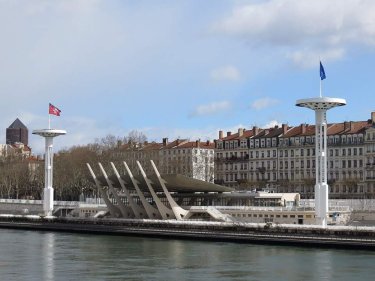
Rhône's Pool, now centre nautique Tony-Bertrand, is a sports venue on quai Claude-Bernard beside the Rhône in Lyon La Guillotière. Designed by Alexandre Audouze-Tabourin and inaugurated in 1965, it was renamed in 2015 to honor Tony Bertrand, the city sports deputy who initiated the project.
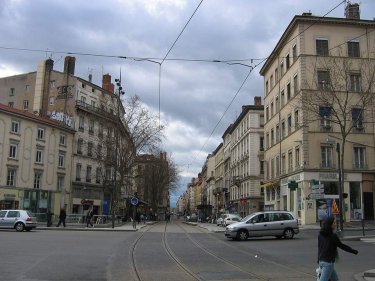
Place Gabriel-Péri is a public square in Lyon, France, located on the border of two districts and at the intersection of several major communication axes. It is locally known as place du Pont because of its proximity to the Pont de la Guillotière.
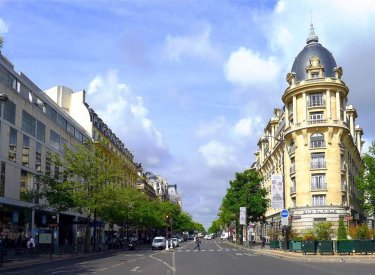
Boulevard des Italiens is a street in Paris at the edge of the 2nd and 9th arrondissements. Created after the suppression of the Louis XIII enclosure in 1670, it developed through former market gardens and later urbanized land.
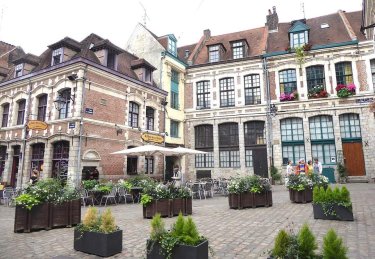
Place aux Oignons is a square in Lille, France, located in one of the city’s oldest neighborhoods. It lies at the foot of the former motte castrale, now at the parvis de Notre-Dame de la Treille.
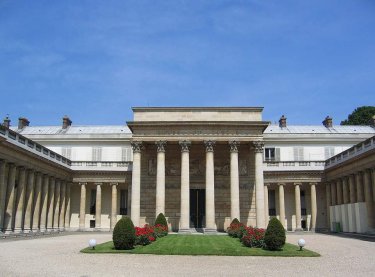
The Palais de la Légion d'Honneur is a historic palace on the left bank of the Seine in Paris’s 7th arrondissement. Built in the late 18th century, it now houses the Grande chancellerie de la Légion d'honneur and the musée de la Légion d'honneur.
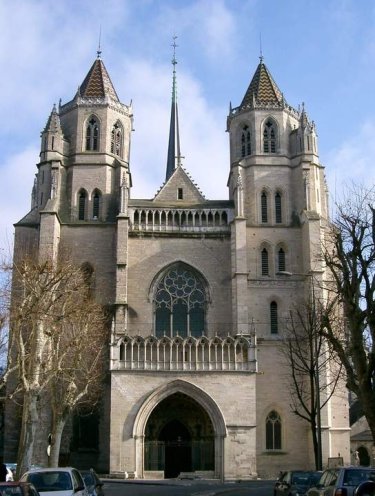
Dijon Cathedral is the Roman Catholic cathedral of Dijon, west of the city center. It is a Burgundian Gothic church that became a cathedral in 1792 and originated as the abbey church of Saint-Bénigne monastery.
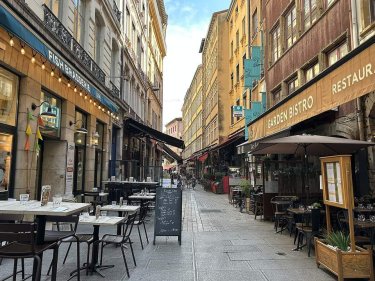
Rue Mercière is one of the oldest streets in Lyon, confirmed since the Middle Ages. It was long a main artery of the city and became an important center of trade, printing, and bookselling from the Renaissance onward.
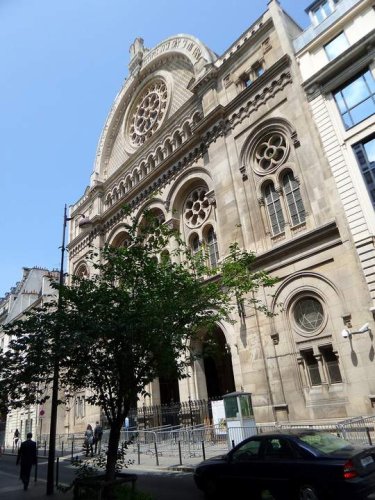
The Grand Synagogue of Paris, also known as Synagogue de la Victoire, is the largest synagogue in France. Located at Rue de la Victoire 44 in Paris’s 9th arrondissement, it was inaugurated in 1874 and declared a Monument historique in 1987.
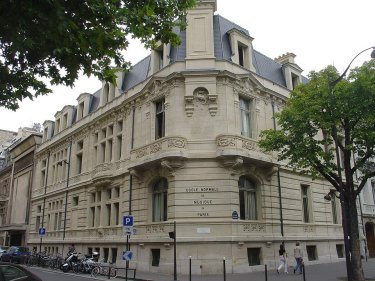
The École Normale de Musique de Paris Alfred Cortot is a private higher music school in Paris, founded in 1919 by pianist Alfred Cortot and music critic Auguste Mangeot. It trains concert performers and teachers through a dual curriculum.
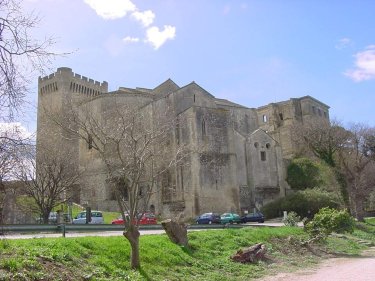
Montmajour Abbey is a Benedictine abbey founded in 948 about four kilometers northeast of Arles. It grew through religious and military buildings from the 10th century to the early 14th century and was later abandoned.
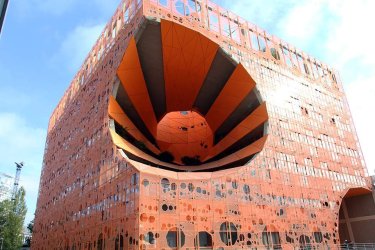
Orange Cube is a design showroom and office building in the La Confluence quarter of Lyon, France. Completed in 2011, it is known for its bright orange color, hole-riddled cube shape, and the nickname “La Mimolette.”
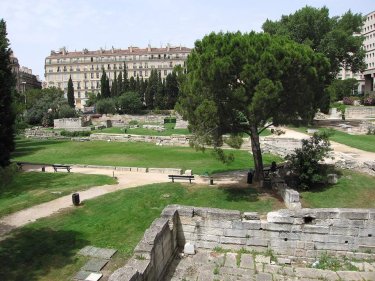
Jardin des Vestiges is an archaeological garden behind Centre Bourse in Marseille. It contains remains of the ancient Port of Marseille and forms part of the Museum of History of Marseille. Classified as a historic monument site, it was uncovered in 1967 and opened to the public in 1983.
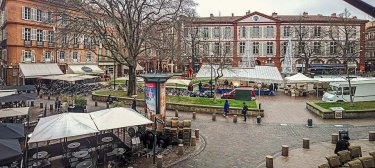
Place Saint-Georges is a square in the heart of Toulouse’s Saint-Georges district. It forms an irregular pentagon bordered by several streets and includes a one-way traffic lane, pedestrian areas, and access to nearby public transport.
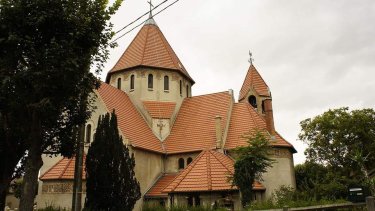
Église Saint-Nicaise de Reims is a parish church in the Saint-Nicaise district of Reims. Built in the 1920s in a Romano-Byzantine style, it was designed by Jean-Marcel Auburtin and is classified as a monument historique.
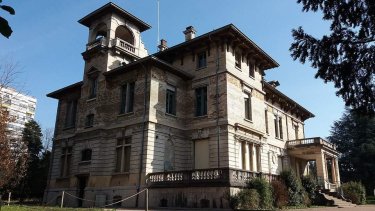
Villa Gillet is a villa in Lyon’s parc de la Cerisaie. Built in 1912 for the Gillet family, it now serves as a house of contemporary writings and a venue for conferences, debates, round tables, and readings.
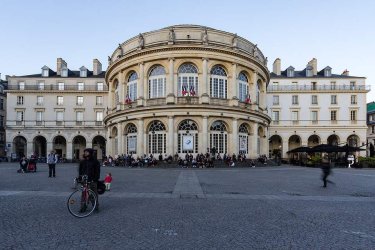
The Rennes Opera House is an Italian-style opera house in downtown Rennes, located at Place de la Mairie. It forms the main eastern side facing the city hall and is listed in the inventory of historic monuments.
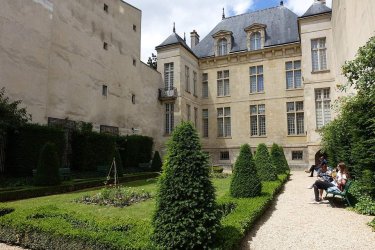
Musée Cognacq-Jay is an art museum of the City of Paris, presenting a collection formed by Théodore-Ernest Cognacq and Marie-Louise Jaÿ between 1900 and 1925. It focuses on 18th-century France and related decorative arts.
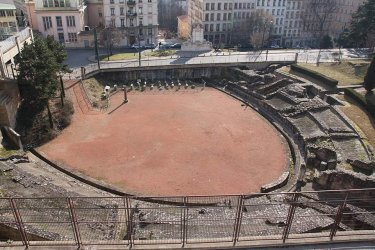
The amphitheater of Lyon is a Roman archaeological site in Lugdunum, present-day Lyon. It was linked to the imperial cult and originally served delegates of Gallic tribes before later expansion.
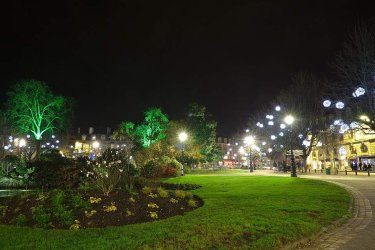
Place Gambetta is one of the main squares in Bordeaux, Gironde. It is noted for its ordered façades and its place among the city’s most important urban architectural ensembles.
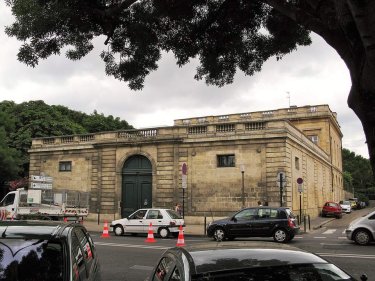
Hôtel de Basquiat is an 18th-century hôtel particulier on cours d’Albret in Bordeaux, France. Built between 1778 and 1781 by François Lhote for Joseph de Basquiat de Mugriet, it later served as the official residence of the rector of the académie de Bordeaux.
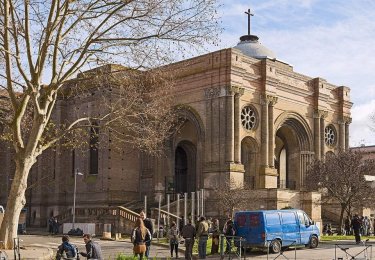
Église Saint-Aubin is a Catholic church in the Saint-Aubin-Dupuy neighborhood, east of central Toulouse. Begun in 1847 by architect Jean-Marie-Thérèse-Auguste Delort, it was built on a former cemetery and opened in 1853.
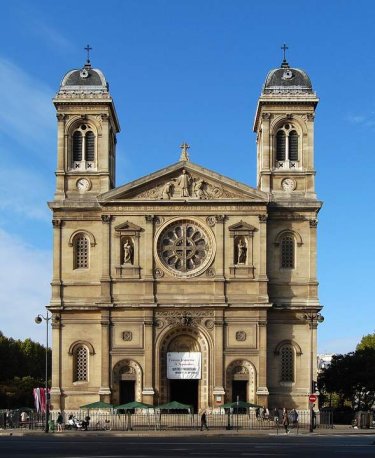
Saint-François-Xavier is a Catholic place of worship in Paris, located in Place du Président-Mithouard in the École-Militaire district. It serves as the seat of the parish Saint-François-Xavier-des-Missions-Étrangères and is administered by the clergy of the Archdiocese of Paris.
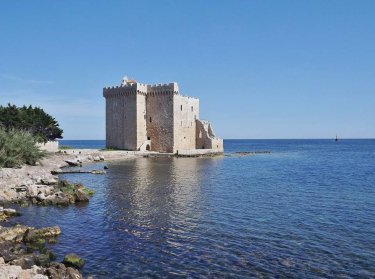
The Fortified Monastery of the Abbey of Lérins is a fortified monastery in Cannes, on Saint-Honorat Island in the Bay of Cannes. Built by the Abbey of Lérins to protect the island, the monastery, and its occupants, it has been a historical monument since 1840.
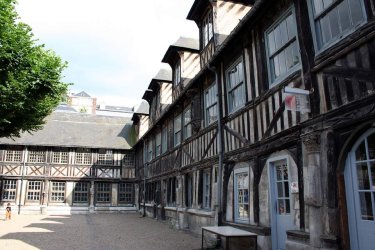
L’aître Saint-Maclou is an ancient charnel house on rue de Martainville in Rouen, Normandy. It is one of the rare surviving European ossuaries of its type, and its buildings reflect a long history of cemetery use, school activity, and later restoration.