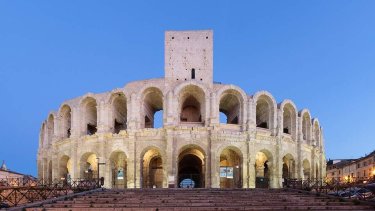
Arles Amphitheatre
Arles Amphitheatre, also known as Les arènes d'Arles, is a Roman amphitheatre in Arles built under Emperor Domitian during the Flavian extensions of the city. It is the most important monument of the ancient Roman colony.
Arles Amphitheatre, also known as Les arènes d'Arles, is a Roman amphitheatre in Arles built under Emperor Domitian during the Flavian extensions of the city. It is the most important monument of the ancient Roman colony.
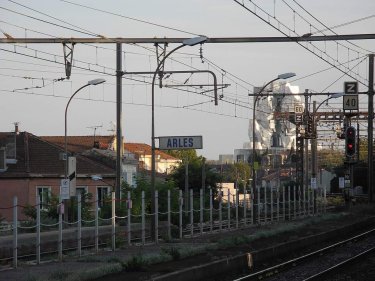
LUMA Arles is an interdisciplinary cultural center in Arles, France, initiated by the Luma Foundation. It combines art, research, architecture, and environmental protection, and offers space for artistic experimentation and collaboration.
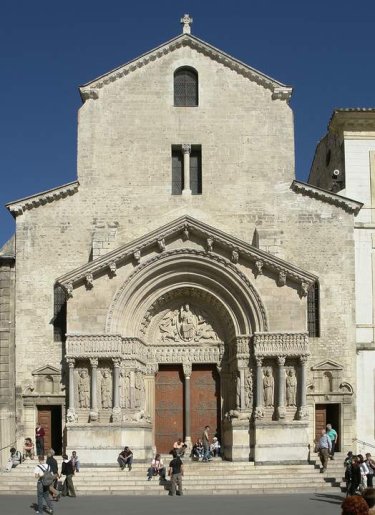
The Church of St. Trophime is a primatial basilica in Arles, built from 1100 on late Antiquity remains. It is known for its Provençal Romanesque architecture, sculpted portal, and attached cloister.
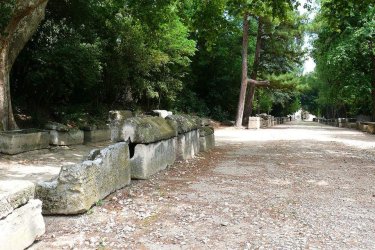
The Alyscamps is a Roman-era necropolis in Arles, Bouches-du-Rhône, France. Once a pagan and later Christian burial ground, it became known for its sarcophagi, churches, and association with pilgrimage and burial traditions.
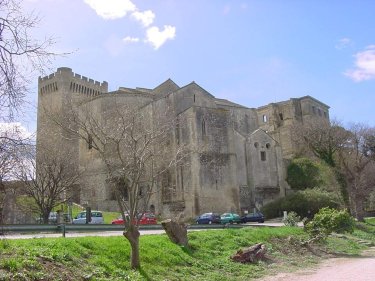
Montmajour Abbey is a Benedictine abbey founded in 948 about four kilometers northeast of Arles. It grew through religious and military buildings from the 10th century to the early 14th century and was later abandoned.
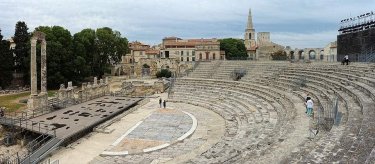
The Gallo-Roman theatre at Arles is a Roman theatre and archaeological site built under Augustus, started around 40/30 BC and completed around 12 BC. It was among the first stone theatres in the Roman world and is on the decumanus of the Roman grid.
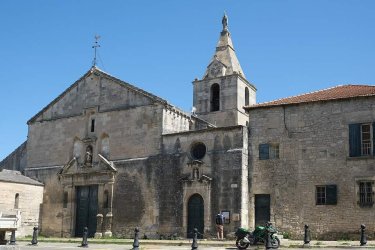
Notre-Dame-de-la-Major is an ancient Romano-Gothic collegiate church in Arles, located at the northern end of Hauture hill. One of the city’s oldest churches, it was originally consecrated in 452 and later rebuilt in Romanesque form.
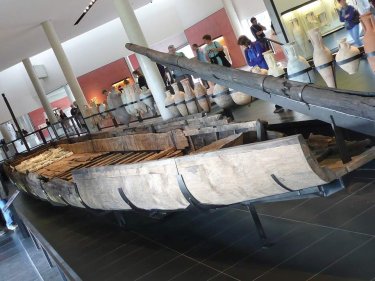
The Musée départemental de l'Arles antique is an archaeological museum complex in Arles, opened in 1995. It is housed in a modern building designed by Henri Ciriani on the peninsula where the ancient Roman circus once stood.
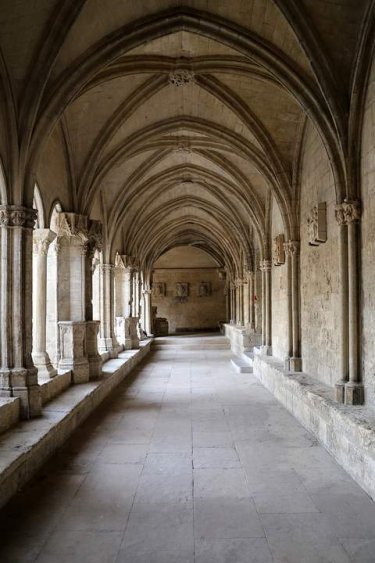
The Saint-Trophime cloister is part of the former cathedral of Arles. It has an approximately rectangular plan and communicates with the choir by a staircase of twenty-five steps. Its galleries combine Roman and Gothic construction, reflecting work from the 12th to the 14th century.
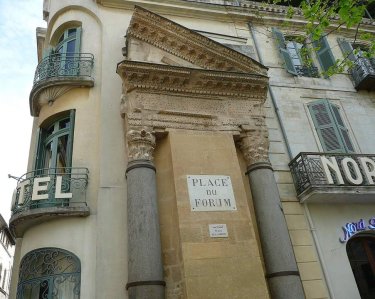
The Forum of Arles was an ancient Roman forum located at the intersection of the cardo maximus and decumanus. It consisted of a large paved square, originally framed by four monumental porticos, of which only two fragments survive.
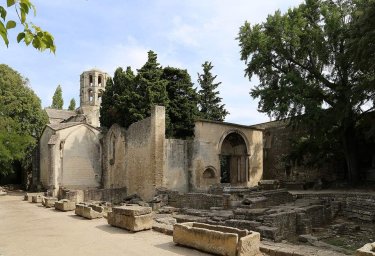
Saint-Honorat des Alyscamps church is an abbey church associated with the Alyscamps necropolis in Arles. It was classified as a historic monument in 1840 and later included in protected heritage listings.
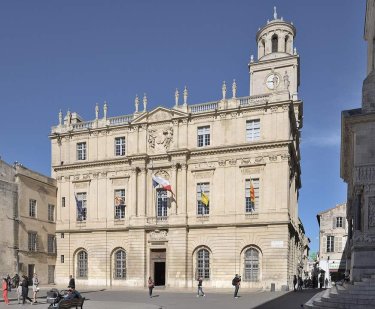
The Town Hall of Arles is located on Place de la République, with the Roman obelisk at the square’s center. Completed in 1676, it remains the seat of the municipality and is partly classified as a historic monument.
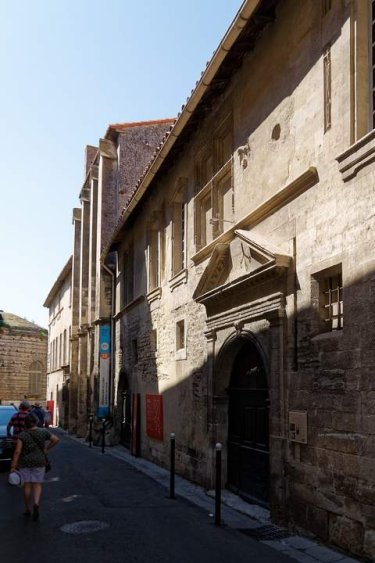
Musée Réattu in Arles is an art museum housed in a former priory on the Rhône quays. It holds works by Jacques Réattu, Antoine Raspal, Picasso drawings, and collections linked to photography and architecture.
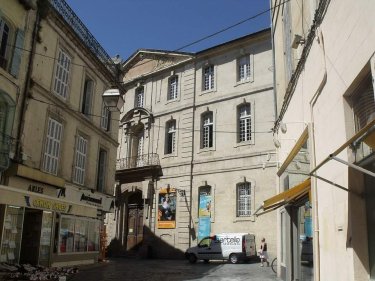
Museon Arlaten is an ethnographic museum in Arles, located at 29, rue de la République in the former Laval-Castellane mansion. Its collections represent the arts, ethnology, and history of the Arles region.
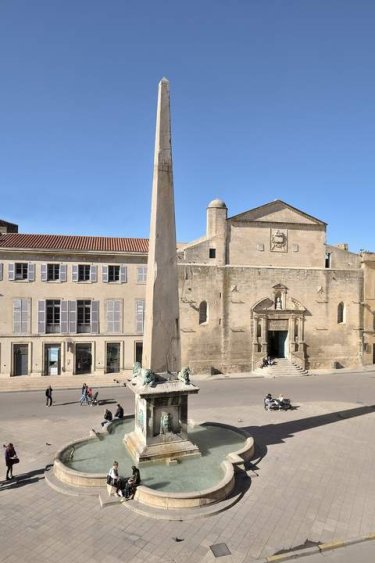
The Obélisque d'Arles is a very slender red granite obelisk in Arles. It is not Egyptian and has no inscriptions. Erected under Constantine at the Roman circus, it was later rediscovered, re-erected in 1676, and altered over time.
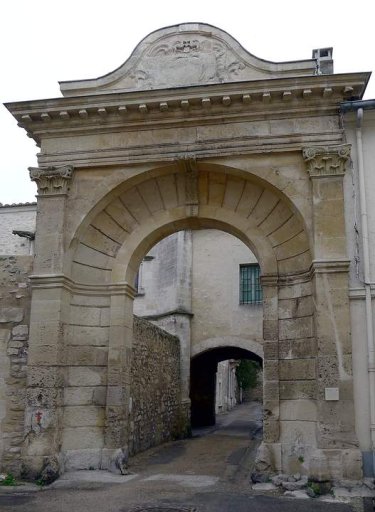
Enclos Saint-Césaire is a former abbey in Arles, founded in 512 by Archbishop Caesarius as a nunnery. Originally called the abbey or monastery of St John, it stood in the south-eastern corner of the rampart.