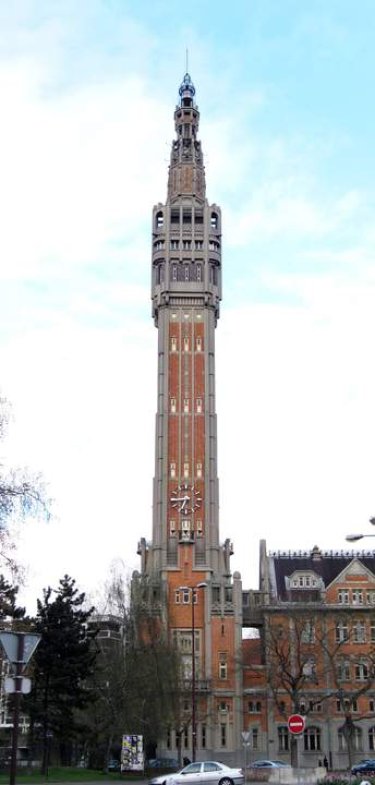
Belfry of Lille
The Belfry of Lille is the belfry of Lille City Hall, inaugurated in 1932. Standing 104 metres high, it is attached to the city hall and combines Art Deco and Neo-Flemish architecture.
The Belfry of Lille is the belfry of Lille City Hall, inaugurated in 1932. Standing 104 metres high, it is attached to the city hall and combines Art Deco and Neo-Flemish architecture.
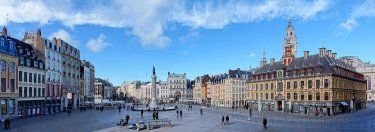
Place du Général-de-Gaulle is the historic main square of Lille, in Hauts-de-France. A grand-place with a mineral, paved character, it remains a center for celebrations, markets, exchanges, and the Lille braderie.
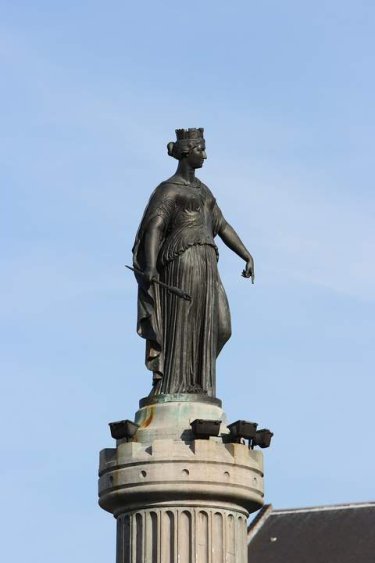
The Column of the Goddess is a commemorative victory column inaugurated at the Grand'Place de Lille. It marks the heroism of the people of Lille during the siege of 1792 and is topped by a statue of a woman holding a boutefeu.
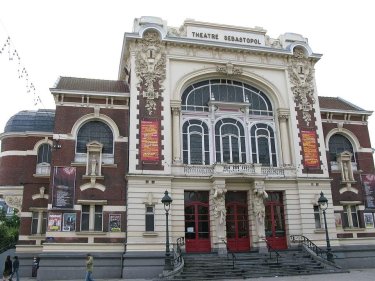
Théâtre Sébastopol is a theatre and performance hall located at place Sébastopol in Lille. It stages more than sixty performances each year, including concerts, plays, one-man shows, screenings, and public meetings.
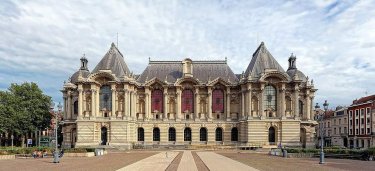
The Palais des Beaux-Arts de Lille is an art museum in northern France, opened in 1809. It houses collections spanning prehistory, antiquity, and visual arts from the Middle Ages to the present.
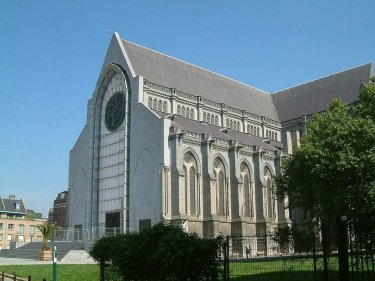
Lille Cathedral is a Neo-Gothic Catholic cathedral and minor basilica in Vieux-Lille, in Nord, Hauts-de-France. Built on the site of the old motte castrale, it was planned as a future cathedral and dedicated to Notre-Dame-de-la-Treille.
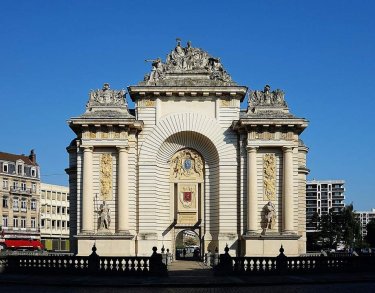
Paris Gate, or Porte de Paris, is a city gate of the Lille enclosure, partly built at the end of the 17th century as a triumphal arch celebrating Louis XIV’s victories. It was completed at the end of the 18th century and classified as a historic monument in 1875.
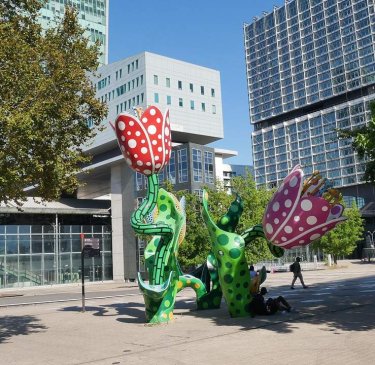
Shangri-La Tulips is a public sculpture by Japanese artist Yayoi Kusama on the esplanade François-Mitterrand in Lille, Nord, France. Seven meters tall and made of reinforced concrete, it represents a bouquet of colorful flowers.
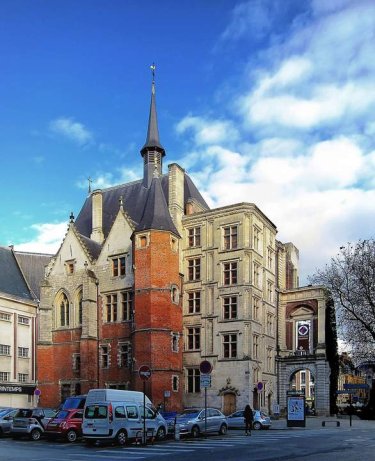
Palais Rihour is a remaining part of a 15th-century palace in Lille, France, built by the Dukes of Valois-Bourgogne. It was classified as a historical monument in 1875, and its guard room now houses the city’s tourist office.
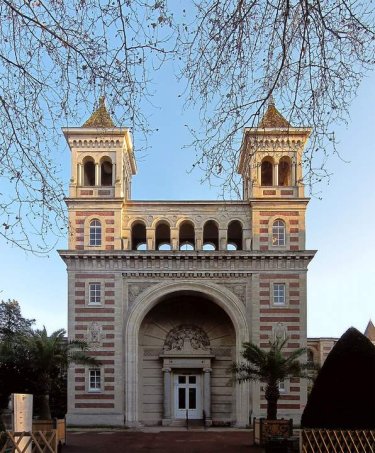
Palais Rameau is a building in Lille designed by architects Auguste Mourcou and Henri Contamine. It features a facade with two bell towers and a circular cast-iron horticultural greenhouse, combining traditional brick and stone with Moorish-style orientalism.
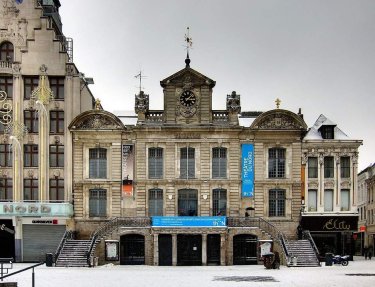
Théâtre du Nord is a theatre building on Lille’s Grand'Place in France. It is installed in the former guardhouse known as the Grande Garde, whose facade is listed as a historical monument.
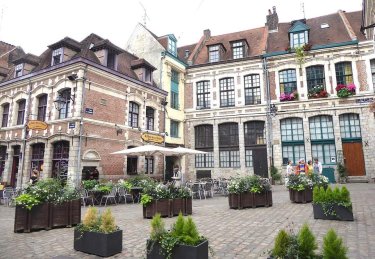
Place aux Oignons is a square in Lille, France, located in one of the city’s oldest neighborhoods. It lies at the foot of the former motte castrale, now at the parvis de Notre-Dame de la Treille.
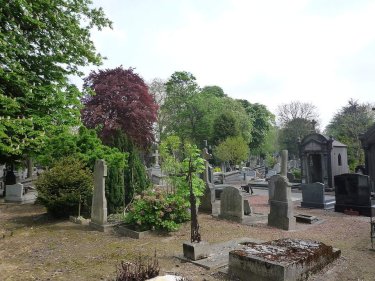
Cimetière de l’Est is a cemetery in Lille, created in 1779. It is mostly Catholic, with Jewish and Muslim sections, and includes tombs of several nationalities, as well as Masonic graves.
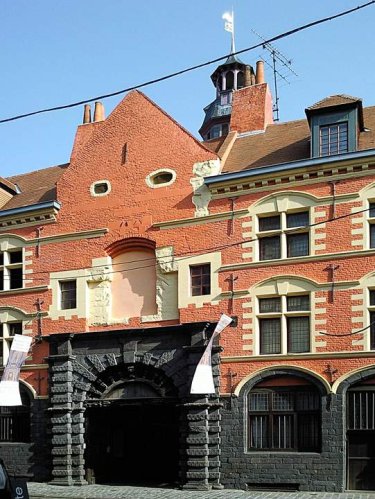
Located in Vieux-Lille, the Musée de l’Hospice Comtesse is housed in a medieval hospital founded in 1237. It has served as Lille’s Museum of Art and History since 1962.
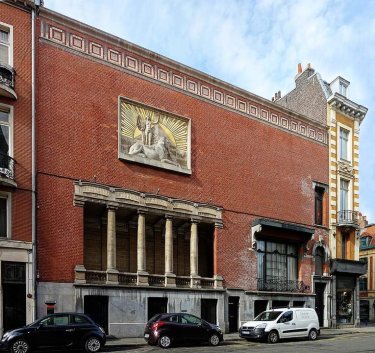
The Masonic Temple of Lille is a building complex made up of two adjoining buildings in Lille, Nord, Hauts-de-France. It houses the lodge La Lumière du Nord and the Philosophical Circle of the Lille Metropolis.
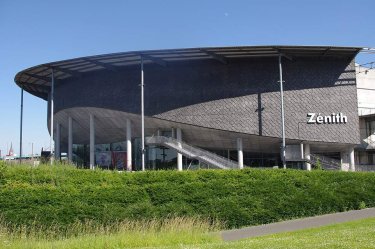
Zénith de Lille is a performance hall in Lille, in the Nord department of France, adjacent to Lille Grand Palais. Designed by Rem Koolhaas and OMA, it opened on 3 December 1994.
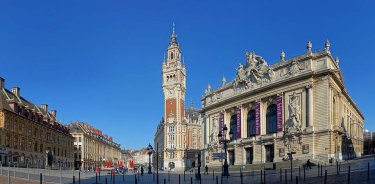
Place du Théâtre is an urban public square in Lille, in the French department of Nord. It is located in the heart of the city between Vieux-Lille and rue Faidherbe and is named after the former theater that once bordered the place.
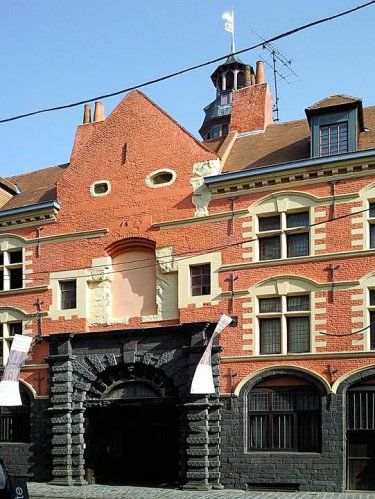
Hospice Comtesse is an ancient hospice in Lille, also known as hospice Notre-Dame. Founded in 1237 by Jeanne de Constantinople, it is located on rue de la Monnaie in Vieux-Lille and now houses a museum.
L'Aéronef is a concert hall in Lille, Nord, in the Hauts-de-France region of France. Located in the Euralille building near Lille-Flandres station, it is dedicated to contemporary music and other artistic disciplines.
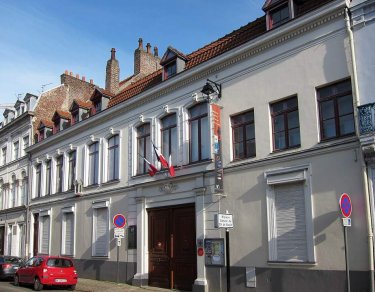
The Birthplace of Charles de Gaulle is a French museum in Lille, Nord, located at 9 rue Princesse in Vieux-Lille. Opened to the public in 1983, it is classified as a monument historique and owned by the Fondation Charles-de-Gaulle.
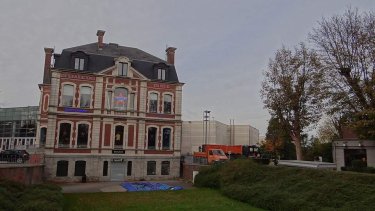
Kinépolis Lomme is a castle in Lomme that serves as the facade of a Kinépolis multiplex cinema. The site combines a historic château image with a contemporary urban cinema landmark.
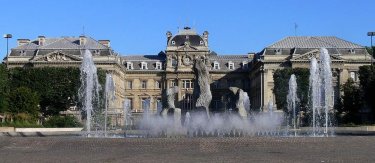
Place de la République is a square in central Lille, created on the former fortifications at the porte Notre-Dame site. It was first named place Napoléon-III and later renamed after the fall of the Second Empire.
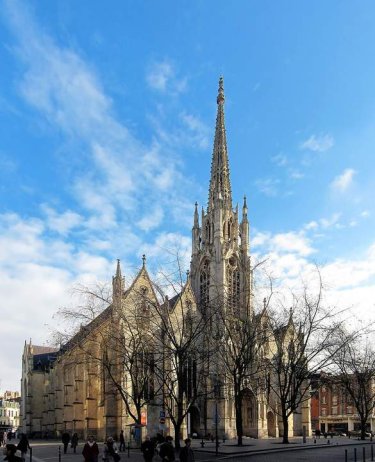
Saint-Maurice Church is a hall church in Gothic and Neo-Gothic style on rue Pierre-Mauroy in Lille’s historic centre. First mentioned in 1066, it has been classified as a historic monument since 1840.
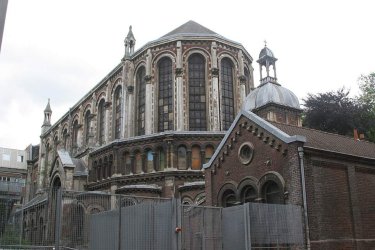
Chapelle Saint-Joseph, inside Collège Saint-Paul on rue Colson in Lille’s Vauban district, was built by the Jesuits. In the late 2010s, it drew attention when demolition was threatened and heritage status was refused.
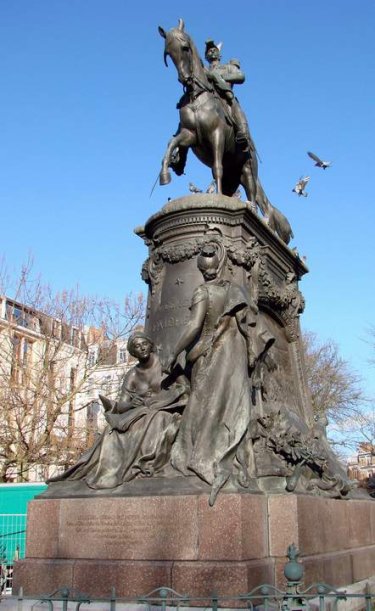
The equestrian bronze statue of Louis Faidherbe stands on Place Richebé in Lille. Designed by Antonin Mercié and cast by Thièbaut frères, it was inaugurated in 1896 and registered as a historical monument in 1975.
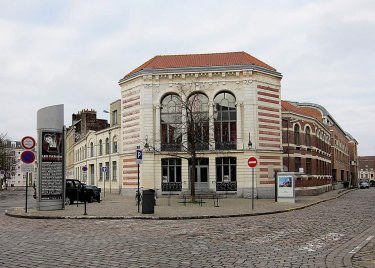
The Regional Conservatory of Lille is an artistic education institution in Lille, Nord, France. Approved and controlled by the French State, it offers training in music, choreography, and dramatic arts.
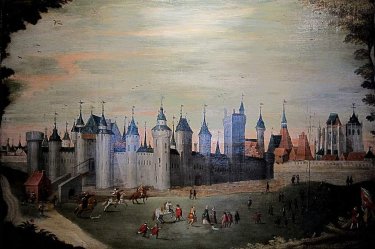
Château de Courtrai is an ancient castle built northeast of Lille on the order of Philippe le Bel after the siege of 1297. It was part of a wider system of fortifications linked to the Flemish War and later control of the city.
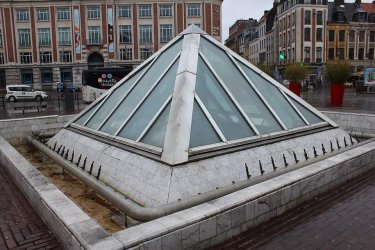
Place Rihour is a square in Lille city centre, adjacent to Place du Général-de-Gaulle. It is connected to Jean-Roisin, Rue de la Vieille Comédie, and Rue du Palais-Rihour, and served by the Rihour metro station below it.
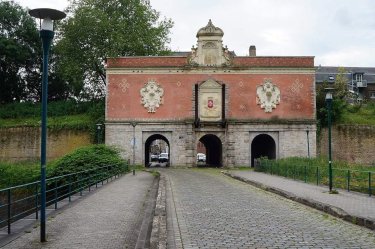
Porte de Gand is a city gate in Lille, part of the old Spanish fortifications built in the early 17th century. Originally called Porte de la Magdeleine, it was renamed after the Revolution and classified as a historical monument in 1929.
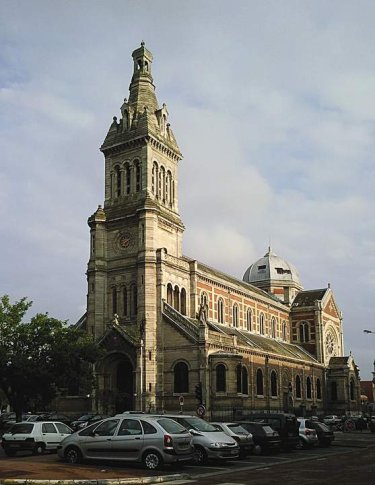
Saint-Michel Church in Lille is a church building constructed between 1869 and 1874 during the Second Empire. It is in the Romano-Byzantine style, with limestone and brick construction, and includes decorated choir and nave spaces.
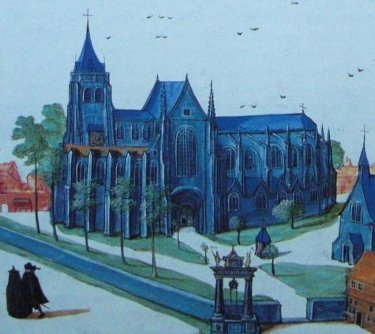
Collégiale Saint-Pierre was a former large collegiate church in Vieux-Lille. It influenced religious life in Lille for nearly 750 years, was damaged in 1792, and its destruction began in 1794. Today, only the crypt survives.
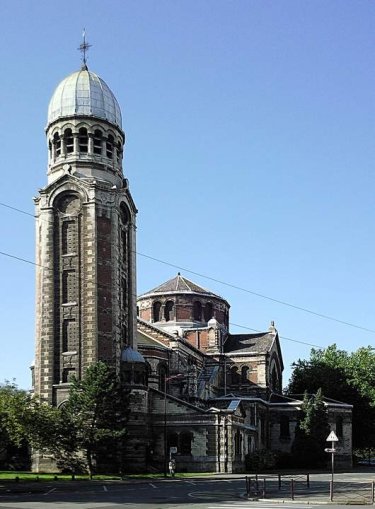
Église Saint-Sauveur de Lille is a church on rue Saint-Sauveur in Lille-Centre. Built from 1898 to 1902 on the site of a former Gothic church, it was designed in an eclectic and neo-Byzantine style and later closed in 2015 for security investigations.
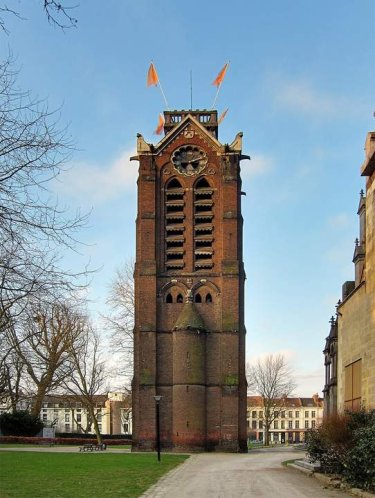
Place Gilleson is a square in Lille, Nord, France, in the Vieux-Lille district near Notre-Dame-de-la-Treille cathedral. It stands on the site of the former Lille motte castrale and lies near the city’s original core, once shaped by canals, roads, and medieval fortifications.
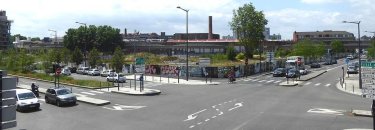
Porte de Valenciennes is a public urban square in Lille, France, at the site of a former city gate of the city walls. Created in 1860, it marked a fortified enclosure and later became part of a district reshaped after demolition in the 1930s.
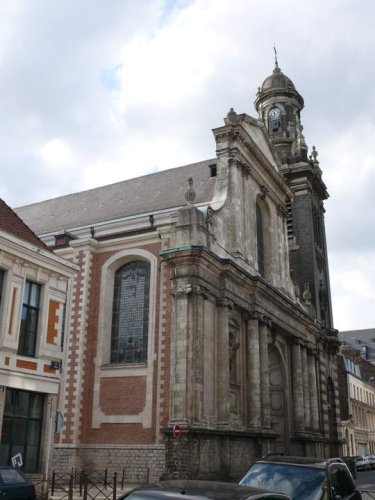
Église Saint-André de Lille is a church building with origins linked to a parish founded in 1233. Its present form includes a limestone facade, a brick-and-stone bell tower, and a slate roof.
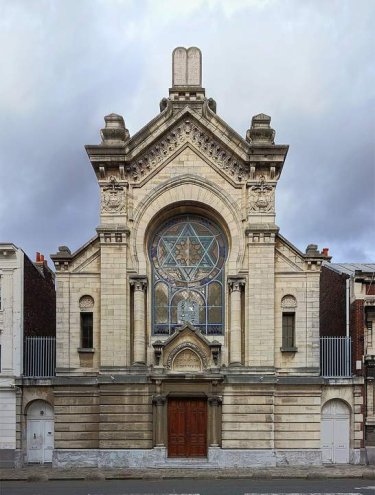
The Synagogue de Lille, inaugurated in 1891, stands on Rue Auguste-Angellier in Lille, northern France. Designed by Albert Hannotin in an Orientalist style, it has been a protected historical monument since 1984 and retained its original interior decoration through World War II.
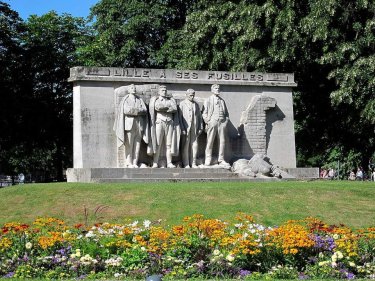
Les Fusillés lillois is a monument sculpted by Félix-Alexandre Desruelles and located in Lille’s Square Daubenton. It commemorates the execution by the Germans of five resistance figures during the First World War.
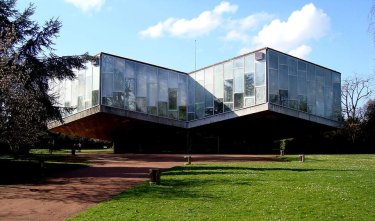
The Jardin des Plantes de Lille is a botanical garden south of the Moulins district in Lille. Inaugurated in 1948, it was listed as a Monument historique in 1997. It is reached by metro and has several entrances.
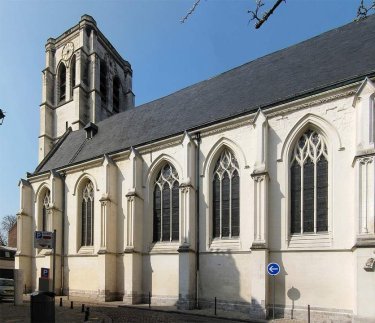
Église Sainte-Catherine de Lille is a three-nave hall church on rue Sainte-Catherine in Lille’s Vieux-Lille district. Dedicated to Sainte Catherine of Alexandria, it was classified as a Monument historique and is served by Rihour metro station.
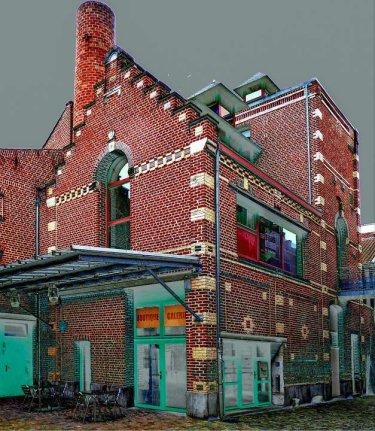
Maison Folie Moulins is a public building in Moulins, Lille, created for Lille 2004 and installed in a former brewery. It hosts concerts, shows, exhibitions, and artistic residencies.
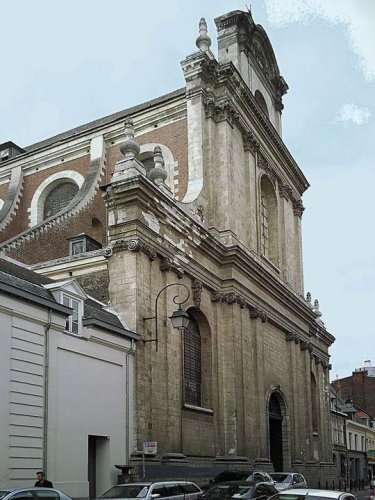
Saint-Étienne in Lille is a Baroque church on Rue de l'Hôpital-Militaire near the Grand'Place. Built from 1606 as the chapel of the Jesuit college, it later became the parish church of Saint Étienne.