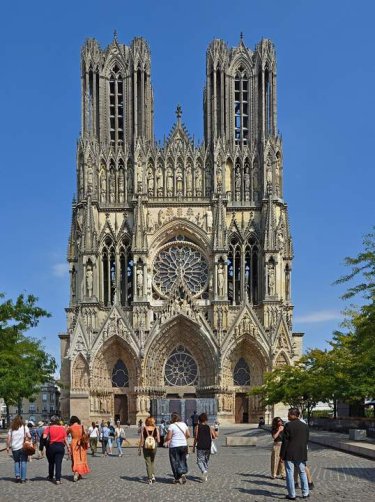
Reims Cathedral
Reims Cathedral is a Gothic cathedral in the French city of Reims. Built mainly between 1208 and 1311, it was later used for the coronation of almost all French monarchs and is known for its vertical design and extensive sculpture.
Reims Cathedral is a Gothic cathedral in the French city of Reims. Built mainly between 1208 and 1311, it was later used for the coronation of almost all French monarchs and is known for its vertical design and extensive sculpture.
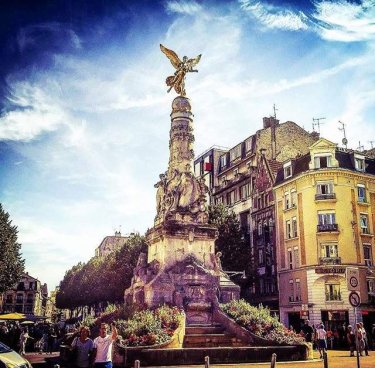
Place Drouet-d’Erlon is a square in the center of Reims, often called place d’Erlon. It is largely pedestrian and has Fontaine Subé at its center, topped by the statue La Gloire. The square is also used for events and terraces.
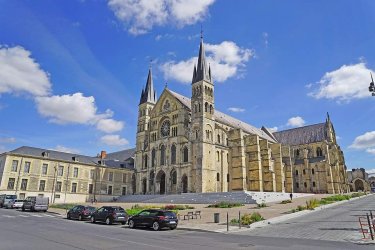
The Basilica of Saint-Remi is a minor basilica in Reims associated with the burial and veneration of Bishop Remigius. Its history includes an early chapel outside the city walls, monastic development, relic transfer, and later church expansion.
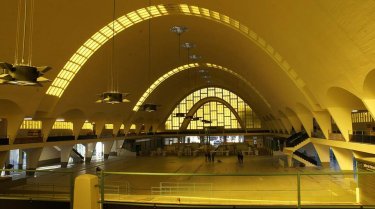
Halles du Boulingrin is a market hall near Porte Mars, set on an islet formed by Boulingrin, Temple, Mars, and Olivier-Metra streets. Its concrete structure has a parabolic vault, glass bays, and a planned interior for market use.
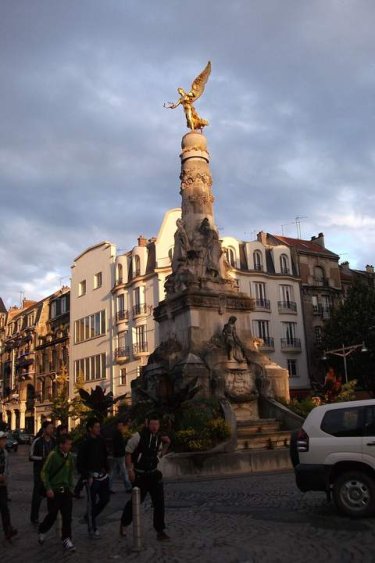
Fontaine Subé is a fountain on Place Drouet-d'Erlon in central Reims. It replaced the statue of Drouet d'Erlon and features a 17-meter vine-garlanded column with civic and symbolic figures.
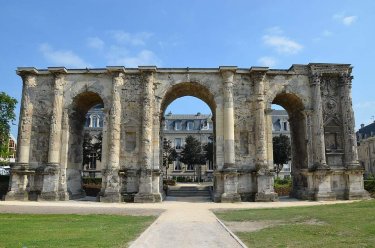
Porte de Mars is a Roman triumphal arch in Reims, France. Dating from the Roman period, it is the widest arch of the Roman world and was classified as a historic monument in 1840.
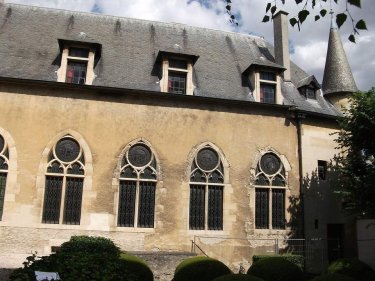
Musée Le Vergeur is a museum-hotel in Reims made up of two building sections. Its oldest part dates from the 12th century, and the complex was heavily restored after the First World War.
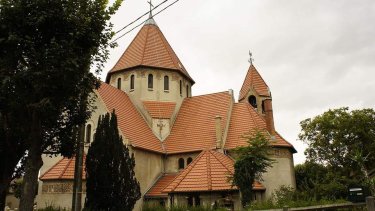
Église Saint-Nicaise de Reims is a parish church in the Saint-Nicaise district of Reims. Built in the 1920s in a Romano-Byzantine style, it was designed by Jean-Marcel Auburtin and is classified as a monument historique.
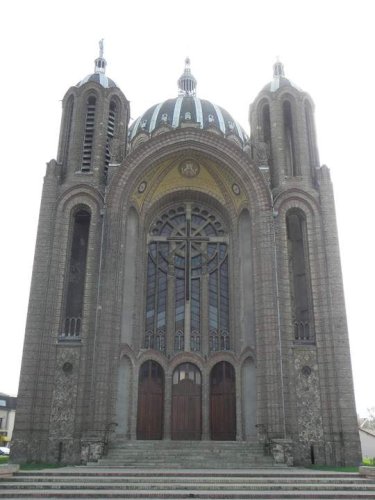
Basilique Sainte-Clotilde de Reims is a Catholic minor basilica located in the heart of the Sainte-Anne district in Reims. Built in 1896 by architect Alphonse Gosset, it features a neo-Byzantine plan in the shape of a Greek cross with a dome.
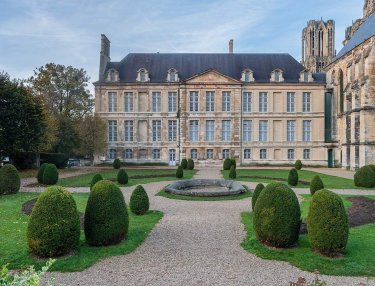
The Palace of Tau is a building adjacent to Notre-Dame de Reims. Once a residence of the archbishops of Reims, it was also used for royal coronations and later became a museum.
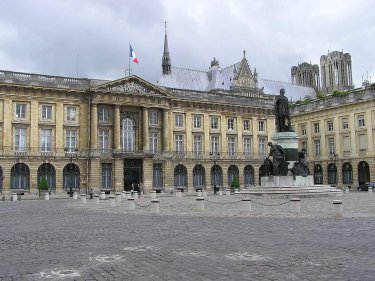
Place Royale is a square in Reims measuring 33 by 38 toises, bordered by orderly architecture typical of royal squares. Its central monument to Louis XV, first by Pigalle and later replaced in bronze by Pierre Cartellier, is a defining feature.

La Cartonnerie is a concert hall in Reims, in the Marne department of the Grand Est region. Located in the city centre, it includes two concert halls, rehearsal studios, and a reception space.
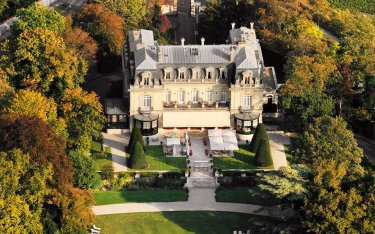
Les Crayères is a château in Reims, located on the UNESCO-listed colline Saint-Nicaise within a classified park designed by Edouard André and Edouard Redont. Built in pure Mansart style, it was inaugurated in 1904 and overlooks the city and surrounding landmarks.
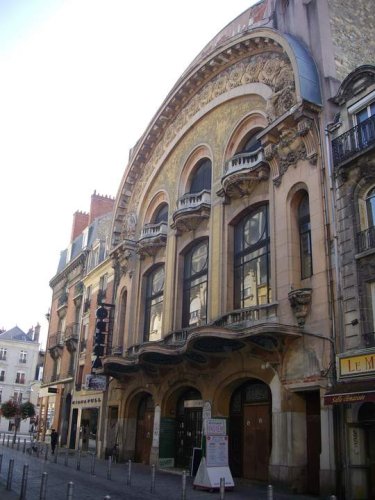
Cinéma Opéra was a cinema in Reims opened in 1923. Its history includes a move in 2019 to place Drouet-d'Erlon and the preservation of its classified facade on rue de Thillois.
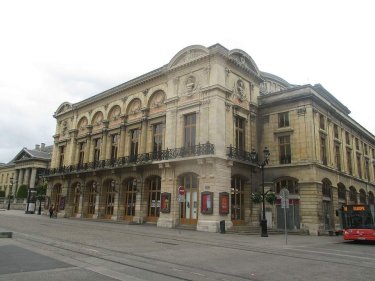
Reims Opera House is a theatre building in Reims, France, built by Alphonse Gosset with Narcisse Brunette and Ernest Leclère. Inaugurated in 1873, it combines a neoclassical exterior with Art Deco interior decoration.
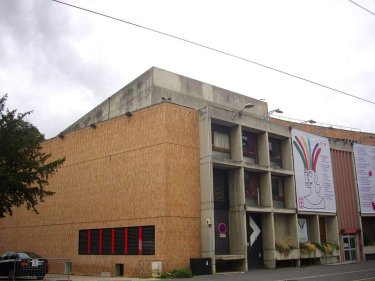
La Comédie de Reims is a national dramatic center in Reims, France, and a former House of Culture. It is served by tramway lines A and B and by bus lines 1, 7, 8, 30, and N.
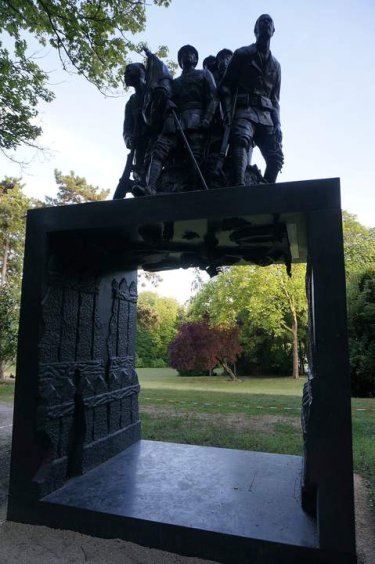
Monument to the Heroes of the Black Army is a 1924 bronze memorial group by Paul Moreau-Vauthier and Auguste Bluysen. It honors Senegalese riflemen and African troops who defended the Champagne sector during the First World War.
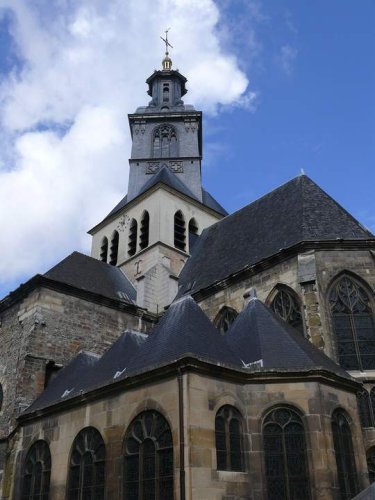
Église Saint-Jacques in Reims is the city’s second oldest preserved church after the basilica Saint-Remi. Its history includes medieval construction, later alterations, wartime damage, and 20th-century repairs.
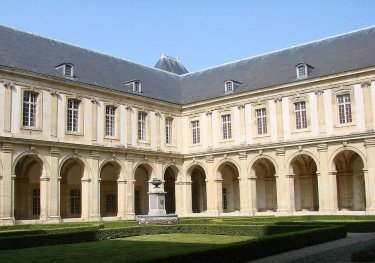
Musée Saint-Remi is located on rue Simon in Reims, in the former abbey Saint-Remi, also known as the former Hôtel-Dieu. It presents collections ranging from prehistory to the Renaissance.
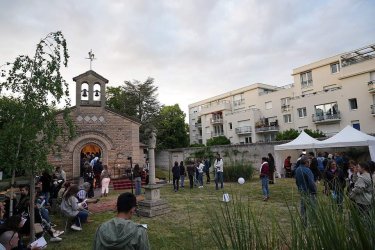
Foujita Chapel, officially Notre-Dame-de-la-Paix, is a chapel in Reims, France, designed and personally decorated by Japanese painter Léonard Foujita. It was constructed in 1964 and later became his burial place.
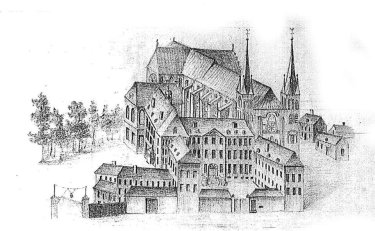
The Royal Abbey of Saint-Remi is an ancient Benedictine abbey in Reims, founded by Archbishop Tilpin around 760. It remained a Benedictine community until the French Revolution and is now the Saint-Remi Museum of Reims.
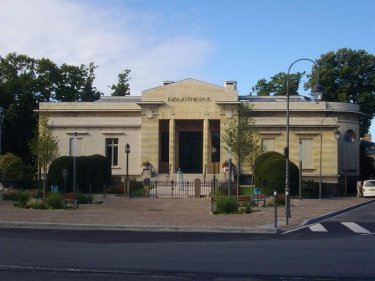
The Carnegie Library of Reims is a municipal library in Reims, created after wartime destruction with support from the Carnegie Endowment. It is noted for its functional layout, distinct public and work areas, and classical entrance.
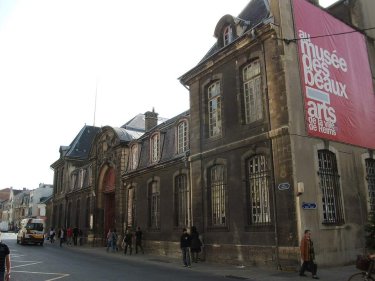
The Museum of Fine Arts of Reims is a French art museum on rue Chanzy in Reims, Champagne-Ardenne. Founded in 1794, it recorded 36,130 visitors in 2018 and was closed in 2019 for renovations.
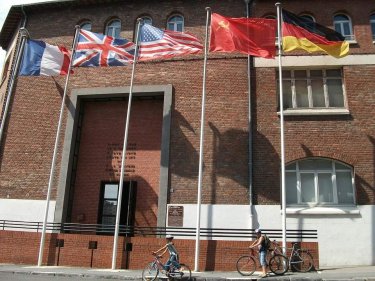
The Museum of the Surrender is a history museum in Reims, founded by the city in 1985. It commemorates the signing of the first part of the Nazi Germany capitulation acts in part of the Franklin-Roosevelt high school building.
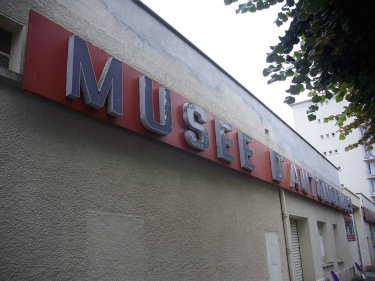
Automobile Museum Reims-Champagne is an automotive museum in Reims presenting around 230 vehicles, along with motorcycles, miniatures, pedal cars and enamel signs.
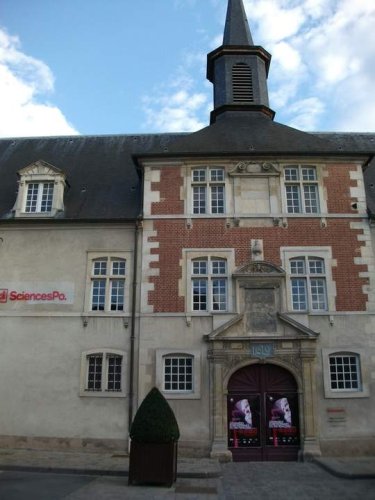
The Ancien Collège des Jésuites de Reims is a historic building in Reims, founded by Jesuits in 1608. Closed in 1762, it later served several educational uses and has belonged to the city since 1976.
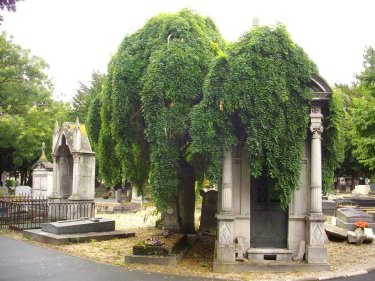
Cimetière du Nord is a cemetery in Reims, inaugurated in 1887 and known as the “Père-Lachaise rémois.” It holds the remains of many citizens distinguished in the city and is among the first necropolises in France placed outside the city walls.
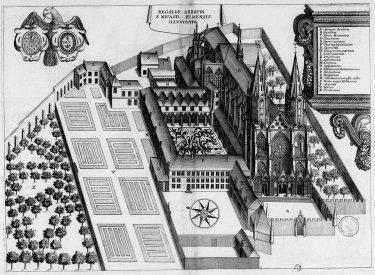
The Old Church of Saint-Nicaise de Reims was the church of the Benedictine abbey of Saint Nicaise in the southern part of the old town of Reims, in the Marne department. It was destroyed in 1793 and is remembered for its Gothic architecture.