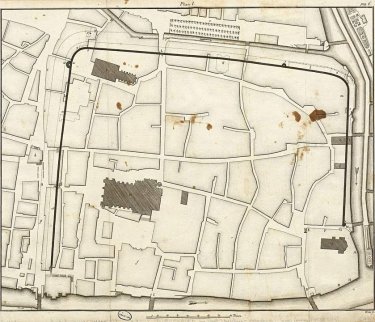
Argentoratum
Argentoratum is the ancient name of Strasbourg and the Roman camp associated with the city in Upper Germania. Archaeological remains of its fortifications survive in the cellars of Strasbourg’s city centre.
Argentoratum is the ancient name of Strasbourg and the Roman camp associated with the city in Upper Germania. Archaeological remains of its fortifications survive in the cellars of Strasbourg’s city centre.
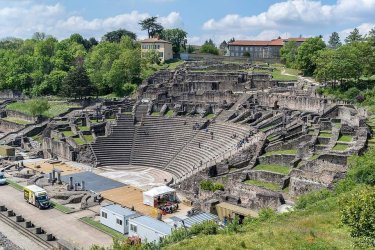
The ancient theatre of Lyon is one of the main Roman monuments visible in the city. Built below the summit of Fourvière, it stood near the center of the Roman colony and was later enlarged.
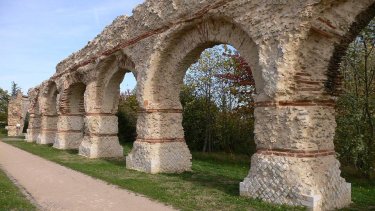
The Aqueduct of the Gier is one of the ancient aqueducts of Lyon, built to supply the city of Lugdunum with water. It is the longest of the four aqueducts and the best preserved among them, with remains protected as historical monuments.
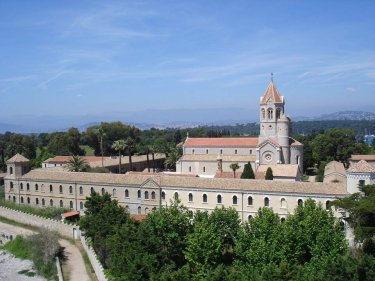
Abbaye Saint-Honorat de Lérins is a monastery on Saint-Honorat island in the Lérins islands near Cannes. Founded around 400–410, it preserves archaeological remains of an early monastic site and buildings from the 11th to 14th centuries.
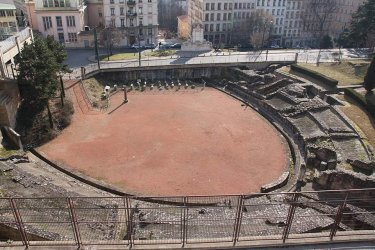
The amphitheater of Lyon is a Roman archaeological site in Lugdunum, present-day Lyon. It was linked to the imperial cult and originally served delegates of Gallic tribes before later expansion.
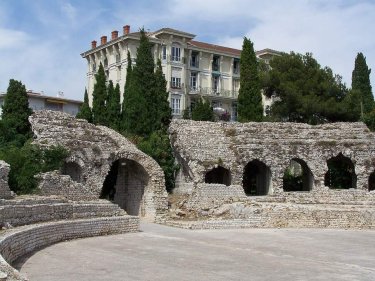
The Arènes de Cimiez is a Roman amphitheatre in the Cimiez district of Nice. Built in successive campaigns between 70 and 80 AD, it is one of the smallest amphitheatres recorded in Gaul and remains open to the public.
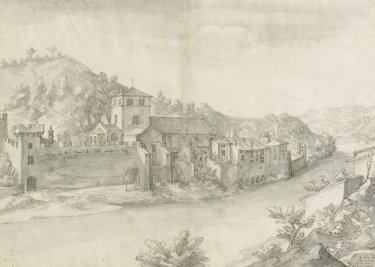
The Abbaye de l'Île Barbe is an ancient Benedictine abbey in Lyon, France, located in the Saint-Rambert-l'Île-Barbe district. Founded before the 6th century, it was one of the oldest monastic establishments in Gaul.