Category

French Cemeteries

40 objects

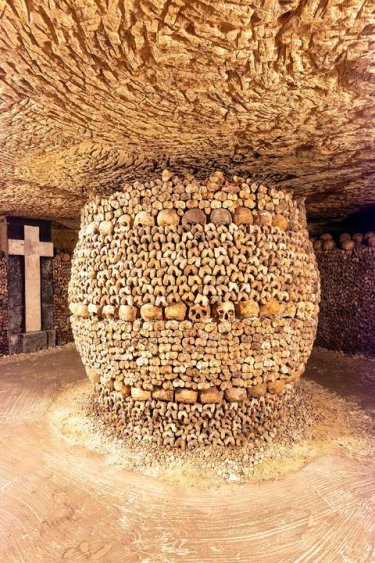
Catacombs of Paris

The Catacombs of Paris are a municipal ossuary formed in old underground quarries beneath the city. About 1.7 kilometres are open to visitors, around twenty metres below the surface, and the site is part of the Museum of the City of Paris.
Montparnasse Cemetery

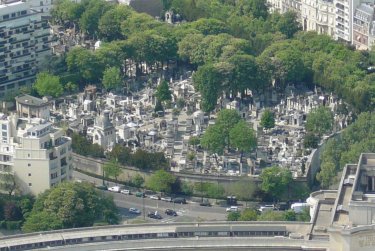
Montparnasse Cemetery, originally called Cimetière du Sud, is a Paris cemetery created in 1824 as part of urban planning reforms. It contains notable graves, individual memorials, and monuments linked to the events of 1870 and 1871.

Montmartre Cemetery

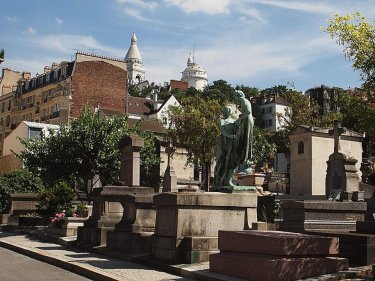
Montmartre Cemetery is a cemetery in the 18th arrondissement of Paris. It covers 11 hectares and is the third largest cemetery in the city, smaller than Père-Lachaise, Montparnasse, and the eastern cemetery.
Saints Innocents Cemetery

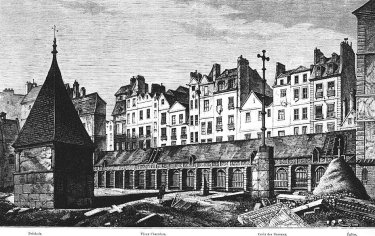
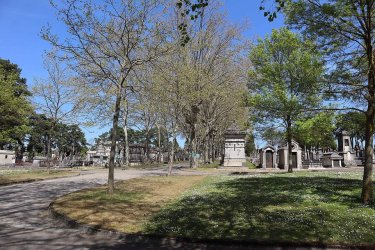
Saints Innocents Cemetery, or Il cimitero degli Innocenti, was a medieval Latin Rite Catholic cemetery in Paris. It was one of the city’s largest parish cemeteries and stood near the Halles district, close to Saint-Eustache and Notre-Dame.

Passy Cemetery

Passy Cemetery is a Parisian cemetery opened in 1820 near the Champs-Élysées on the Right Bank. Located behind the Trocadéro and in the shadow of the Eiffel Tower, it became an aristocratic necropolis of Paris by 1874.

Tomb of Chateaubriand

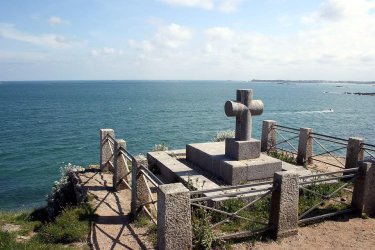
The tomb of François-René de Chateaubriand stands on the islet of Grand Bé at Saint-Malo. Chosen to face the sea and storm, it reflects his wish to be buried on a small island and has been a historic monument since 1954.

Terre-Cabade Cemetery

Terre-Cabade Cemetery is the largest cemetery in Toulouse, in the Midi region of France. It extends over 33 hectares on the slope of Jolimont hill and is divided into two parts by chemin de Caillibens.

Picpus Cemetery

Picpus Cemetery is the largest private cemetery in Paris, located in the 12th arrondissement. Created from confiscated convent land during the French Revolution, it contains the graves of 1,306 victims executed in 1794 and the tomb of Marquis de Lafayette.

Saint-Véran Cemetery

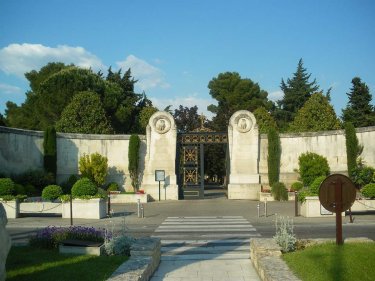
Saint-Véran Cemetery in Avignon was opened in 1820 at the beginning of the French Restoration. Registered in the Inventaire général du patrimoine culturel, it covers 14 hectares and contains funerary works by several sculptors, as well as military memorials and an arboretum of Mediterranean species.

Errancis Cemetery

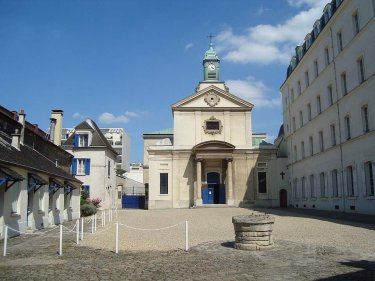
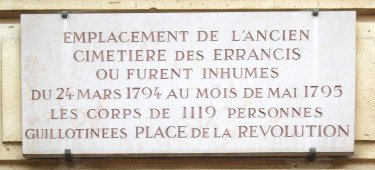
Errancis Cemetery, also known as Cimetière de Monceau or Cimetière de Mousseaux, was an ancient cemetery of the French Revolution in Paris’s 8th arrondissement. It was one of four Revolutionary Paris cemeteries used for bodies executed by guillotine.

Madeleine Cemetery

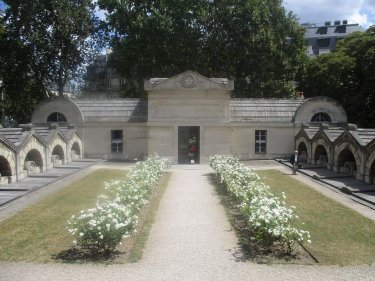
Madeleine Cemetery was an 18th-century parish cemetery in Paris, associated with Revolutionary burials and later dismantled. It was named for Saint Mary Magdalene and later replaced in part by the Chapelle Expatoire.

The Alyscamps

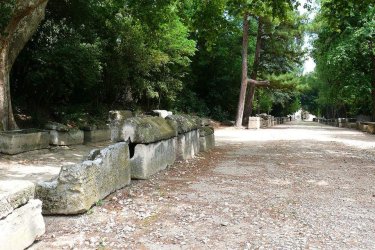
The Alyscamps is a Roman-era necropolis in Arles, Bouches-du-Rhône, France. Once a pagan and later Christian burial ground, it became known for its sarcophagi, churches, and association with pilgrimage and burial traditions.

Cimetière de Loyasse

Cimetière de Loyasse is a cemetery in Lyon on the Fourvière hill. Created in 1807, it is the oldest cemetery in Lyon still in use. It includes an old and a new cemetery, separated by Rue du Cardinal-Gerlier.

Mourners of Dijon

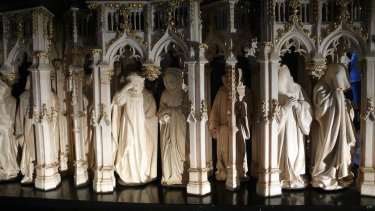
The Mourners of Dijon are 82 alabaster statuettes in ronde-bosse from 15th-century Burgundy. They belonged to the tombs of Philippe le Hardi and of Jean sans Peur and Marguerite de Bavière.

Abadie Cemetery

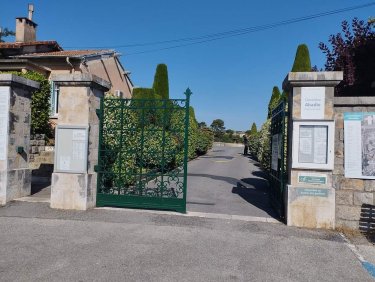
Abadie Cemetery is a cemetery in Cannes, in the Alpes-Maritimes. It consists of two sites: Abadie I at 2 chemin des Gourguettes and Abadie II, an annex in the La Bocca district.

Tomb of Philip the Bold

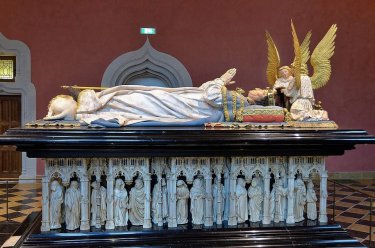
The Tomb of Philip the Bold is a funerary monument commissioned in 1378 for the Duke of Burgundy, who chose the Chartreuse de Champmol near Dijon as his burial site. It is known for its recumbent figure and mourning pleurants.

L’aître Saint-Maclou

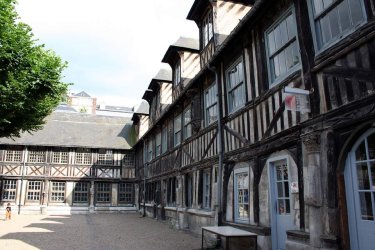
L’aître Saint-Maclou is an ancient charnel house on rue de Martainville in Rouen, Normandy. It is one of the rare surviving European ossuaries of its type, and its buildings reflect a long history of cemetery use, school activity, and later restoration.

Cimetière de l’Est

Cimetière de l’Est is a cemetery in Lille, created in 1779. It is mostly Catholic, with Jewish and Muslim sections, and includes tombs of several nationalities, as well as Masonic graves.

Cimetière du Grand Jas

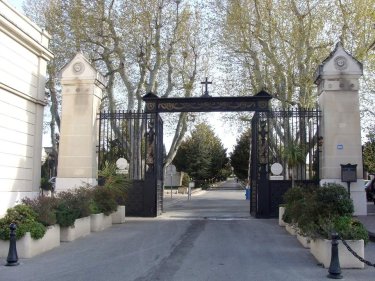
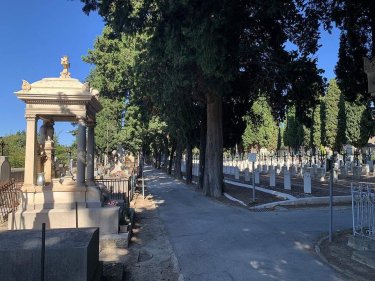
The Cimetière du Grand Jas is a famous cemetery in Cannes, located on Avenue de Grasse. Terraced and garden-like, it is known for its old trees, flower decorations, and as the burial place of several well-known public figures.

Cimetière du Château

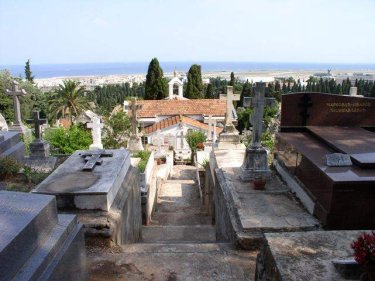
Cimetière du Château is a cemetery in Nice created in 1783 on the site of the old city citadel. It was established after burials in churches were prohibited. The cemetery includes a Jewish section and overlooks the city and the Mediterranean Sea.

Tomb of Francis II

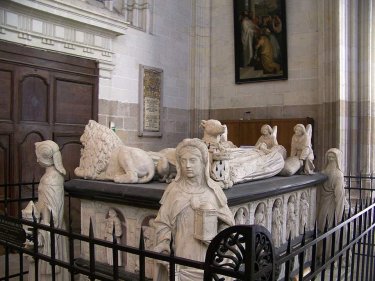
The Tomb of Francis II is a funerary monument in Nantes Cathedral for François II, Duke of Brittany, and his wife Marguerite de Foix. Made in the early 16th century, it is regarded as a major work of French Renaissance sculpture.

Saint-Vincent Cemetery

Saint-Vincent Cemetery is a Parisian cemetery in the Montmartre Quarter, located on rue Lucien-Gaulard. Opened on January 5, 1831, it became Montmartre’s second cemetery after the Cimetière du Calvaire had been filled.

Chartreuse Cemetery

Chartreuse Cemetery is a 25.7-hectare cemetery in Bordeaux, created at the end of the 18th century on the former gardens of a Carthusian convent. It contains a range of 19th-century funerary monuments and was classified as a historical monument in 1921.

Péjoces Cemetery

Péjoces Cemetery is a cemetery in Dijon, Côte-d'Or, and one of the largest in France. It is known for its setting and for the notable personalities buried there.

Cimetière de Montrouge

Cimetière de Montrouge is a cemetery in the Petit-Montrouge quarter of Paris. Opened in 1821 after being created in 1819, it is the only Parisian cemetery with a crypt, which is open to visitors.
Saint-Lazare Cemetery

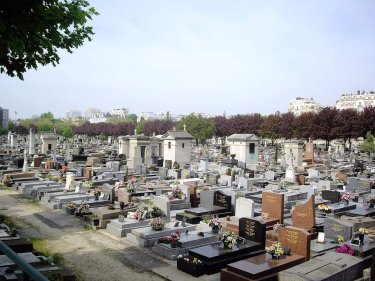
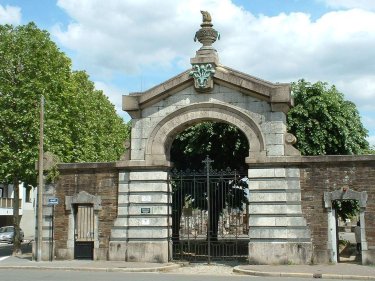
Saint-Lazare Cemetery is the largest cemetery in Montpellier, Hérault. Established in 1846 on the former Saint-Lazare hospital grounds, it includes military sections, a Jewish section, and notable tombs and vaults.
Cemetery of Rocabey

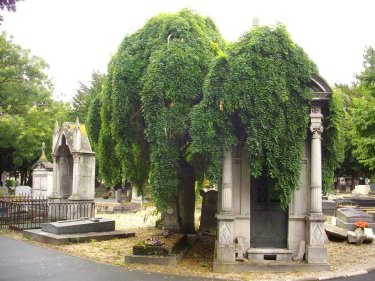
The Cemetery of Rocabey is the main cemetery of Saint-Malo, in Ille-et-Vilaine, Brittany. Founded in 1779 on the Clos-à-Pihuit plot, it is located on avenue de Moka in the Rocabey district and contains graves of notable local figures.

Miséricorde Cemetery

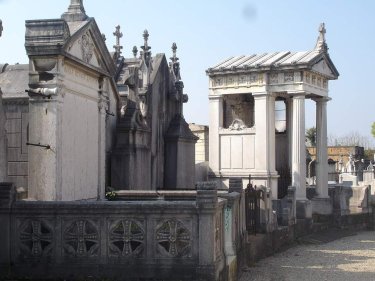
Miséricorde Cemetery is a cemetery in the Hauts-Pavés - Saint-Félix district of Nantes, France. Opened in 1793, it is nicknamed the “Père-Lachaise nantais” and contains neo-Gothic mausoleums along a tree-lined alley.

Cimetière du Nord

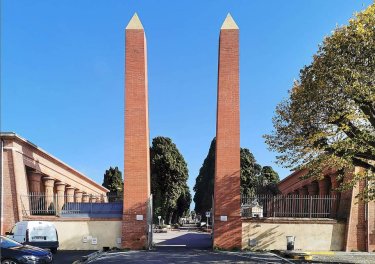
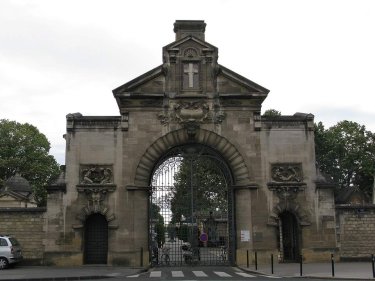
Cimetière du Nord is a cemetery in Rennes established on the Estival field after the creation of a new public burial ground in the late 18th century. Its grounds include notable tree species and a monumental neo-classical entrance.

Jewish cemeteries in Bordeaux

Bordeaux has three Israeli cemeteries, registered as historical monuments since 1995. They are located on cours de la Marne, cours de l’Yser, and rue Sauteyron; only the cemetery on cours de l’Yser is functional and regularly open to the public.

Cimetière du Nord

Cimetière du Nord is a cemetery in Reims, inaugurated in 1887 and known as the “Père-Lachaise rémois.” It holds the remains of many citizens distinguished in the city and is among the first necropolises in France placed outside the city walls.