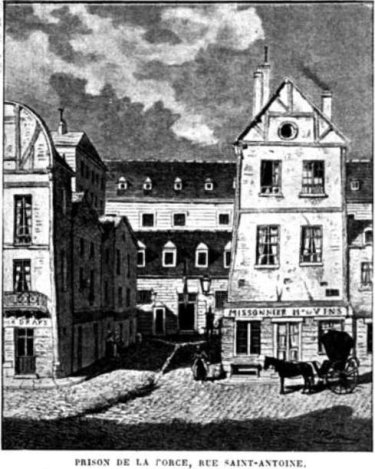
La Force Prison
La Force Prison was a former hôtel particulier transformed into a maison de détention. It served as a prison for Paris between 1780 and 1845, and today the building is almost entirely destroyed.
La Force Prison was a former hôtel particulier transformed into a maison de détention. It served as a prison for Paris between 1780 and 1845, and today the building is almost entirely destroyed.
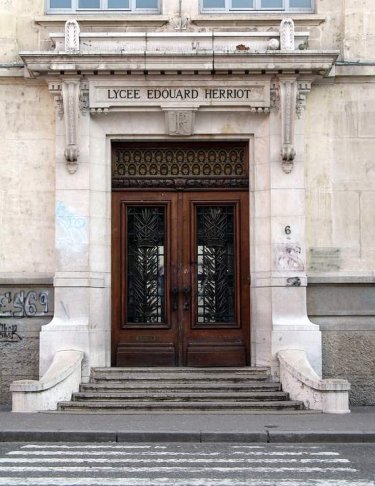
Lycée Édouard-Herriot is a public secondary school in Lyon. Founded in 1882 under the influence of Jeanne Desparmet-Ruello, it moved to its current building, inaugurated in 1888 on place Saint-Pothin.
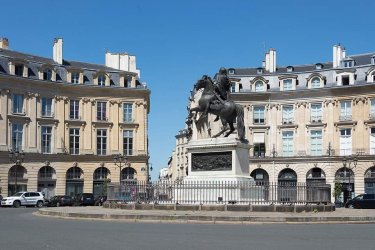
Place des Victoires is a square in the historical center of Paris. Created in honor of Louis XIV, it is the third Royal square built in the city, after Place Dauphine and Place des Vosges.
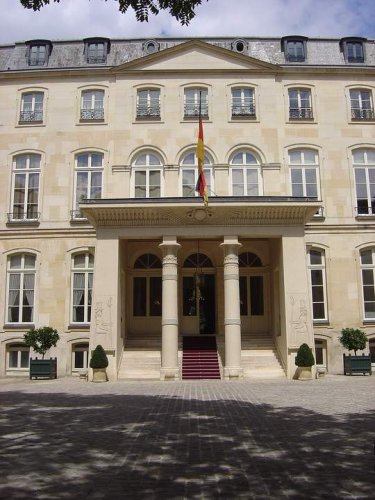
Hôtel Beauharnais is a historic hôtel particulier in Paris’s 7th arrondissement. Designed by Germain Boffrand and completed in 1714, it was later rebuilt in the Empire style by Eugène de Beauharnais and now serves as the official residence of the German ambassador to France.
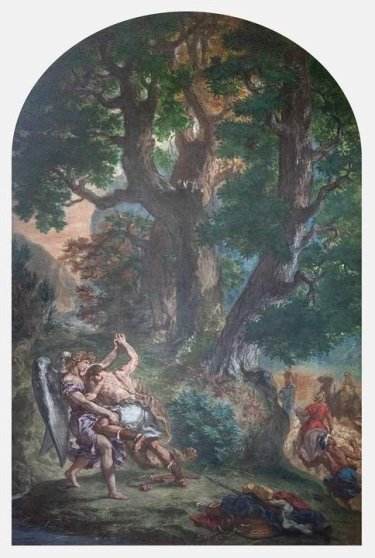
Jacob Wrestling with the Angel is a mural painting by Eugène Delacroix, completed in 1861 for the chapel of the Saints-Anges at Saint-Sulpice in Paris. It is one of the painter’s last masterpieces and is classified as a historical monument object.
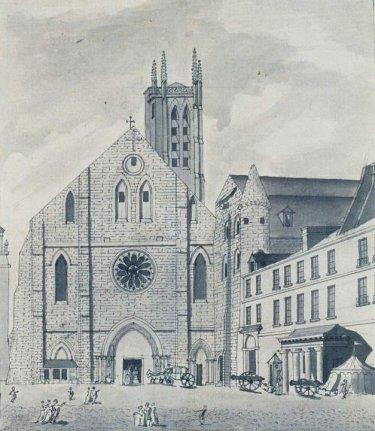
The Abbey of St Genevieve was a church building in Paris founded by Historique in 508 near the former palace of the Thermes. It became associated with the burial of its founder and with the relics of Saint Genevieve.
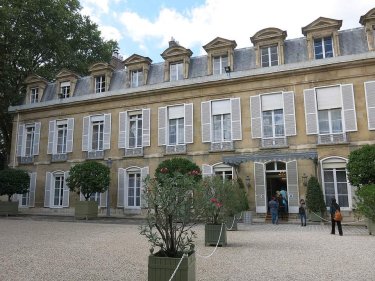
Petit Luxembourg is a private mansion in the 6th arrondissement of Paris, west of the Palais du Luxembourg on Rue de Vaugirard. It has served as the residence of the President of the French Senate since 1825.
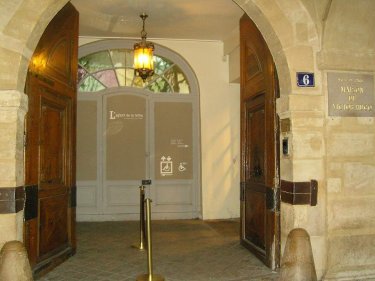
Maison de Victor Hugo is a monographic Paris museum at 6, place des Vosges. It preserves the former hôtel de Rohan-Guémené, where Victor Hugo rented an apartment on the second floor from 1832 to 1848.
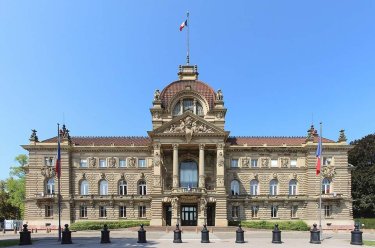
The Palais du Rhin is a palace on Place de la République in Strasbourg, dominated by a large dome and set within a garden with ornate wrought iron fences. It is one of the most complete and emblematic examples of late German architecture.
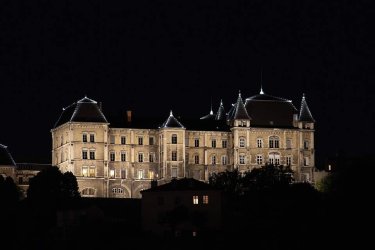
Lycée de Saint-Just is a public high school in Lyon’s Saint-Just district. Overlooking the city from Fourvière hill west of the Saône, its site combines a long architectural history with remains linked to Roman Lugdunum.
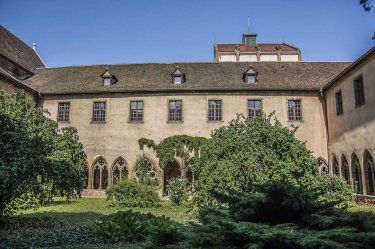
The Unterlinden Museum in Colmar, Alsace, is housed in the former Dominican convent of Unter den Linden. It presents a large collection of objects from the Neolithic to the present and is especially known for Upper Rhine sacred art from the Middle Ages to the Renaissance.
Place Garibaldi is a rectangular square in the port district, on the northern edge of Old Nice. It is bordered by arcaded buildings, crossed by tram line 1, and lined with shops, cafés, and restaurants.
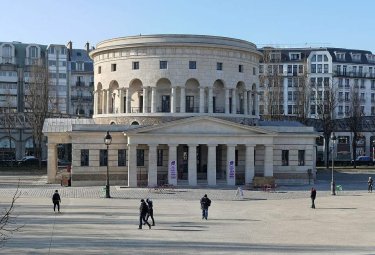
Place de la Bataille-de-Stalingrad is a square in Paris, located in the 10th and 19th arrondissements, in the quartiers of l'Hôpital-Saint-Louis and de la Villette. Created in 1945 and redeveloped in 1988, it combines urban landscaping, transit infrastructure, and commemorative elements.
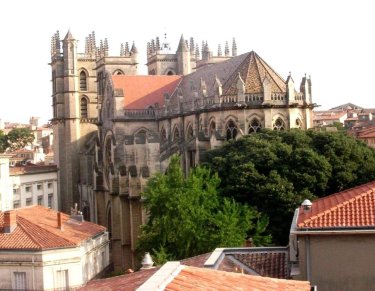
Montpellier Cathedral is a Catholic cathedral in the old town of Montpellier in Hérault. It is the city’s most important Gothic monument and the largest church in the former Languedoc-Roussillon region.
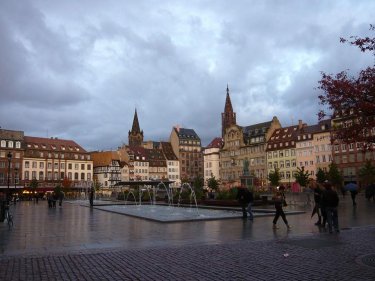
Place Kléber is a central square and tourist attraction named after Jean-Baptiste Kléber, a French general. It has been a transport hub, market site, and place for public events.
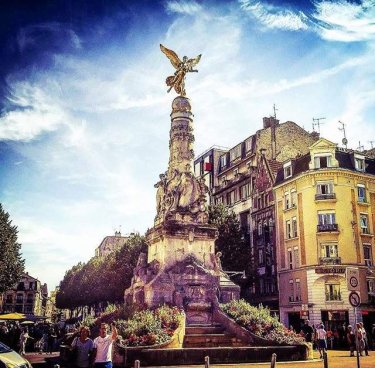
Place Drouet-d’Erlon is a square in the center of Reims, often called place d’Erlon. It is largely pedestrian and has Fontaine Subé at its center, topped by the statue La Gloire. The square is also used for events and terraces.
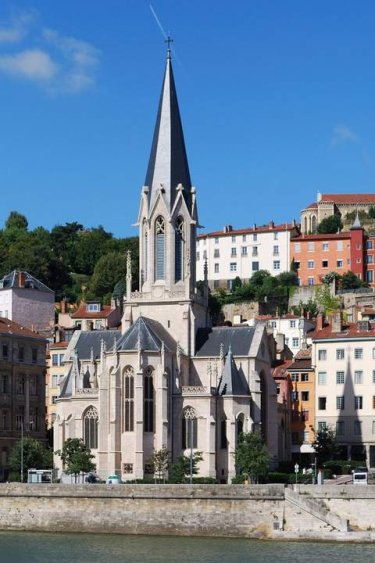
Église Saint-Georges is a Catholic place of worship in the Vieux Lyon neighborhoods. Dedicated to Saint Georges de Lydda, it belongs to the parish of the primatiale Saint-Jean de Lyon. The current building was constructed in neo-Gothic style by Pierre Bossan in 1844–1845.
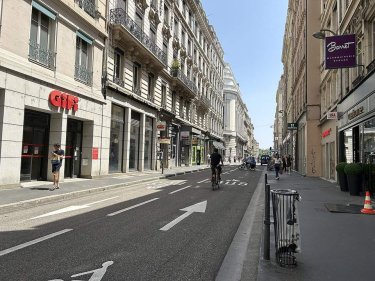
Rue Grenette is a historic street in Lyon, first attested in 1193. Named after the halls of the Grenette, it was once connected to Place des Cordeliers and Rue Basse-Grenette.
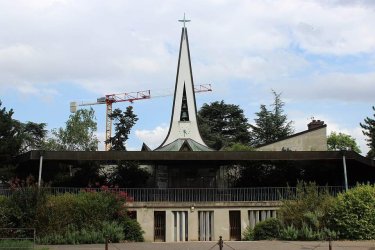
Église Notre-Dame-du-Point-du-Jour is a church in Lyon’s Point-du-Jour district. Completed in 1973, it replaced the former church of the Massues. Its design includes a spire symbolizing the biblical tent and an interior centered on an octagonal choir.
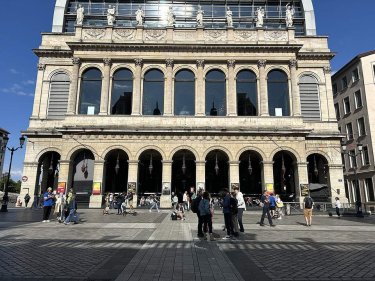
Opéra Nouvel is an opera house in Lyon, France, on Place de la Comédie opposite the city hall. It was built in 1831 as the Grand Théâtre and later restructured and enlarged by Jean Nouvel.
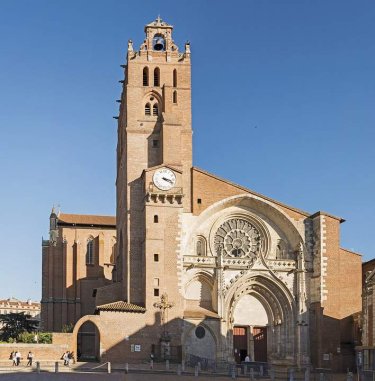
Toulouse Cathedral is a Roman Catholic cathedral in the historic centre of Toulouse, Haute-Garonne, France. Its complex architecture reflects successive periods of modification, renovation, and reconstruction, and it gave its name to the surrounding neighborhood.
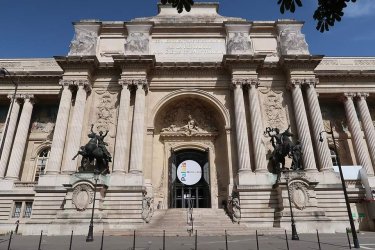
The Palais de la Découverte is a science museum created by Jean Perrin in 1937 to show science in the process of being made. Its displays include experiments in optics, biology, X-rays, and other fields.
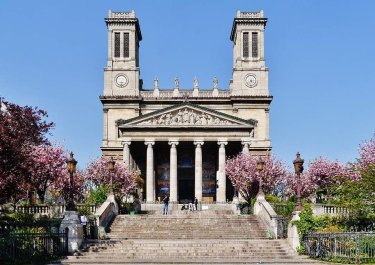
Saint-Vincent-de-Paul Church is a 19th-century church in Paris on Place Franz-Liszt. Dedicated to Saint Vincent de Paul, it dominates the neighborhood and stands on the former Saint-Lazare enclosure, where he lived and worked.
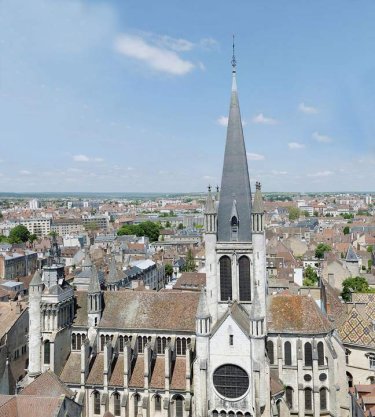
The Church of Notre-Dame of Dijon is a medieval Gothic church in the heart of Dijon’s protected historic sector. Built from 1229 to around 1250, it stands near the Palace of the Dukes and States of Burgundy and is decorated with the city’s Jacquemart and owl.
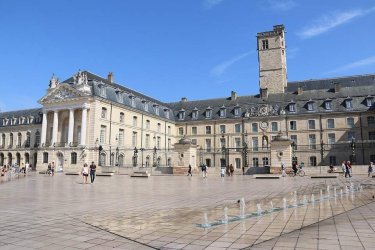
The Palace of the Dukes of Burgundy is a historic palace in Dijon, France. Begun in 1364 for Philippe le Hardi, it combines Gothic, Renaissance, and Classical styles and now houses the Musée des Beaux-Arts de Dijon and Dijon City Hall.
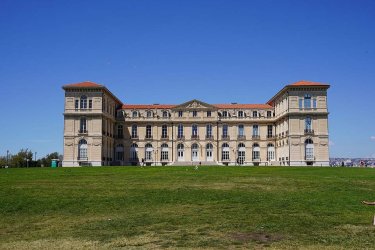
The Palais du Pharo is a 19th-century palace in Marseille, built by order of Napoléon III for Empress Eugénie. It overlooks the port and the Jardin du Pharo and now belongs to the city.
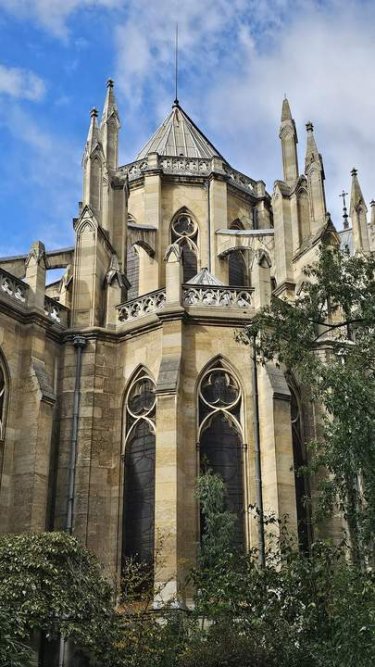
Sainte-Clotilde Church is a minor basilica on Rue Las Cases in Paris’s 7th arrondissement. Built between 1846 and 1857, it was the first neo-Gothic church in Paris and was later declared a minor basilica in 1896.
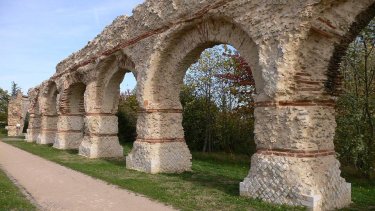
The Aqueduct of the Gier is one of the ancient aqueducts of Lyon, built to supply the city of Lugdunum with water. It is the longest of the four aqueducts and the best preserved among them, with remains protected as historical monuments.
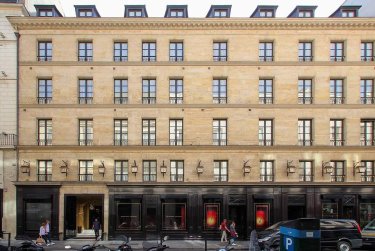
Hôtel Costes is a 5-star Parisian hotel with 84 rooms, a terrace and a spa. Founded by Jean-Louis and Gilbert Costes, it is known for its distinctive decoration, lounge atmosphere, and position as a luxury hotel with a strategy different from palaces.
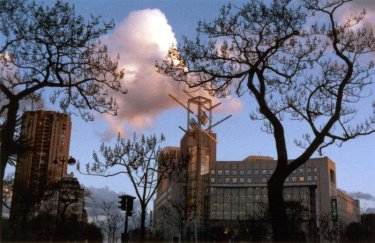
Place d’Italie is a square in Paris located at a major crossroads. Its history is tied to the ancient Roman road from Lutèce to Lugdunum, later road and boulevard development, and the former barrière d’Italie.
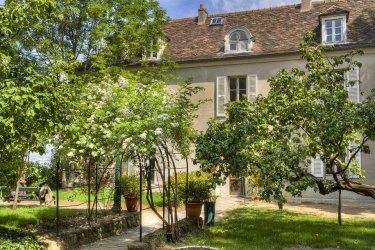
The Musée de Montmartre is a French art museum in the Montmartre district of Paris’s 18th arrondissement. It is housed in a group of historic buildings and presents the history of Montmartre and its artists.
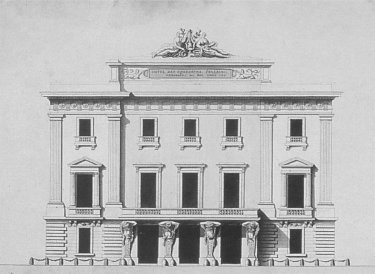
Hôtel de Bourgogne was a theatre built in Paris in 1548 for the Confrérie de la Passion. Located on rue Mauconseil, it became a major French stage before closing in 1783.
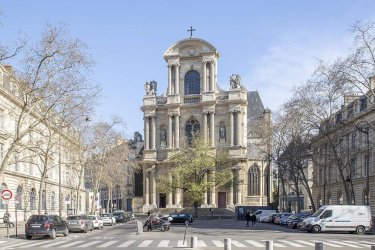
Saint-Gervais-Saint-Protais is a church in the Saint-Gervais district of Paris, east of the Hôtel de Ville. Its history reaches back to the earliest known place of worship on the right bank of Paris.
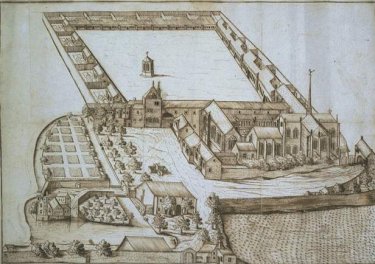
Champmol was a Carthusian monastery on the outskirts of Dijon, founded in 1383 by Duke Philip the Bold as a dynastic burial place for the Valois Dukes of Burgundy. It was richly decorated with artworks.
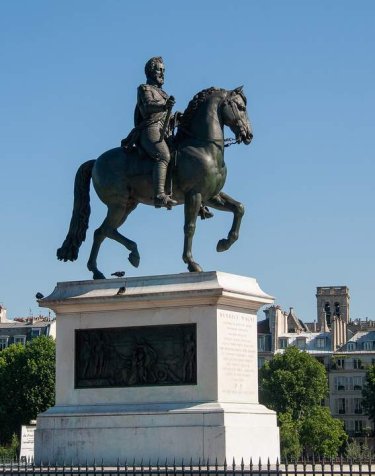
The equestrian statue of Henri IV is a bronze monumental sculpture on Place du Pont-Neuf in Paris. Inaugurated in 1818, it shows Henri IV on horseback, crowned with laurel and holding a scepter. It replaced earlier versions destroyed or removed.
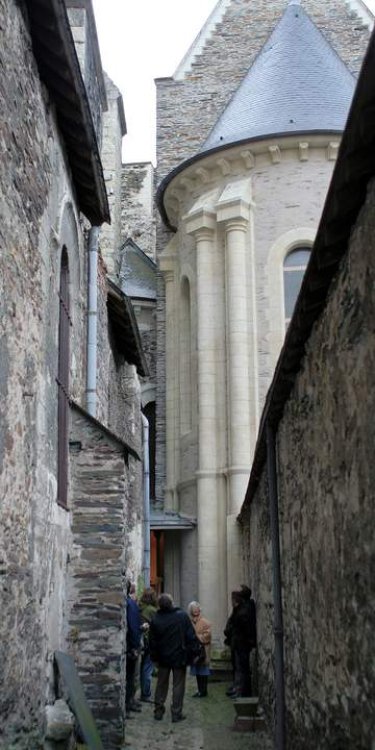
Abbaye du Ronceray d'Angers is a Benedictine nunnery in Angers, in the Maine-et-Loire department of Pays de la Loire. Founded in the 11th century, it is the only female monastic establishment in Angers and among the most important in the diocese.
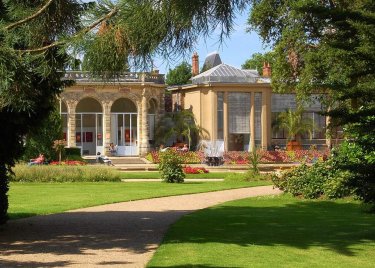
Parc du Thabor is a public park near the centre of Rennes, France. Covering more than ten hectares, it combines a French garden, an English garden, and a large botanical garden.
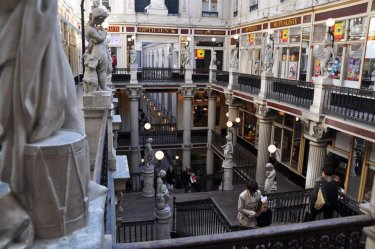
Passage Pommeraye is a covered shopping arcade in Nantes, France, built from the end of 1840. Set on a steep slope, it is arranged over three levels connected by a central staircase and has been a listed historical monument.
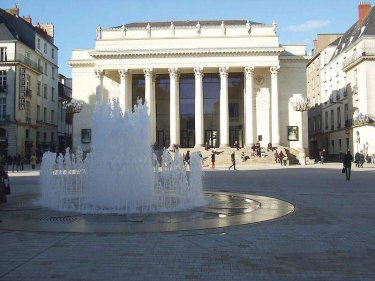
Place Graslin is a square in the city center of Nantes, France. Shaped as a rectangle joined to a semicircle, it is entirely pedestrian and largely paved. Its most notable monument is the Théâtre Graslin on the north side.
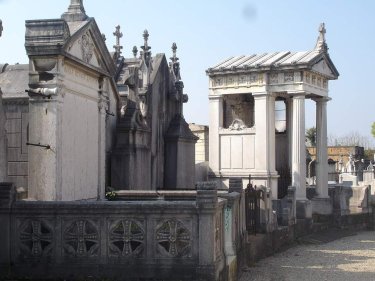
Cimetière de Loyasse is a cemetery in Lyon on the Fourvière hill. Created in 1807, it is the oldest cemetery in Lyon still in use. It includes an old and a new cemetery, separated by Rue du Cardinal-Gerlier.
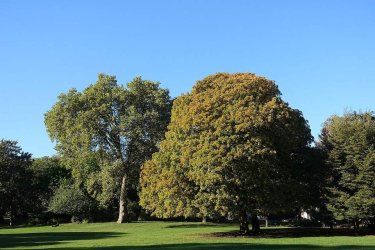
Parc Montsouris is a large urban park in the 14th arrondissement of Paris, opposite the Cité Universitaire de Paris. Established in 1869, it features an English-style landscape with a lake, lawns, planted trees, statues, monuments, and a restaurant.
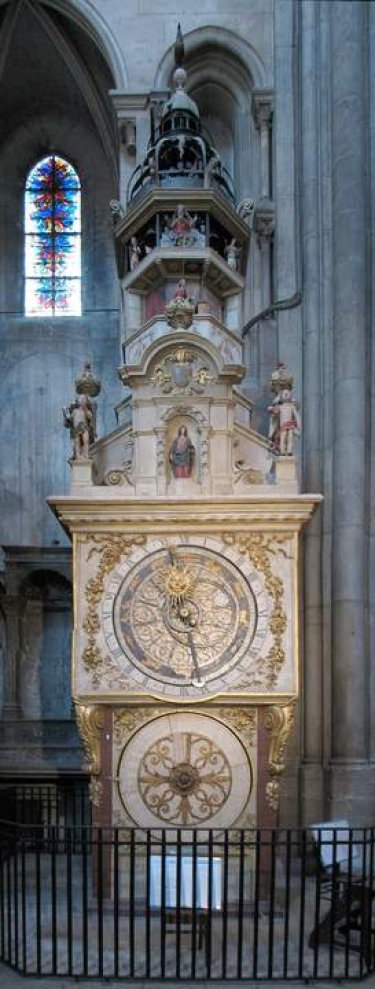
The Lyon astronomical clock is a seventeenth-century astronomical clock located in Lyon Cathedral. It is a tall clock with a central octagonal tower and several automated figures, including angels, the Virgin Mary, and a rotating statue in a western niche.
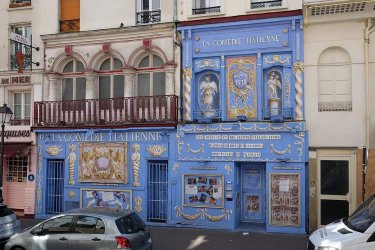
Comédie-Italienne was a French name used for Italian-language theatre and opera performed in Paris. It is associated with commedia dell’arte troupes, Italian-born royal patrons, and later changes in company name and repertory.
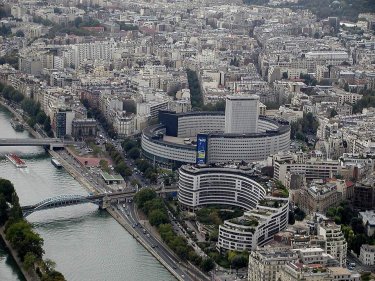
Maison de la Radio is a circular broadcasting house in Paris, designed by Henry Bernard to house French public radio-television. It has a central tower and a circumference of 500 meters.
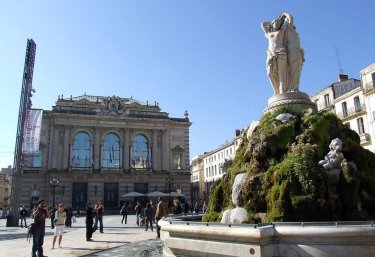
Comédie Square is a major urban square in Montpellier, shaped as a long rectangle and linked to Esplanade Charles-de-Gaulle. It is widely associated with the Three Graces fountain and its role as a central meeting place.
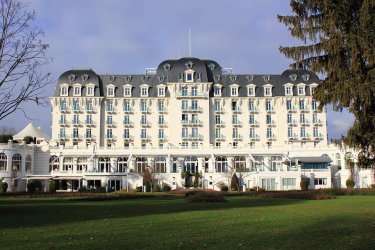
Imperial Palace is a four-star hotel in Annecy, Haute-Savoie, on the shores of Lake Annecy. It is surrounded by public gardens that also contain a casino and a seminar center.
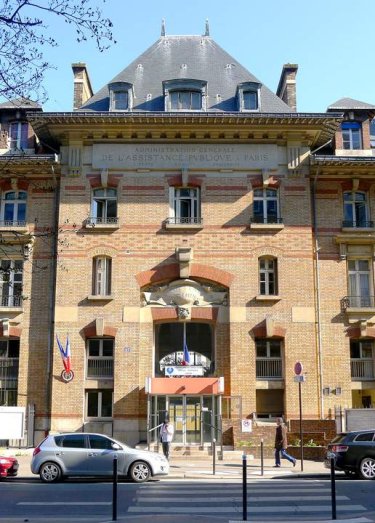
Hôpital Cochin is a hospital of Assistance publique - hôpitaux de Paris in Paris, at 27 rue du Faubourg-Saint-Jacques. It depends on the faculty of medicine of Université Paris-Cité and traces its origins to an 18th-century hospice founded by Jean-Denis Cochin.
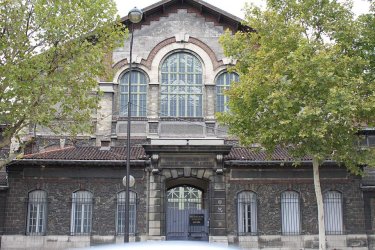
Ateliers Berthier is a set of buildings at 32 boulevard Berthier in Paris. Designed by Charles Garnier in the late 19th century, they were built as workshops and storage for the Opéra de Paris décor and now house the Odéon-Théâtre de l'Europe’s second auditorium.