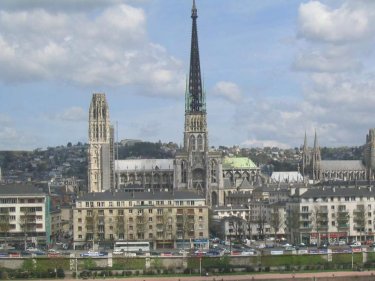
Rouen Cathedral
Rouen Cathedral is a Catholic church in Rouen, Normandy, France, and the see of the Archbishop of Rouen, Primate of Normandy. It is marked by three towers in different styles and a long building history.
Rouen Cathedral is a Catholic church in Rouen, Normandy, France, and the see of the Archbishop of Rouen, Primate of Normandy. It is marked by three towers in different styles and a long building history.
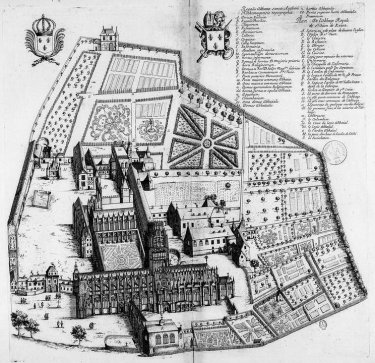
The Royal Abbey of Saint-Ouen was a former Benedictine abbey in Rouen, active from 750 until the French Revolution. Only its former abbey church survives on the territory of the commune. It is a principal monument of the city and a noted Gothic example in Normandy.
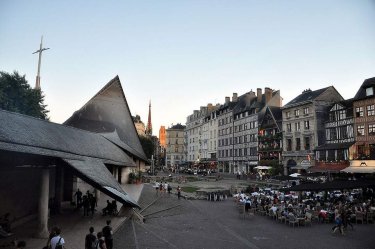
Church of St Joan of Arc is a church building noted for its 13 stained glass windows, created between 1520 and 1530. Many were originally part of the choir of the old Saint-Vincent church and were sheltered in 1939.
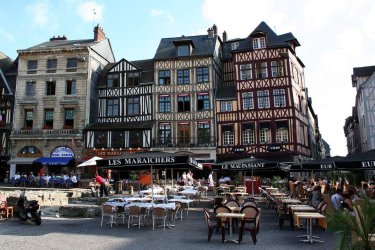
Place du Vieux-Marché is a square known for its link with the execution of Jeanne d’Arc. It also contains historic layers, including former church remains, memorials, reconstructed market buildings, and the Sainte-Jeanne d’Arc church.
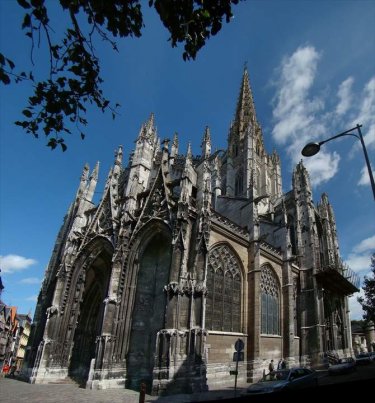
The Church of Saint-Maclou is a Catholic place of worship in the city center of Rouen, in Seine-Maritime, Normandy. Its history includes repeated rebuilding after fires, reconstruction in the 15th century, and later damage and restoration.
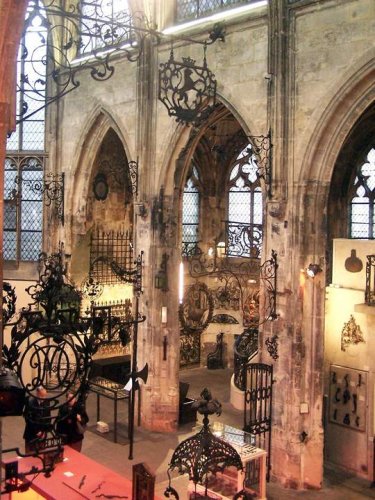
Musée Le Secq des Tournelles is a museum of ironwork in Rouen, installed in the former Saint-Laurent church. It is located in the Vieux-Marché – Cathédrale district, near the Saint-Godard church and the Museum of Fine Arts.
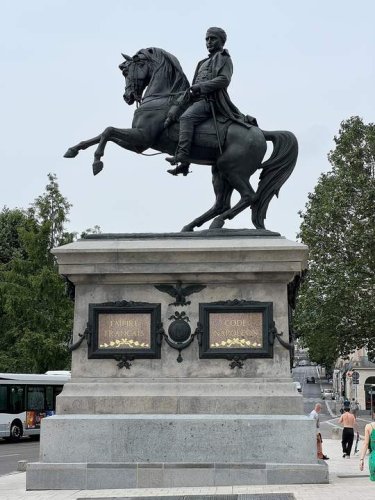
The Monument to Napoléon Ier is a bronze equestrian statue by Vital Gabriel Dubray, located at place du Général-de-Gaulle in Rouen. It shows Napoleon saluting on a rearing Arabian horse, set on a pedestal with marble panels and a bronze bas-relief.
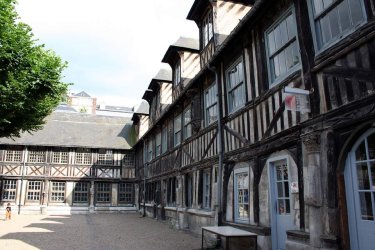
L’aître Saint-Maclou is an ancient charnel house on rue de Martainville in Rouen, Normandy. It is one of the rare surviving European ossuaries of its type, and its buildings reflect a long history of cemetery use, school activity, and later restoration.
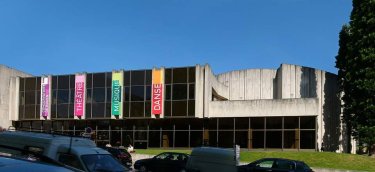
The Conservatoire de Rouen is a regional conservatory in Rouen, Seine-Maritime, France. It is an approved and state-controlled artistic education institution offering music, dance, and drama.
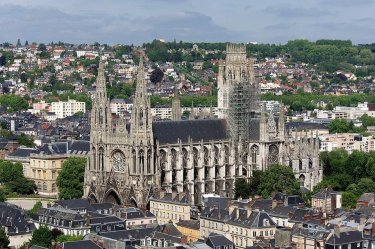
Abbey Church of Saint-Ouen is a Catholic place of worship and a main monument in Rouen, France. Formerly the abbey church of a Benedictine monastery, it is known for its monumental organ by Aristide Cavaillé-Coll and its status as a French historical monument since 1840.
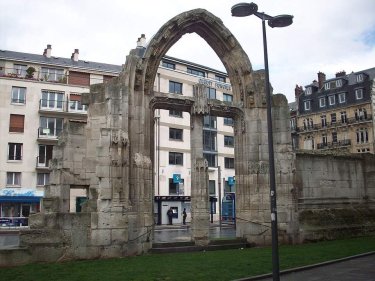
Église Saint-Vincent de Rouen is a former Catholic church of Gothic style in Rouen, France. Attested since 1169, it was closely linked to the Seine quays, port activity, and the Vicomté. It was almost entirely destroyed in a bombing in May 1944.
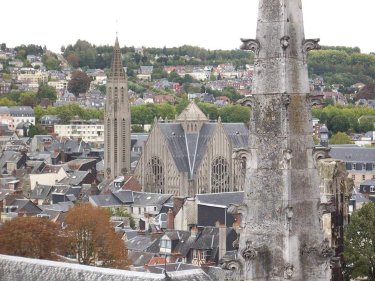
Église Saint-Nicaise de Rouen is a church building in Rouen founded in 640 as a chapel outside the city. It later became a parish church, was rebuilt in reinforced concrete in the 1930s, and features modern stained glass by Max Ingrand.
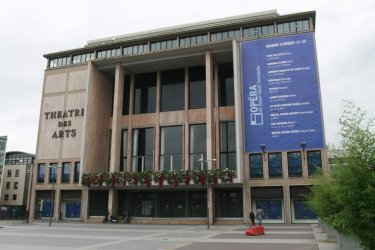
Rouen Opera House, formally the Rouen Normandy Opera House - Theatre of Arts, is a French opera house in Rouen, Normandy. It is home to the Rouen Philharmonic Orchestra and includes concert venues such as the Théâtre des arts and Chapelle Corneille.
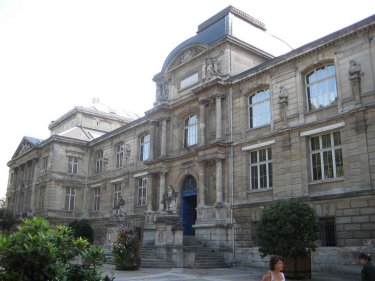
The Musée des Beaux-Arts de Rouen is an art museum in the city center of Rouen, Normandy. Created after the French Revolution, it holds major collections of paintings, sculptures, and graphic arts.
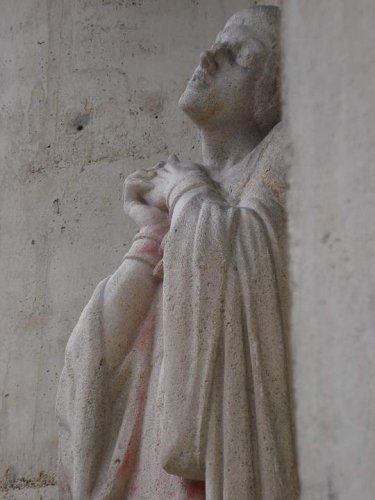
Jeanne au bûcher is a monument and sculpture by Maxime Real del Sarte. Presented at the Salon des artistes français in 1927, it later appeared in Rouen and was installed near the entrance of the Église Sainte-Jeanne-d'Arc.
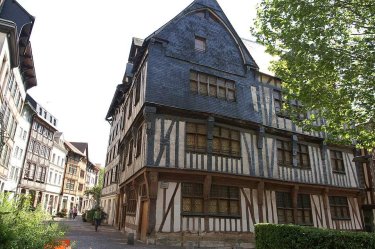
The Musée national de l'Éducation is a national museum formed from educational collections that began in Paris under Jules Ferry and were later united in Rouen. Its holdings include books, pedagogical materials, scientific materials, and old school objects.
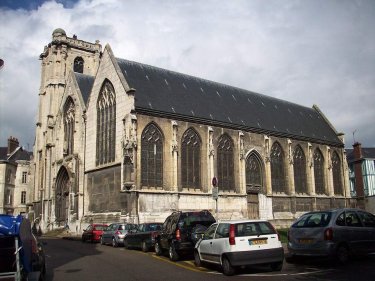
Église Saint-Godard de Rouen is a church building in Rouen with medieval origins, later rebuilt after a fire in 1248 and expanded in the 15th and 16th centuries. It also preserves a history of stained glass restoration and monument listing.
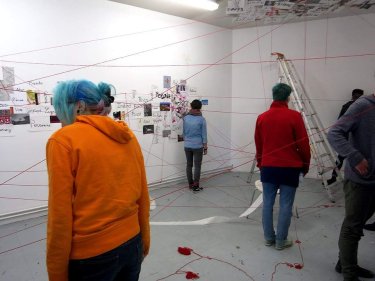
École supérieure d'art et design Le Havre-Rouen is an art academy and public cultural cooperation establishment with roots in the 18th and 19th centuries. Its history includes foundations in Rouen and Le Havre, periods of closure and reopening, and several relocations.
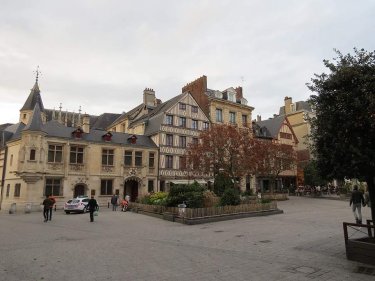
Place de la Pucelle-d'Orléans is a square in Rouen, located south of Place du Vieux-Marché. It includes underground parking and has a history linked to successive fountains, including one discovered during parking works in 1994.
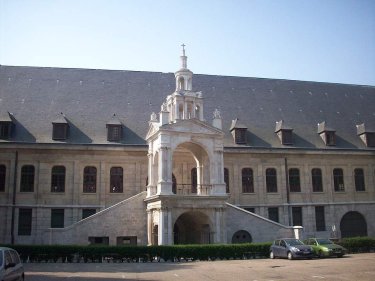
Halle aux Toiles is the south building of the former halls of Rouen and the only surviving building of the complex. Classified as a historic monument, it was reconstructed after the war and completed in 1961.
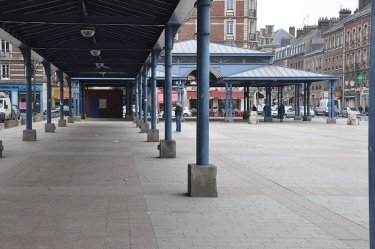
Place Saint-Marc is a square in Rouen, located in the Saint-Marc–Croix de Pierre–Saint-Nicaise district. Served by the TEOR, it includes underground parking and a Cy'clic station. Its name comes from the chapel Saint-Marc.
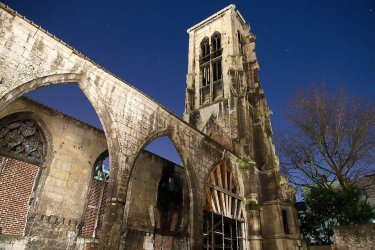
Église Saint-Pierre-du-Châtel is the remains of a former Catholic church in Rouen, Seine-Maritime, Normandy. Severely damaged in 1944, it is listed as a historic monument and preserves notable 16th-century elements.
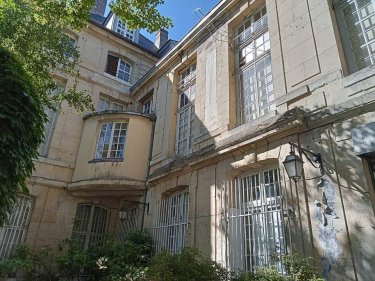
The Musée Flaubert in Rouen is the Flaubert and History of Medicine museum, located in Gustave Flaubert’s birthplace in the former Hôtel-Dieu. It holds the labels Musée de France and Maisons des Illustres.
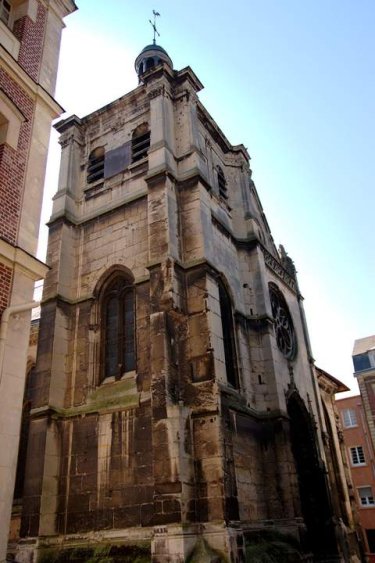
Saint-Patrice Church is a church building in Rouen, Seine-Maritime, at the corner of rue Saint-Patrice and rue Abbé-Cochet. Reconstructed in the 16th century on a 13th-century site, it combines flamboyant Gothic and Renaissance styles.
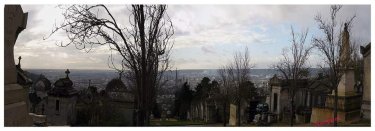
The Cimetière monumental de Rouen is the largest cemetery in Rouen, covering ten hectares in the city’s northeast. It contains the graves of about one hundred personalities linked to the city’s political, artistic, and other fields.
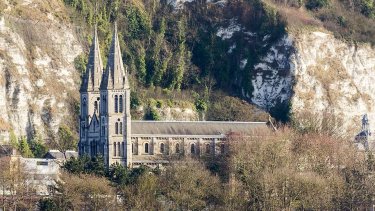
Église Saint-Paul de Rouen is a neo-Romanesque church at the foot of Sainte-Catherine hill near the Mathilde bridge. It is closed for worship and has been disused since 2017, while the remains of the older Romanesque church survive as a sacristy.
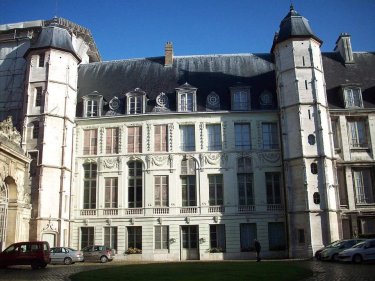
The Archiepiscopal Palace in Rouen is the official residence of the Metropolitan Archbishop of Rouen, Primate of Normandy. It adjoins the cathedral and is the only archiepiscopal palace in France to retain its original function.
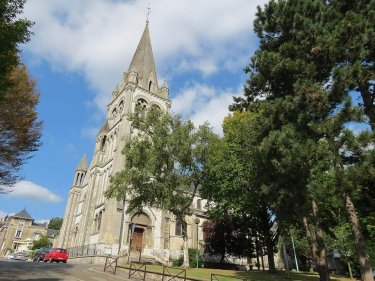
Saint-Gervais Church is a Catholic church in Rouen, part of the Archdiocese of Rouen. The current building was constructed between 1868 and 1874 in a neo-Romanesque style by architect Martin Pierre, and it is listed as a historical monument.
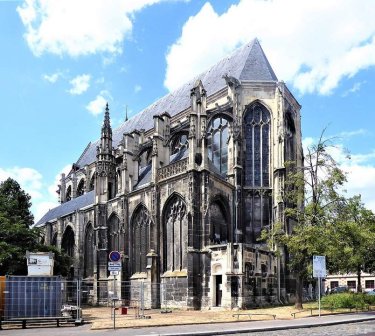
Saint-Éloi de Rouen is a Protestant temple in Rouen, located at place du Pasteur-Martin-Luther-King. Formerly a Catholic church until the French Revolution, it was assigned to the Reformed Church in 1803 and remains part of the United Protestant Church of France.
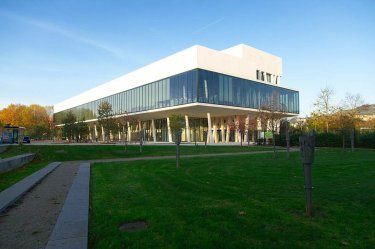
The Departmental Archives of Seine-Maritime were shaped by the 1796 law requiring archives to be gathered in each department’s capital. In Rouen, holdings long remained dispersed before reunification near the Préfecture and later expansion.
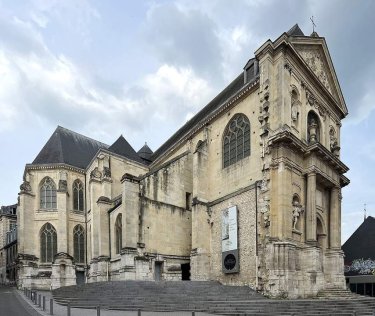
Chapelle Corneille is the former Church of St Louis in Rouen, Normandy, France. It served as a Roman Catholic church and as the chapel of the nearby Lycée Corneille before being turned into an auditorium in 2016.
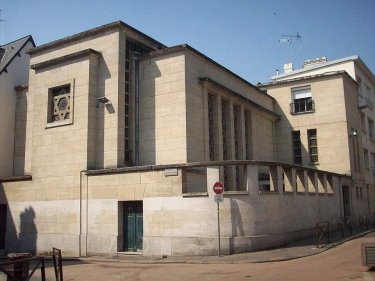
The Synagogue de Rouen is a consistorial synagogue of Sephardic rite at 55 rue des Bons-Enfants. A commemorative plaque at the entrance honors the deported dead of the Jewish community of Rouen.
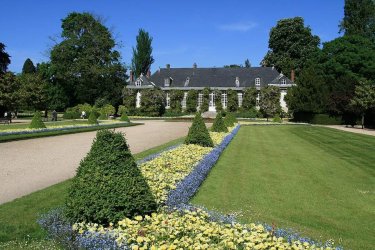
Jardin des Plantes de Rouen is a public botanical garden on the left bank of the Seine in Rouen. It covers eight and a half hectares, with eight hectares open to the public, and includes notable collections, greenhouses, and historic garden features.