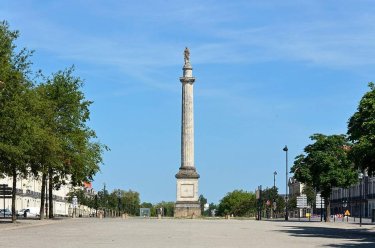
Colonne Louis-XVI
The Colonne Louis-XVI is a 28-metre-high monument in Nantes, France, located at the centre of Place Maréchal-Foch. It stands on a pedestal and is topped with a statue of the king of France, shown as a Roman emperor.
The Colonne Louis-XVI is a 28-metre-high monument in Nantes, France, located at the centre of Place Maréchal-Foch. It stands on a pedestal and is topped with a statue of the king of France, shown as a Roman emperor.
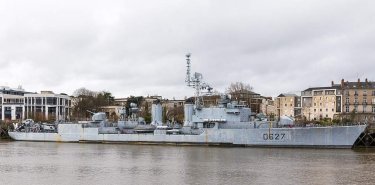
Maillé-Brézé is a French Navy squadron escort of the T47 Surcouf class, preserved as a museum ship. Moored at Nantes’s Quai de la Fosse since 1988, it has been listed as a historical monument since 1991.
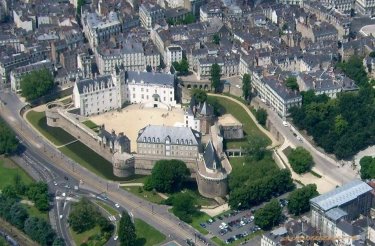
The Château des ducs de Bretagne is one of the emblematic buildings of Nantes. Founded in the 13th century, it became a ducal residence, then a royal fortress, and later a museum site housing the Nantes History Museum.
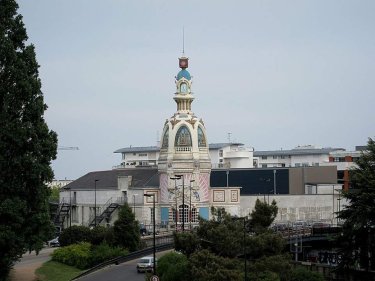
Le Lieu unique is a contemporary culture center and scène nationale in Nantes. It occupies the former LU biscuit factory on the banks of the Saint-Félix canal, in the Champ-de-Mars district.
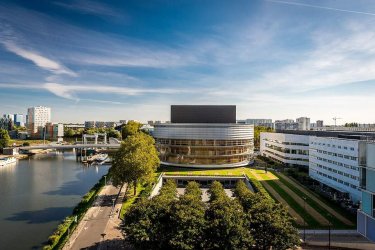
The Cité des Congrès de Nantes is the congress center of the city of Nantes, France. Formerly named the Cité internationale des congrès de Nantes, it hosts professional, cultural, and societal events in the city center.
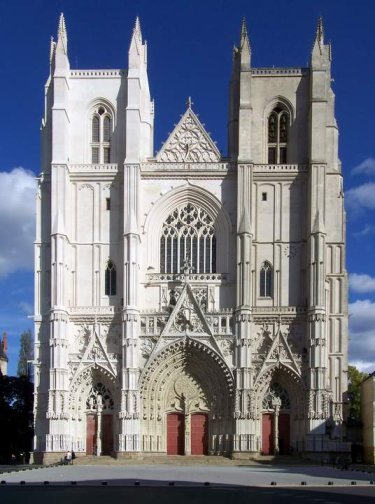
Nantes Cathedral is a Catholic cathedral at Place Saint-Pierre in Nantes, Loire-Atlantique. It is the cathedral of the Diocese of Nantes and the seat of the bishop of Nantes, and it has been classified as a historic monument since 1862.
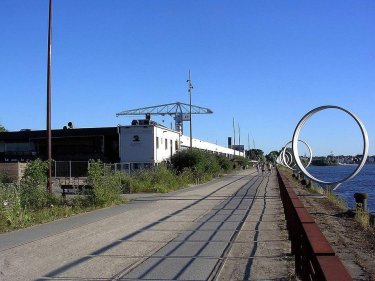
Les Anneaux is an installation artwork by Daniel Buren and Patrick Bouchain on the quai des Antilles in Nantes. Created for the Estuaire 2007 contemporary art festival, it consists of 18 galvanized steel rings along the Loire and the hangar à bananes.
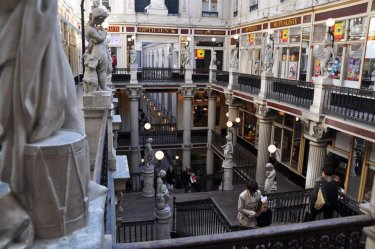
Passage Pommeraye is a covered shopping arcade in Nantes, France, built from the end of 1840. Set on a steep slope, it is arranged over three levels connected by a central staircase and has been a listed historical monument.
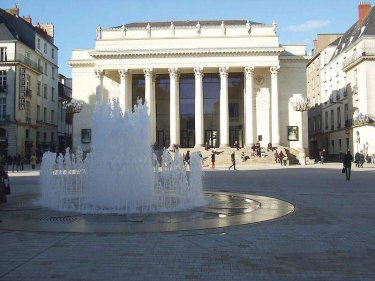
Place Graslin is a square in the city center of Nantes, France. Shaped as a rectangle joined to a semicircle, it is entirely pedestrian and largely paved. Its most notable monument is the Théâtre Graslin on the north side.
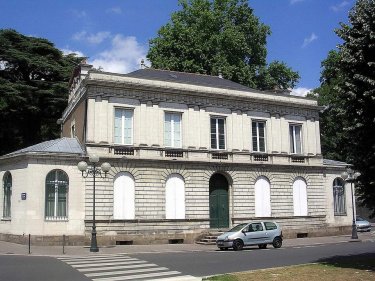
Hôtel Maës is a private mansion built in 1827 on place Général-Mellinet, between boulevard Allard and rue Richer, in Nantes’s Dervallières-Zola district. It was registered as a historical monument in 2011.
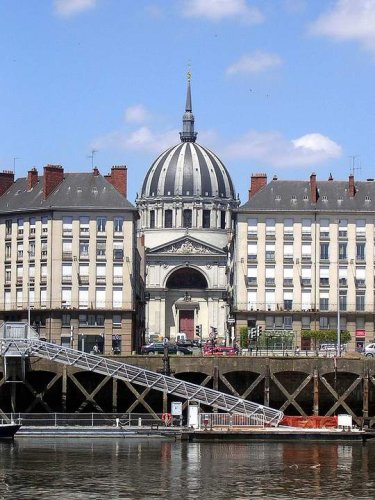
Notre-Dame de Bon-Port, officially Église Notre-Dame-de-Bon-Port and also called Église Saint-Louis, is a religious building in Nantes. Constructed in 1852, it was designed by Saint-Félix Seheult and Joseph-Fleury Chenantais and registered as a historic monument.
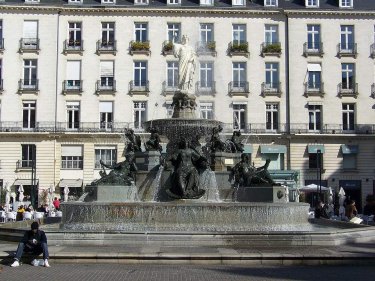
Place Royale is a square in the city center of Nantes, France, designed by Mathurin Crucy in 1786 and developed in 1790 after the destruction of medieval ramparts. It remains a commercial and civic gathering place.
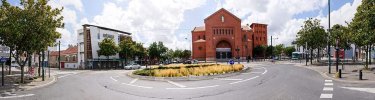
Église Sainte-Thérèse is a church building in Nantes, located on the southwest side of Place Alexandre-Vincent in the Breil-Barberie district. It belongs to a parish complex that also includes school and college buildings built in the same style.
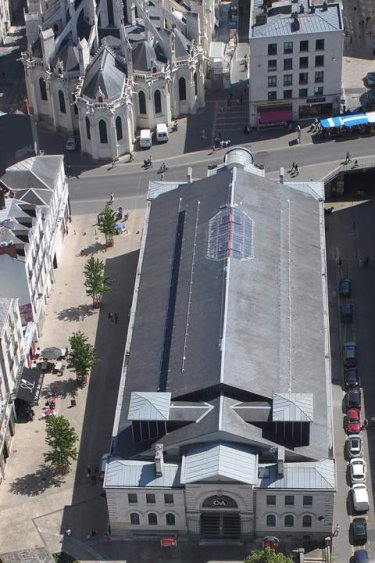
Marché de Feltre is an ancient covered market in Nantes city center, inaugurated in 1902. It replaced an older cloth hall designed by Mathurin Crucy, which had also housed the city’s first fine arts museum.
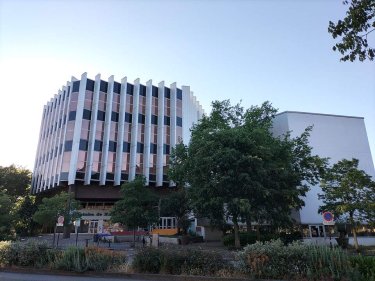
The Nantes Conservatory is a French artistic education institution in Nantes, Loire-Atlantique. Originating from an establishment founded in 1846, it is approved and controlled by the French State and offers music, dramatic art, and choreography.
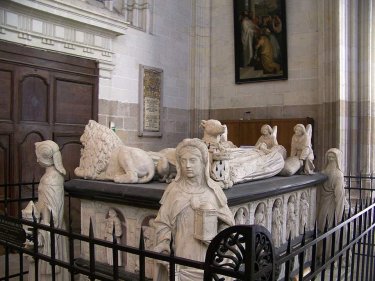
The Tomb of Francis II is a funerary monument in Nantes Cathedral for François II, Duke of Brittany, and his wife Marguerite de Foix. Made in the early 16th century, it is regarded as a major work of French Renaissance sculpture.
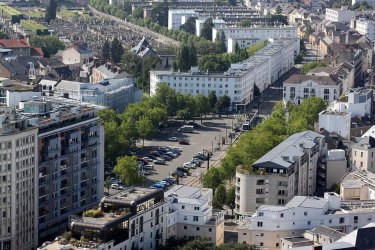
Place Viarme is a square named after Jean-Baptiste de Pontcarré de Viarmes, intendant of Brittany in the mid-18th century. It has a history shaped by market activity, a former guillotine site, and later tram service.
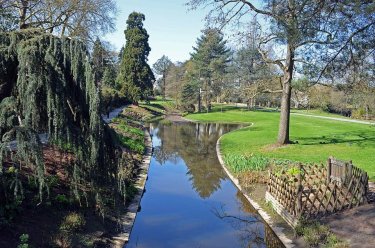
Parc de Procé is an urban park in western Nantes, in the Hauts-Pavés - Saint-Félix and Dervallières - Zola districts. Crossed by the Chézine, it is among the city’s main green spaces and includes sports facilities and several heritage elements.
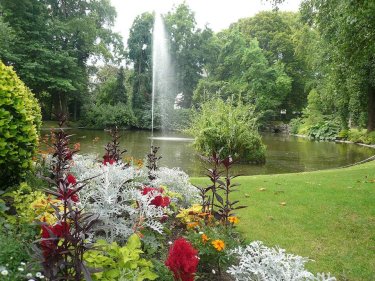
Jardin des plantes de Nantes is a public botanical garden in Nantes, covering 7.32 hectares. It is identified by the code NTM and has been listed as a remarkable garden since 2004.
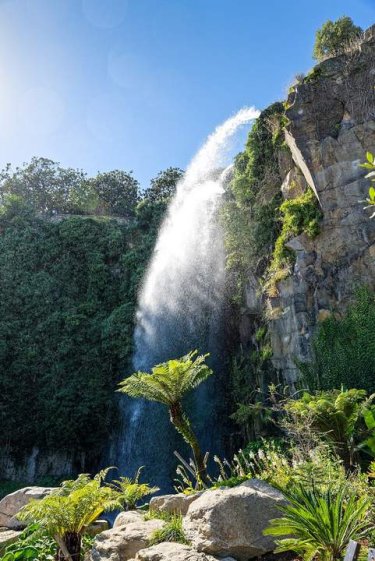
Jardin extraordinaire is a public park in Nantes, in the Bellevue - Chantenay - Sainte-Anne district on the right bank of the Loire. It occupies part of the former Carrière de Miséry and includes a 25-meter waterfall, quarry vegetation, and a metal staircase linking the garden to the cliff top.
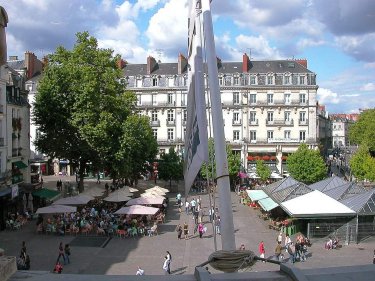
Place du Commerce is a pedestrian square in Nantes, France, located in the city center near the main public transport station. Also unofficially called place Sarajevo, it is a central location in the life of the city.
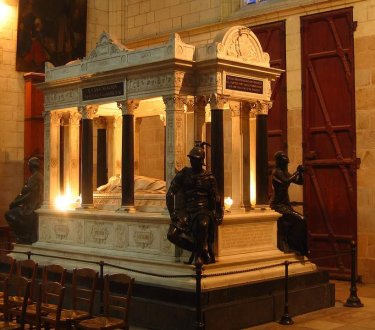
The Lamoricière cenotaph is a funerary monument installed in 1879 in Nantes’s Saint-Pierre-et-Saint-Paul Cathedral. Made of white marble and black bronze, it commemorates Juchault de La Moricière and his services to the papacy.
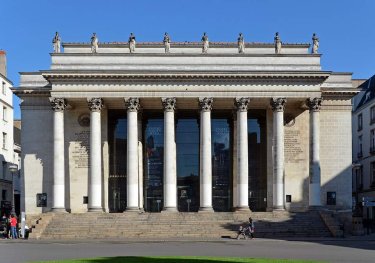
Théâtre Graslin is the opera house of Nantes in Loire-Atlantique. Built at the end of the 18th century, it is operated by Angers-Nantes Opéra and has been listed as a historical monument since 1975.
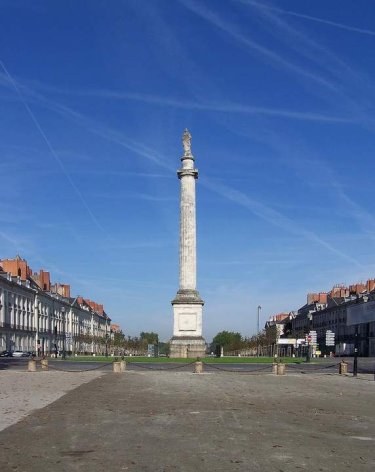
Place Maréchal-Foch is a square in downtown Nantes, France, between Cours Saint-Pierre and Cours Saint-André. It links several surrounding streets and bears the name of Ferdinand Foch, Marshal of France. The site is known for historic buildings and monuments.
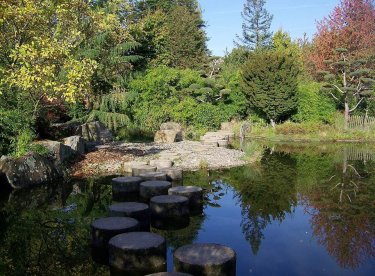
Île de Versailles is a river island on the Erdre in Nantes, in the Hauts-Pavés - Saint-Félix district. It lies closer to the right bank than the left and is linked by a stone bridge and two metal footbridges.
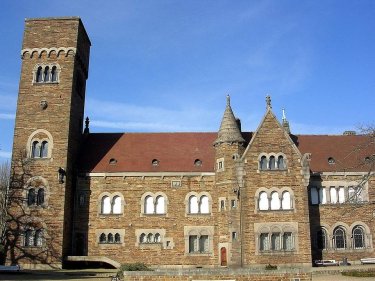
Musée Dobrée is a history museum in central Nantes, in the Graslin district near the Muséum d'histoire naturelle and cours Cambronne. It brings together collections linked to Thomas Dobrée and other regional holdings.
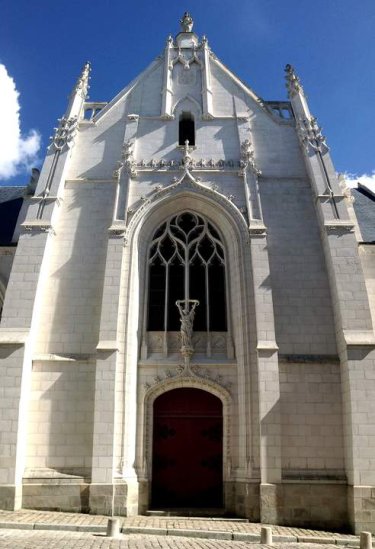
Chapelle Notre-Dame-de-l'Immaculée-Conception is a religious building on rue Malherbe in the Richebourg quarter of Nantes, France. Begun in 1470, it was renamed several times and listed in the supplementary inventory of historical monuments in 1991.
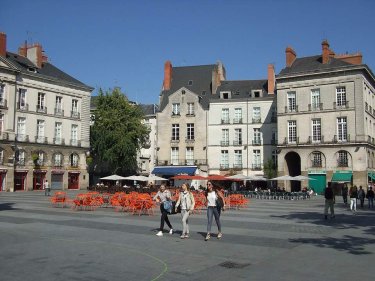
Place du Bouffay is a paved square in Nantes’ Bouffay district, the oldest area in the city center. It is part of the pedestrian zone and serves several streets. Formerly the main square of the medieval city, it was once the courtyard of the château du Bouffay.
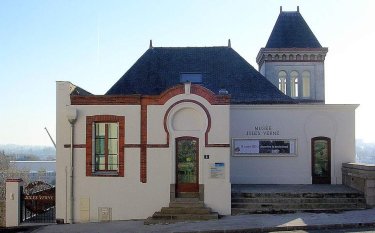
The Jules Verne Museum is a museum in Nantes established in 1978 in a large bourgeois house built from 1872 to 1878 by architect Ernest-Marie Buron. It was opened by artist-painter Jean Bruneau and Luce Courville.
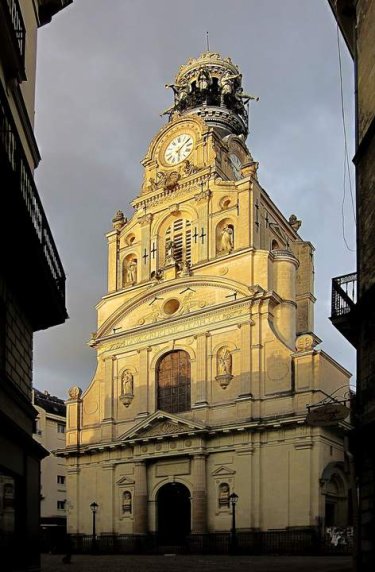
Église Sainte-Croix is a church in Nantes and the parish church of the Bouffay district since 1138. Its architecture combines Renaissance forms, a Gothic choir, and later additions from the 16th to 19th centuries.
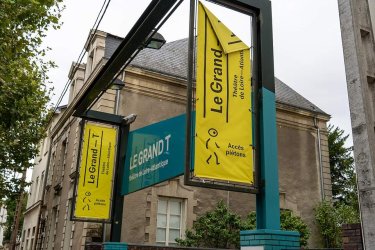
Le Grand T is a performance hall in Nantes, France, mainly intended for theatre. Formerly called Espace 44, it is managed by EPCC Le Grand T, théâtre de Loire-Atlantique.
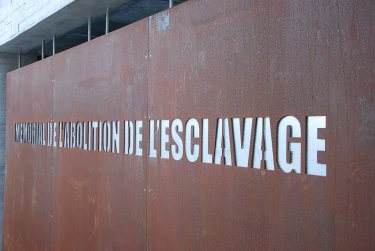
The Memorial to the Abolition of Slavery is a French memorial in Nantes, a major former slave-trade port. It is dedicated to the slave trade in Nantes and worldwide, as well as to slavery and its abolition.
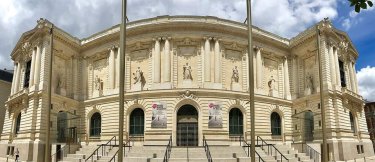
The Nantes Museum of Arts is an art museum in Nantes, formerly known as the musée des Beaux-Arts de Nantes. Its collections offer an overview of major French and European artistic movements from the 15th century to the present.
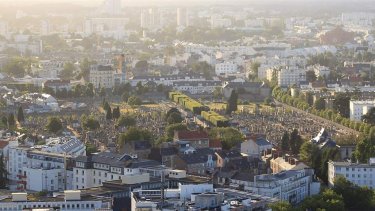
Miséricorde Cemetery is a cemetery in the Hauts-Pavés - Saint-Félix district of Nantes, France. Opened in 1793, it is nicknamed the “Père-Lachaise nantais” and contains neo-Gothic mausoleums along a tree-lined alley.
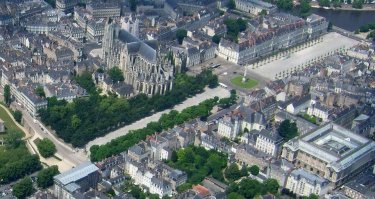
Cours Saint-Pierre and Cours Saint-André are public promenades in central Nantes. Established among the city’s first public promenades, they were laid out on former vacant land outside the city walls and form a tree-planted perspective between Quai Ceineray and Place Duchesse-Anne.
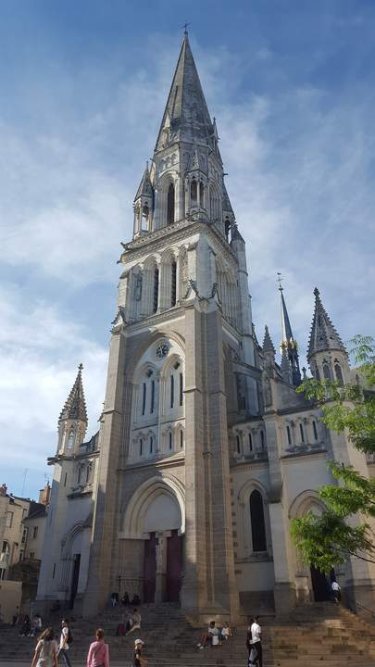
Basilique Saint-Nicolas is a Catholic neo-Gothic basilica in downtown Nantes. It is one of the city’s two basilicas and belongs to the urban and parish history of Saint-Nicolas, with parts of the old city wall still visible nearby.
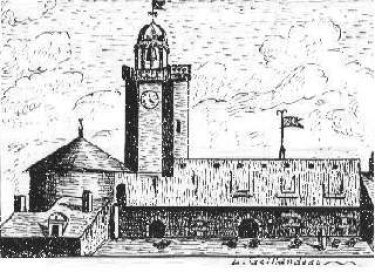
Château du Bouffay was a medieval comital palace in Nantes, built in the 10th century by Conan the Tort and Alain Barbetorte. It later served as a prison, municipal administration seat, and courthouse before its demolition in 1843.
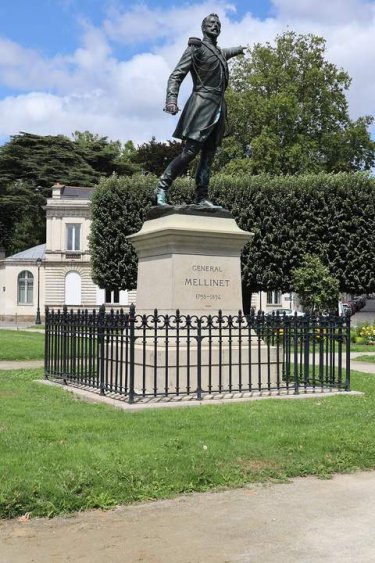
Place Général-Mellinet is an octagonal square in Nantes’s Dervallières-Zola district, at the center of the Mellinet micro-district. It is surrounded by historic mansions with symmetrical Restoration-style façades and a central cast-iron statue of General Mellinet.
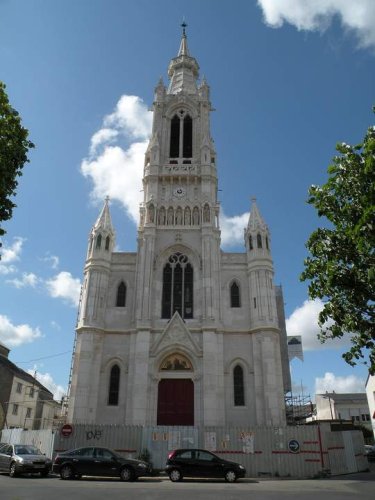
Saint-Anne's Church is a church building in the Hermitage district of Nantes. Built between 1845 and 1847, it was part of a wider redevelopment linked to urban growth and industrialization, and it was dedicated to Sainte Anne, who was especially venerated by Breton communities.

Notre-Dame-des-Lumières is a Catholic church in Nantes, Loire-Atlantique. It serves as the conventual church of a Carmelite convent and is also attached to the parish of Sainte-Marie-Madeleine. Built in a modern style, it combines traditional inspiration with a pentagonal plan.
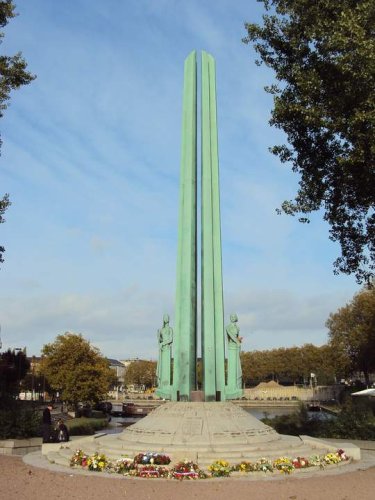
The Monument aux 50 Otages is a sculpture in Nantes, located on the esplanade des Cinq-communes-Compagnon-de-la-Libération beside the Erdre river. It was created by architect Marcel Fradin and sculptor Jean Mazuet.
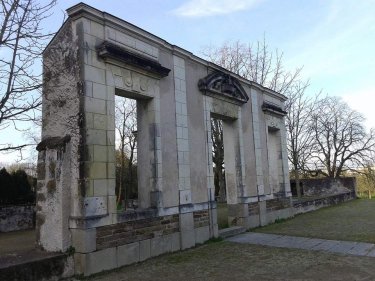
The Château des Dervallières was a noble residence in Nantes, in the Dervallières-Zola district. It is now almost entirely disappeared. Its history is linked to the seigneurie des Dervallières and a long succession of owners.
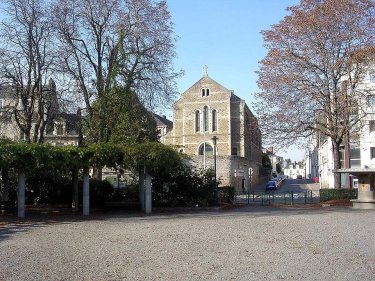
Place Canclaux is a square in the Dervallières-Zola neighborhood of Nantes. It is formed by several intersecting streets and includes a fenced central area with about twenty chestnut trees, as well as two aubettes.
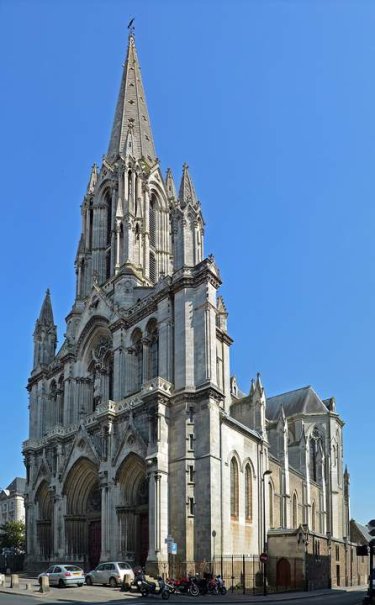
Saint-Clément is a Catholic church in Nantes, France, built in the 19th century. Designed in a neo-Gothic style, it is used by the Priestly Fraternity of Saint Peter, who celebrate Mass according to the Tridentine rite.
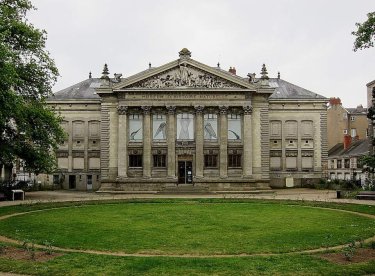
The Natural History Museum of Nantes began as a cabinet of natural history created in 1799 by François-René Dubuisson. Its collections were later installed in the former Saint-Côme surgery school, where the museum opened with geology, mineralogy, and botany collections.
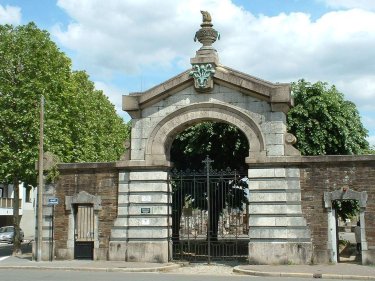
La Bouteillerie Cemetery is a cemetery in Nantes, France, in use since 1774. Located about 700 metres east of the cathedral, it is rectangular in plan and bordered by private properties and the Jardin des plantes.
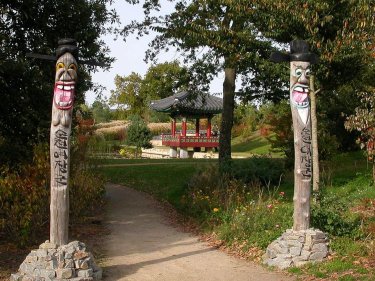
Parc du Grand-Blottereau is an urban park in Nantes linked to the former Grand-Blottereau lordship. Its history includes episcopal ownership, later noble families, and the construction of a castle in the 18th century.
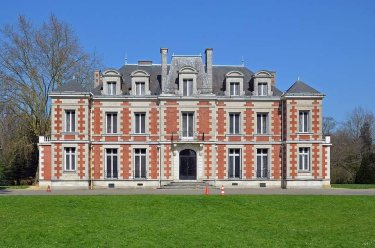
Château de la Gaudinière is a château in the Breil-Barberie district of Nantes, France. Rebuilt between 1864 and 1873 for banker J. Brousset, it stands within a historic park once shaped by gardens, orchards, and wooded areas.