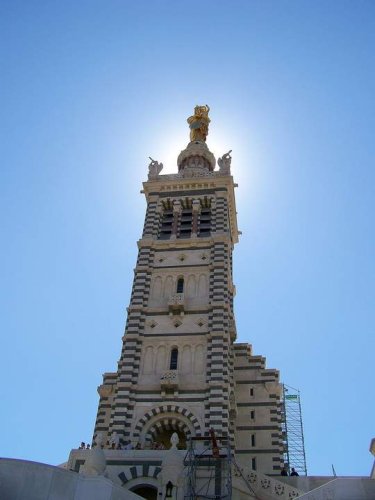
Notre-Dame de la Garde
Notre-Dame de la Garde is a Catholic basilica in Marseille, France, and the city’s best-known symbol. Built on a limestone outcropping above the Old Port, it is also the city’s most visited site.
Notre-Dame de la Garde is a Catholic basilica in Marseille, France, and the city’s best-known symbol. Built on a limestone outcropping above the Old Port, it is also the city’s most visited site.
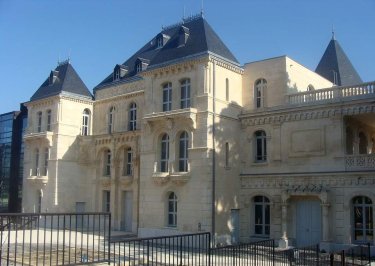
Château de la Buzine is a building in Marseille known for its link to Marcel Pagnol, who mentioned it in Souvenirs d’enfance and once owned it. Since 2010, it has hosted the Maison des cinématographies de la Méditerranée.
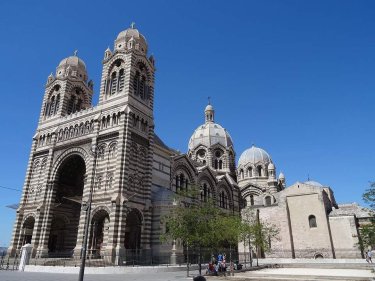
Marseille Cathedral, known as La Major, is a Romanesque-Byzantine building in Marseille, Bouches-du-Rhône. Built between 1852 and 1893, it stands on an esplanade between the Vieux-Port and the new commercial port.
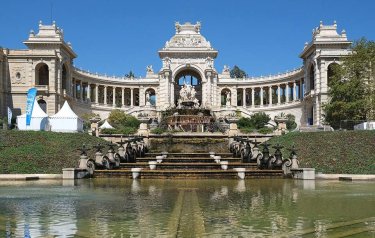
Palais Longchamp is a neo-classical Second Empire palais and château d'eau in the Cinq-Avenues quarter of Marseille. Inaugurated in 1869, it is listed and classified as a monument historique.
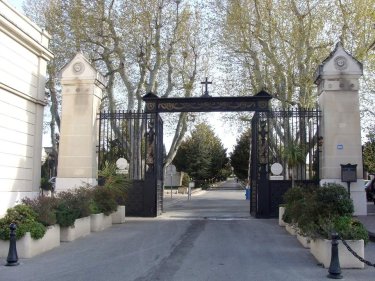
Saint Pierre Cemetery is the largest cemetery in Marseille, covering 63 hectares in the La Timone and Saint-Pierre neighborhoods. It is the third largest necropolis in France, after Pantin and Thiais.
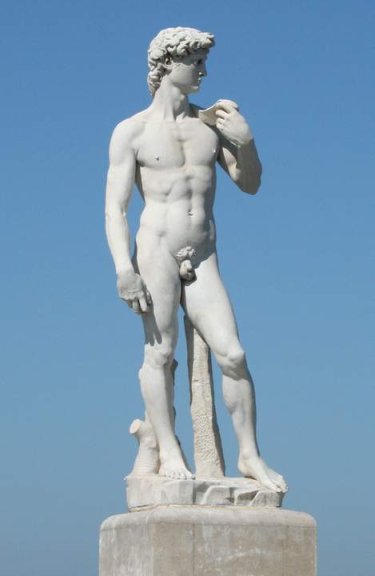
The Statue of David in Marseille is a Carrara marble copy of Michelangelo's David. It was offered by marble sculptor Jules Cantini in 1903 and placed in 1949 near the beaches of Prado.
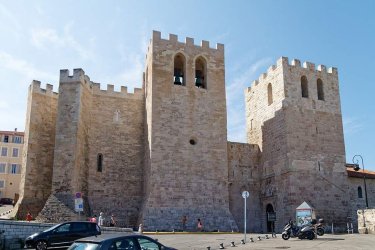
The Abbey of St. Victor is a French abbey founded by Saint Jean-Cassien near the tombs of the martyrs of Marseille, including Saint Victor. It has been an important Catholic place in southern France for more than 1,700 years.
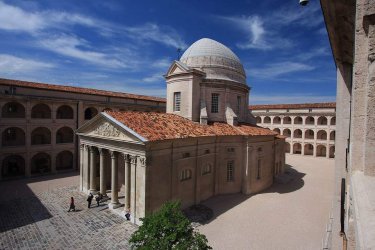
La Vieille Charité is a 17th-century building in Marseille’s Panier district, designed by Pierre Puget to house the city’s indigent and poor. Its architecture includes a central chapel and a rectangular courtyard surrounded by galleries.
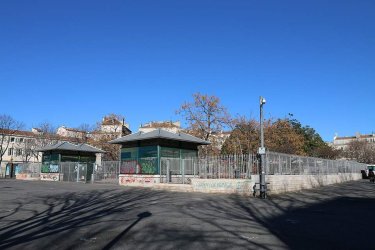
Place Jean-Jaurès, also known as La Plaine, is one of the largest squares in Marseille. It lies in the city center at the boundary of the 1st, 5th, and 6th arrondissements, in the Thiers, Camas, and Notre-Dame-du-Mont neighborhoods.
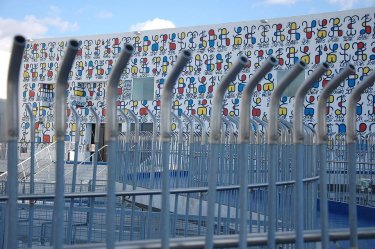
La Friche la Belle de Mai is a cultural center in Marseille’s Belle de Mai district, created in a former tobacco factory opened in 1992. It brings together artistic workplaces, performance rooms, and exhibition spaces across many disciplines.
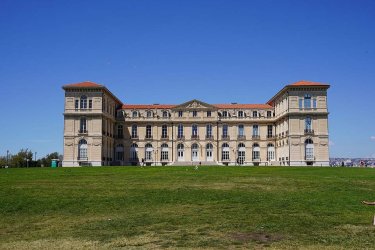
The Palais du Pharo is a 19th-century palace in Marseille, built by order of Napoléon III for Empress Eugénie. It overlooks the port and the Jardin du Pharo and now belongs to the city.
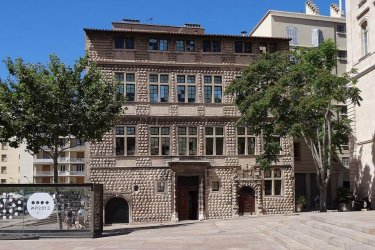
Maison Diamantée is a historic private mansion in Marseille, located behind the city hall in the quartier de l’hôtel de ville. Its façade is covered with stones cut in points, known as bossage prismatique, and it is classified as a monument historique.
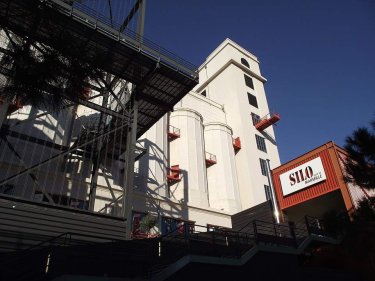
Le Silo, also known as CEPAC Silo, is a performance hall in Marseille’s Arenc district. Opened in 2011, it occupies a former industrial grain silo that was converted as part of the Euroméditerranée project.
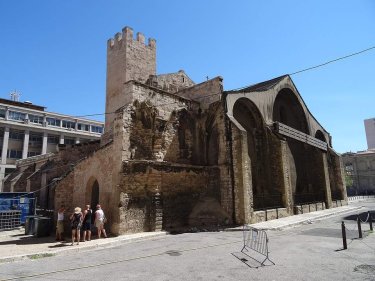
Vieille Major is a former Catholic cathedral in Marseille. Its history is tied to the earliest Christian community in the city, with a first cathedral likely built in the early 5th century. The present building was rebuilt in the 11th and 12th centuries.
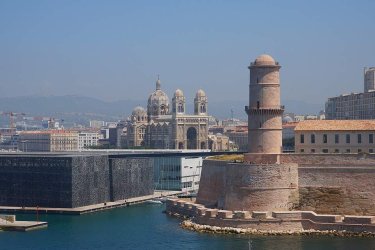
The Museum of European and Mediterranean Civilisations is a national museum in Marseille dedicated to the cultural anthropology of European and Mediterranean societies. Its permanent and temporary exhibitions cover anthropology, archaeology, history, art history, and contemporary art.
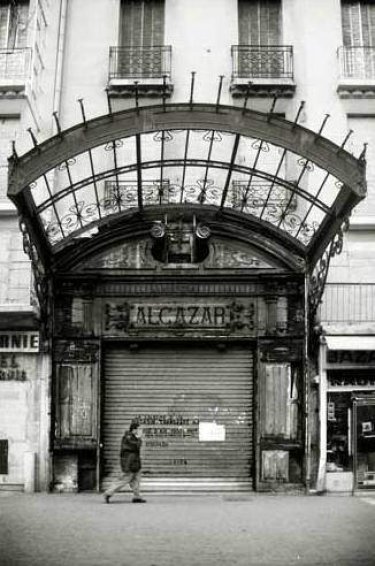
The Alcazar in Marseille is a former performance hall on Cours Belsunce, near La Canebière. Abandoned from the 1960s, the site has housed a regional municipal library since 2004.
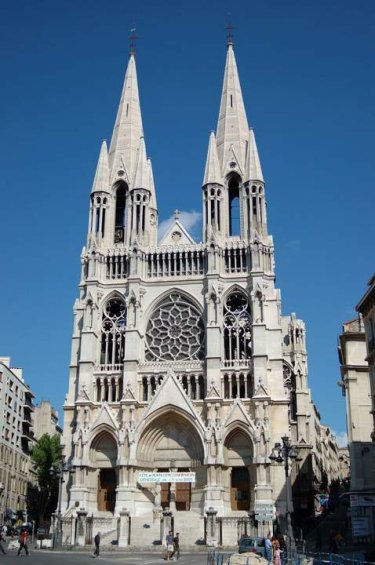
Église Saint-Vincent-de-Paul is a church building in Marseille’s Thiers neighborhood, at the top of the Canebière. Locals call it église des Réformés, a name linked to the site’s earlier chapel history.
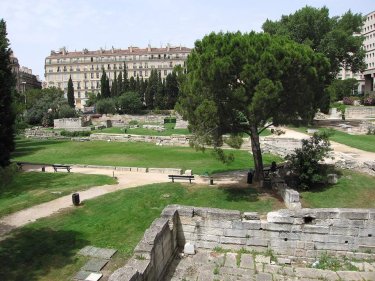
Jardin des Vestiges is an archaeological garden behind Centre Bourse in Marseille. It contains remains of the ancient Port of Marseille and forms part of the Museum of History of Marseille. Classified as a historic monument site, it was uncovered in 1967 and opened to the public in 1983.
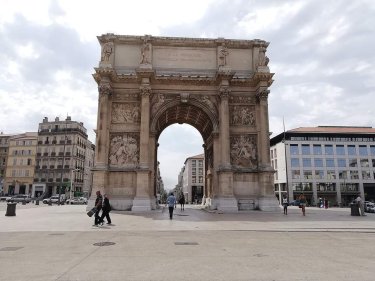
Porte d'Aix is a triumphal arch in Marseille, standing at the center of the square at the former gate in the old city walls opening toward Aix-en-Provence. It has been classified as a historic monument.
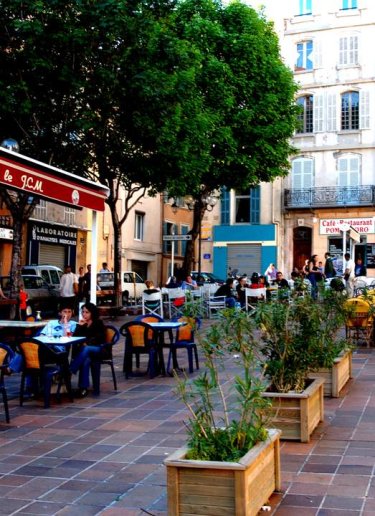
Place de Lenche is a square in Marseille whose name comes from the Lenche family of Corsican origin. The family built a mansion on the square in the 17th century, and the site is also linked to the former Saint-Sauveur monastery.
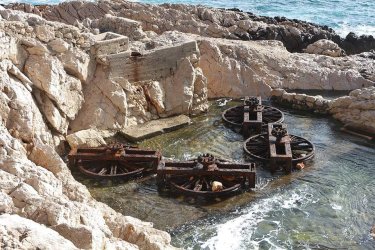
Téléscaphe was a cable car system inaugurated in June 1967 in a Mediterranean bay between Les Goudes and Callelongue in Marseille, France. Its cabins could submerge underwater, and participants received a certificate after the trip.
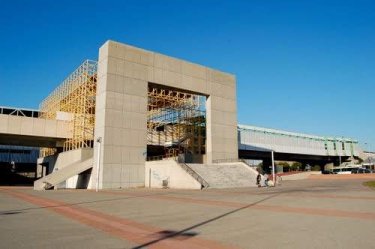
Palais des sports de Marseille is an event venue on rue Raymond-Teisseire in Marseille, near the Stade Vélodrome. Inaugurated on an unspecified date, it hosts sports competitions and other events.
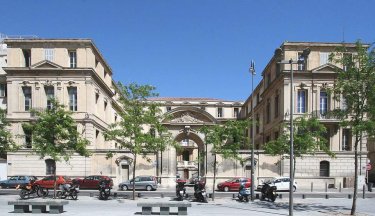
The Hôtel de police de Marseille is housed in the Palais épiscopal, a building on rue du Commissaire-Divisionnaire-Antoine-Becker. Its façades, roofs, and street portal are registered as historical monuments, and the building is also called l’évêché in metonymy.
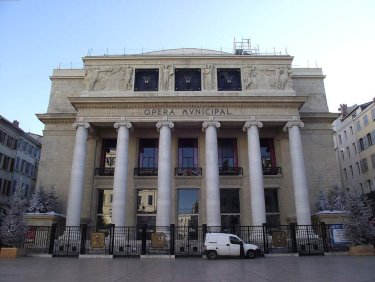
Opéra de Marseille is a theater in the Lopéra municipal de Marseille neighborhood near the Vieux-Port. It stands on the remains of the Grand Théâtre, which was destroyed by fire in 1919.
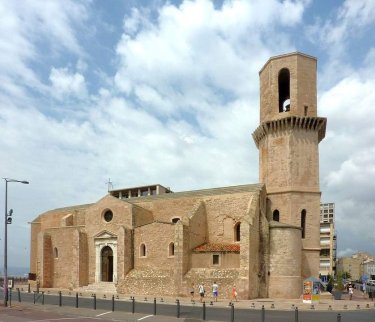
Eglise Saint-Laurent is a Romanesque Provençal church on Saint-Laurent hill, at 16 esplanade de la Tourette in Marseille, near Fort Saint-Jean. It serves as the parish church for fishermen and seafarers of the city.
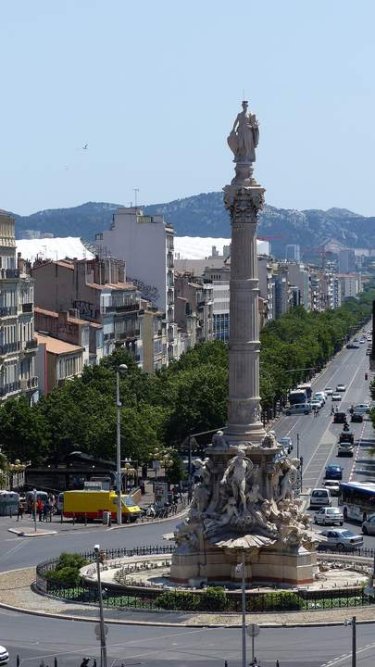
Castellane Square is a plaza in Marseille’s 6th district, near the city center. It is named after Henri-César de Castellane-Majastre and has been a site of notable monument changes, including an obelisk and the Jules Cantini fountain.
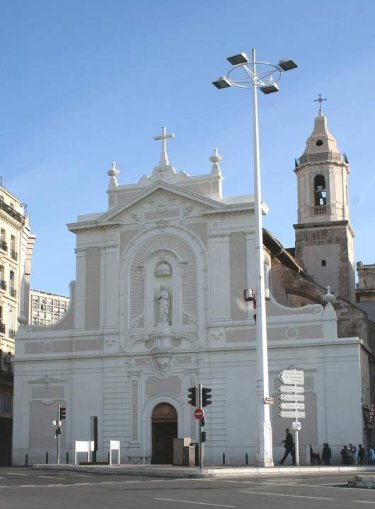
Église Saint-Ferréol les Augustins is a church building in the 7th arrondissement of Marseille, at quai des Belges near rue du Beausset, rue de la reine Élisabeth, and rue des Augustins. Since 1965, it has been entrusted to the Compagnie de Jésus by the archbishop of Marseille.
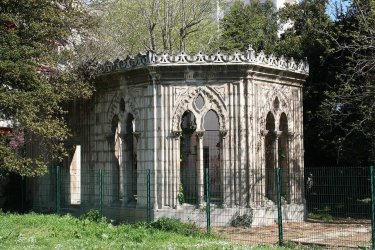
The Mosquée de l’arsenal des galères is a monument in Parc Valbelle in Marseille, France. It is associated with the former mosque used by Ottoman slaves and convicts in the early 18th century, and it was later transformed into a kiosk and private chapel.
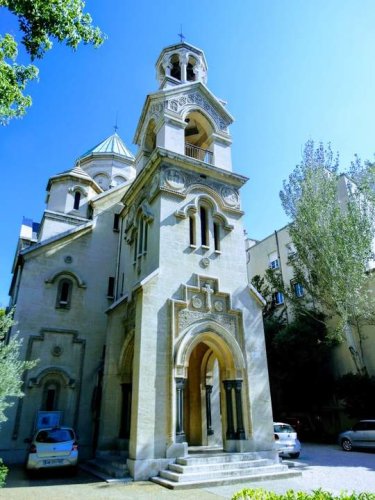
Cathédrale des Saints-Traducteurs is an Armenian Apostolic church on avenue du Prado in Marseille’s VIII arrondissement. Also known as Sahak I° and Mesrop Mashtots, it was founded with a first stone laid in 1928 and consecrated in 1931.
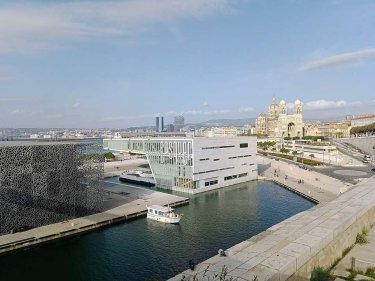
Villa Méditerranée is a public building in the 2nd arrondissement of Marseille, on the esplanade du J4 in the Joliette district. Designed by Stefano Boeri, it was inaugurated in 2013, closed in 2016, and reopened in 2022.
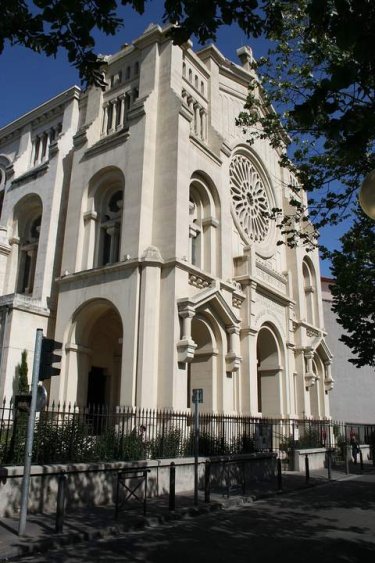
The Basilique du Sacré-Cœur de Marseille is a Roman Catholic minor basilica dedicated to the Sacred Heart of Jesus Christ. Located on Avenue du Prado in the Rouet district, it was built in the first half of the 20th century in a Romano-Byzantine style.
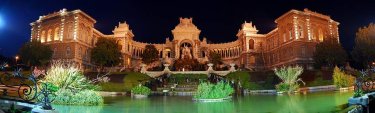
The Musée des beaux-arts de Marseille is the city’s oldest museum. Located in Palais Longchamp, it holds European paintings, drawings, and sculptures from the 16th to the 19th century, with a focus on artists from Provence-Alpes-Côte d’Azur.
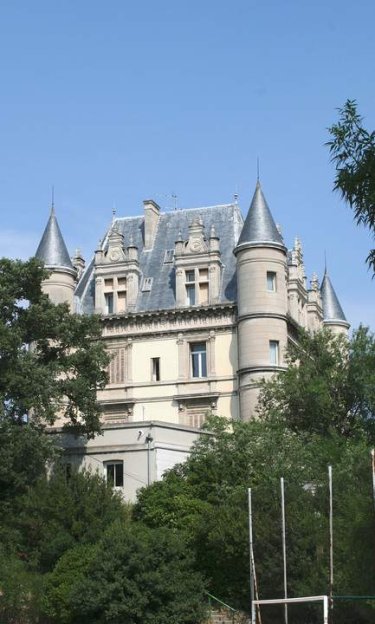
Château Régis is a 19th-century château designed by Marseille architects Sixte Rey and Vaud for merchant and shipowner Louis Régis. Built between 1860 and 1865 as a replica of Chenonceau, it is part of a castle, keep, and park listed as a Monument historique.
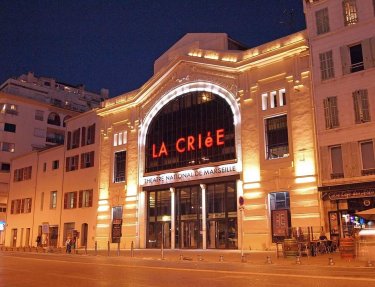
Théâtre National de la Criée is a theatre in Marseille, France, on the Vieux-Port. Founded in 1981 by Marcel Maréchal, it has the status of Centre dramatique national and occupies a former fish market site with a historic façade.
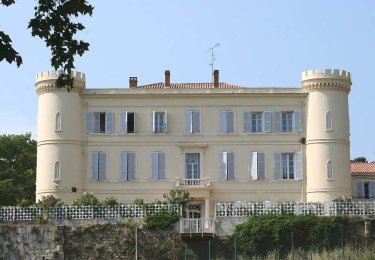
Château de la Reynarde is a former medieval fortress converted into a castle in the 18th century. It belonged to the French noble family de Félix and was later bought by Louis Régis in 1868.
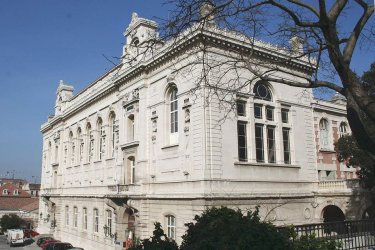
Palais des arts is a monument in Marseille, located at the end of Place Auguste-et-François-Carli in the Thiers district. Built in 1864, it originally housed the municipal library and the École des beaux-arts de Marseille.
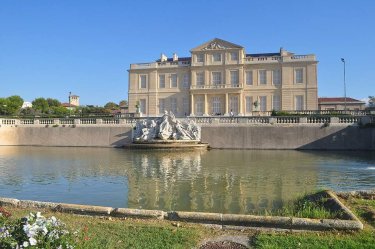
Château Borély is a neo-classical château-bastide in the Bonneveine district of Marseille’s 8th arrondissement, in Bouches-du-Rhône, Provence-Alpes-Côte d'Azur. It is associated with Parc Borély and the Marseille Borély golf course and has been a historic monument since 1936.
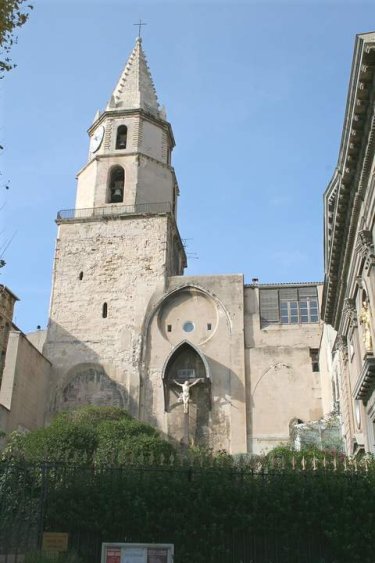
Notre-Dame-des-Accoules is an ancient medieval collegiate church in Marseille’s Accoules district. Most of the building was destroyed during the Revolution, leaving the bell tower, the back wall, and later additions such as a crypt and calvary at Place Daviel.
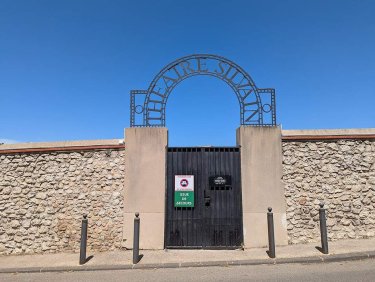
Théâtre Silvain is a sylvan theater in the Vallon de la Fausse-Monnaie, in Marseille’s Endoume district. Inaugurated in 1923, it was designed for 3,000 to 6,000 spectators and later underwent renovation and renewed regular programming.
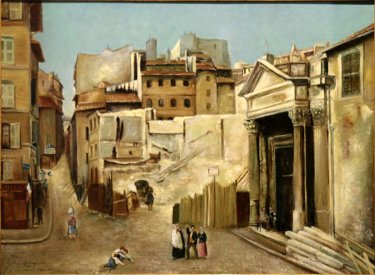
Église Saint-Martin was a former Gothic collegiate church in Marseille. It was demolished in 1887 for the construction of rue Colbert. It should not be confused with the Saint-Martin church of Arenc, built in 1913.
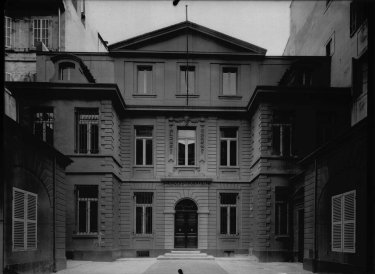
Musée Cantini is an art museum at 19 de la rue Grignan in Marseille, housed in the former hôtel de Montgrand. Its collections focus on modern and contemporary art and complement those of the Musée d’art contemporain de Marseille.
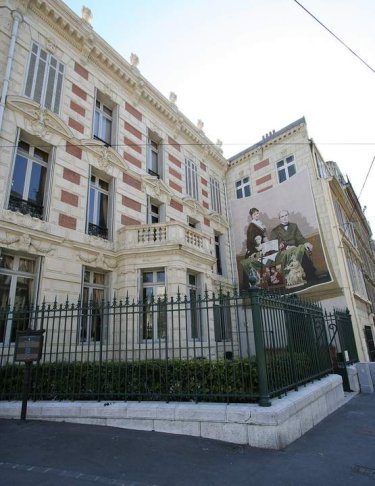
Musée Grobet-Labadié is an art museum in Marseille, housed in an hôtel particulier built in 1873 and facing the Palais Longchamp. It preserves a family collection and the building donated to the city.
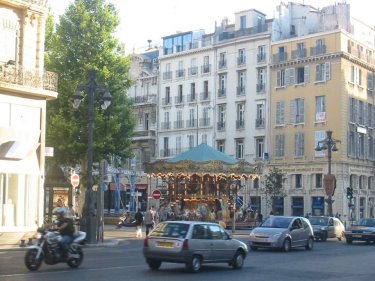
Place du Général-de-Gaulle is a square in Marseille at the intersection of la Canebière and rue Paradis, facing the Palais de la Bourse. Its history includes earlier urban layouts, archaeological remains, and later redevelopment.
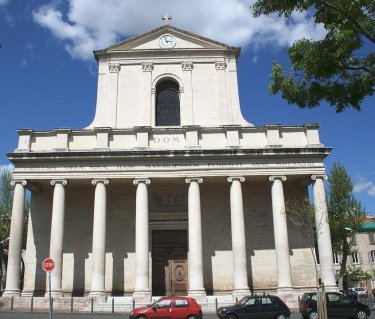
Église des Chartreux, officially Église Sainte-Marie-Madeleine des Chartreux, is a church building at place Edmond-Audran in Marseille. It served as a parish church and as a chapel for a Carthusian monastery. The surrounding neighborhood took its name from the monastery.
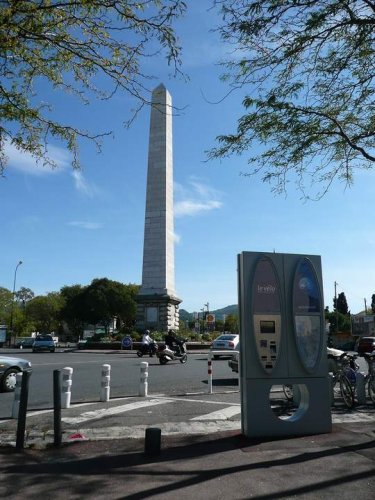
The Mazargues Obelisk is a commemorative monument in the Mazargues district of Marseille, France. Originally erected in 1811 on Place Castellane, it was moved to its present roundabout in 1911. The monument is carved from local Cassis stone.
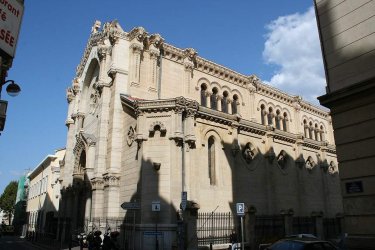
Couvent Saint-Lazare is a Dominican convent in Marseille, built by Pierre Bossan between 1868 and 1880 for the church Notre-Dame-du-Rosaire. It stands at 35 rue Edmond-Rostand, at the corner of rue Sainte-Victoire.
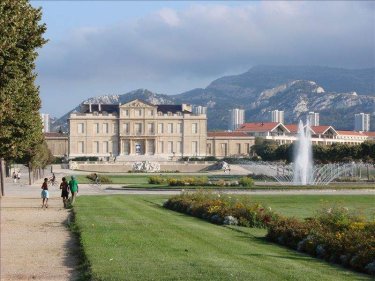
The Musée des Arts décoratifs, de la Faïence et de la Mode, also called musée Borély, is open to the public in Château Borély on Avenue Clot-Bey in Marseille. Its rooms present decorative interiors, faience, and historic artworks.
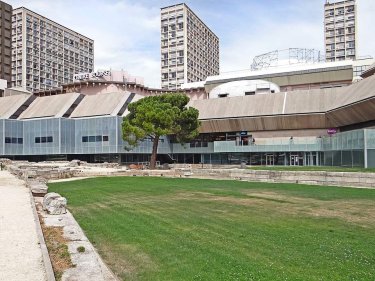
Musée d'Histoire de Marseille is a municipal museum at 2, rue Henri Barbusse, in Centre Bourse and Port antique. Opened in 1983, it presents collections from prehistory to the present day.