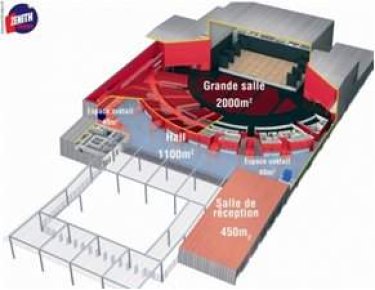
Zénith de Dijon
Zénith de Dijon is a concert hall located in the former Parc de la Toison d'Or, near the Toison d'Or shopping center north of Dijon. Opened as the eleventh venue of its name in France, it is one of the largest Zéniths in the country.
Zénith de Dijon is a concert hall located in the former Parc de la Toison d'Or, near the Toison d'Or shopping center north of Dijon. Opened as the eleventh venue of its name in France, it is one of the largest Zéniths in the country.
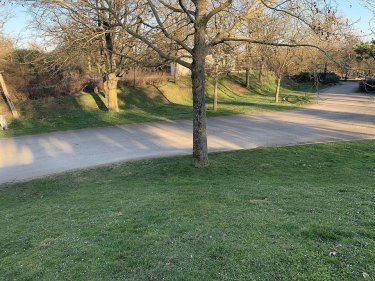
Parc de la Toison d'or was an amusement park in Dijon, France, adjacent to the La Toison d'or shopping center. It closed in 1993 and became an urban park with playgrounds, rose gardens, and animal enclosures.
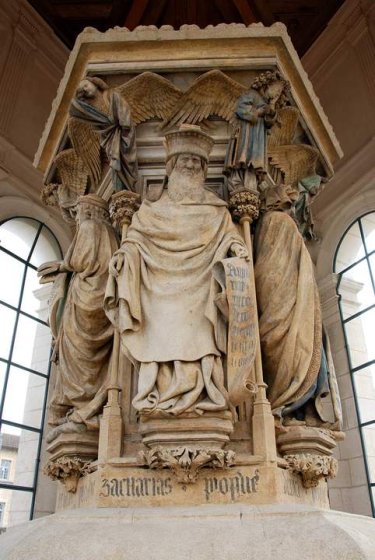
The Well of Moses is the surviving lower part of a calvary once set in a well at the centre of the grand cloister of Champmol. Created for Philippe II de Bourgogne, it is now in the park of the specialized hospital center of Dijon.
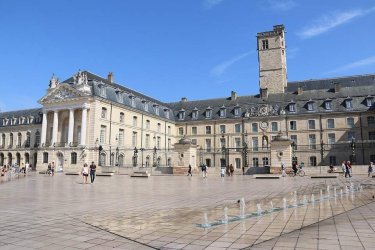
The Palace of the Dukes of Burgundy is a historic palace in Dijon, France. Begun in 1364 for Philippe le Hardi, it combines Gothic, Renaissance, and Classical styles and now houses the Musée des Beaux-Arts de Dijon and Dijon City Hall.
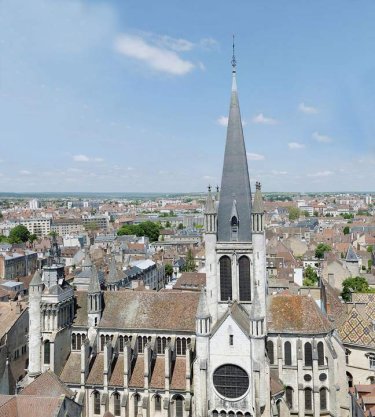
The Church of Notre-Dame of Dijon is a medieval Gothic church in the heart of Dijon’s protected historic sector. Built from 1229 to around 1250, it stands near the Palace of the Dukes and States of Burgundy and is decorated with the city’s Jacquemart and owl.
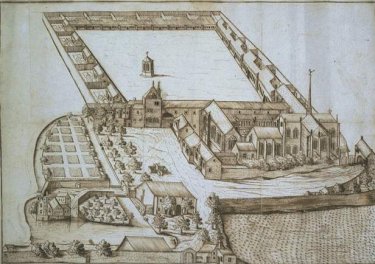
Champmol was a Carthusian monastery on the outskirts of Dijon, founded in 1383 by Duke Philip the Bold as a dynastic burial place for the Valois Dukes of Burgundy. It was richly decorated with artworks.
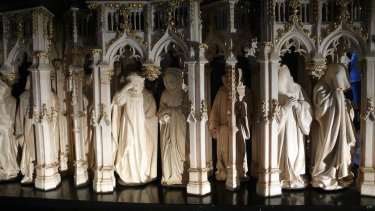
The Mourners of Dijon are 82 alabaster statuettes in ronde-bosse from 15th-century Burgundy. They belonged to the tombs of Philippe le Hardi and of Jean sans Peur and Marguerite de Bavière.
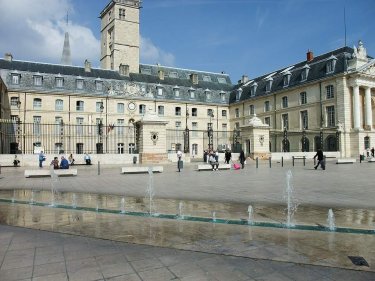
Square of Liberation, now Place de la Libération, is a historic square in Dijon. It was originally designed as Place Royale between 1686 and 1689 and later renamed several times. In 2005–2006, it was pedestrianized and redesigned with Comblanchien stone and three fountains.
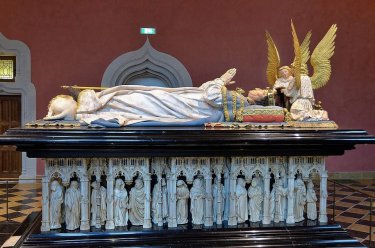
The Tomb of Philip the Bold is a funerary monument commissioned in 1378 for the Duke of Burgundy, who chose the Chartreuse de Champmol near Dijon as his burial site. It is known for its recumbent figure and mourning pleurants.
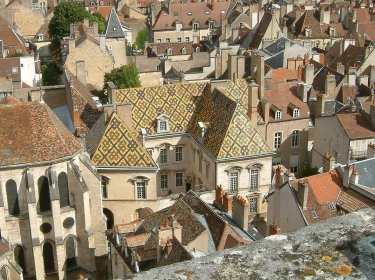
Hôtel de Vogüé is a private mansion in Dijon, built from houses acquired in the late 16th and early 17th centuries. It is notable for its courtyard plan, glazed Burgundy-tile roof, and decorated façades.
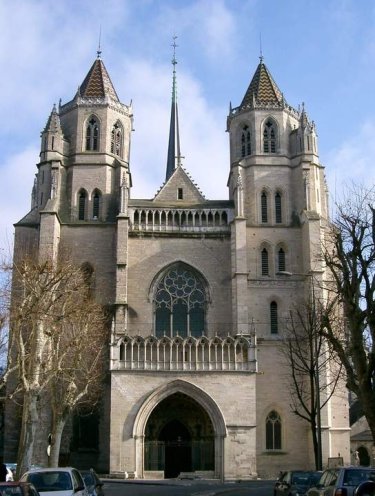
Dijon Cathedral is the Roman Catholic cathedral of Dijon, west of the city center. It is a Burgundian Gothic church that became a cathedral in 1792 and originated as the abbey church of Saint-Bénigne monastery.
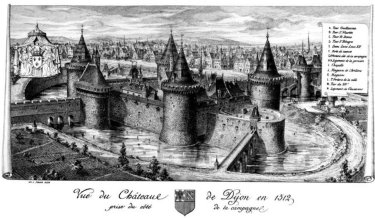
The Château Royal de Dijon was an ancient fortress castle located at the current Place Grangier in the city center of Dijon. It had no visible remains and formed part of the city’s fortified history.
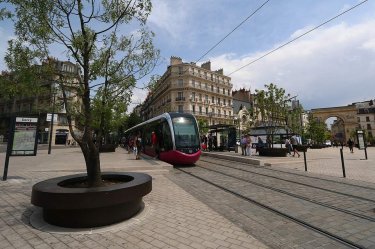
Place Darcy is a haussmannian square in Dijon, located at the gates of the city’s protected area. It was named after Henry Darcy, a hydraulics engineer from Dijon who lived from 1803 to 1858.
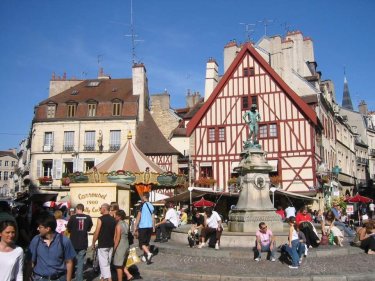
Place François-Rude, also called Place du Bareuzai, is a pedestrian square in central Dijon. It is known for its picturesque setting, the Bareuzai fountain, and a mix of historic buildings around the square.
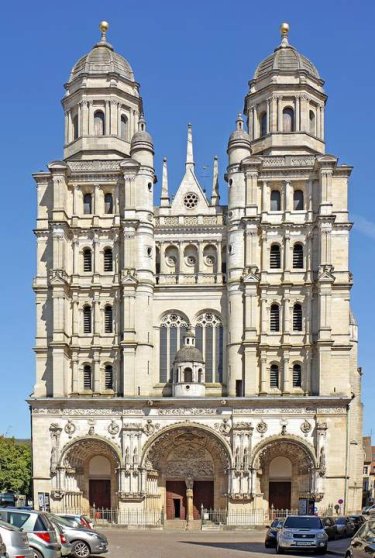
Saint-Michel Church in Dijon stands in the secteur sauvegardé and is known for its Renaissance façade. Classified as a monument historique in the 1840 list, it combines Gothic and Renaissance elements.
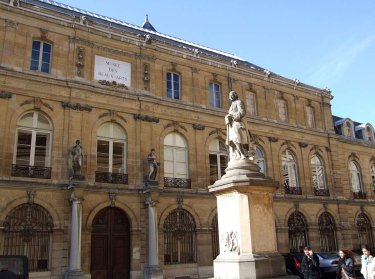
The Musée des Beaux-Arts de Dijon is an art museum in the heart of Dijon. It is one of the oldest and most important museums in France and occupies the former ducal palace.
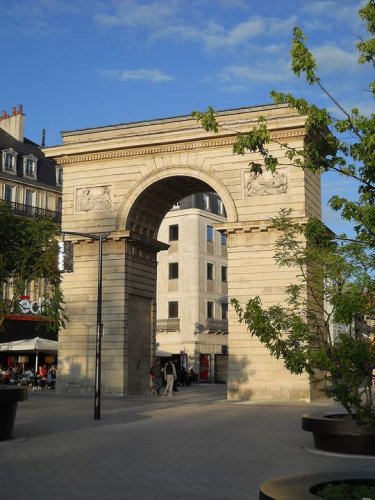
Guillaume's Gate is a city gate in Dijon built between 1786 and 1788 in place of an older wall gate. The monument has a large arched opening, sculpted reliefs, and Neoclassical architectural details linked to its changing Revolutionary-era names.
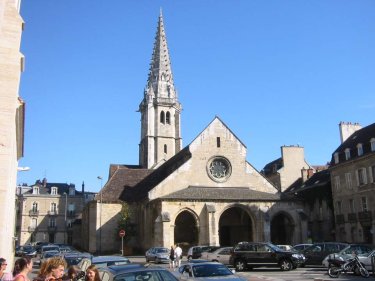
Église Saint-Philibert de Dijon is a decommissioned church on rue Michelet, near Dijon Cathedral. Built in the 11th century, it is the only Romanesque religious building in Dijon apart from its porch, northern chapels, and stone bell tower.
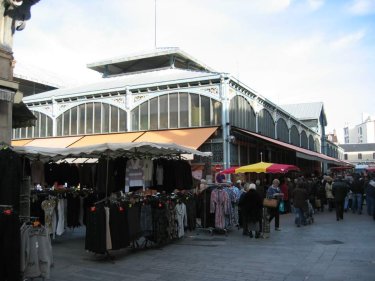
Les halles de Dijon is a covered market hall in Dijon, Côte-d'Or, in Bourgogne-Franche-Comté. Built from 1873 to 1875, it is listed as a historical monument since 1975.
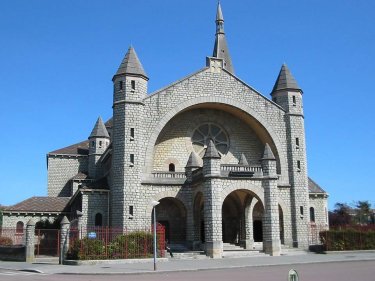
Église du Sacré-Cœur de Dijon is a church built in the 1930s in neo-Byzantine style. It stands in the quartier de la Maladière, in the north-east of Dijon, and was planned with support from Father Louis Tattevin.
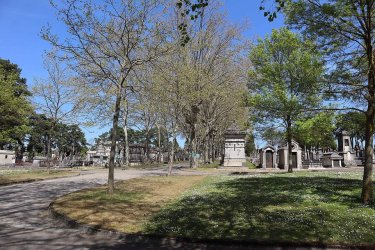
Péjoces Cemetery is a cemetery in Dijon, Côte-d'Or, and one of the largest in France. It is known for its setting and for the notable personalities buried there.
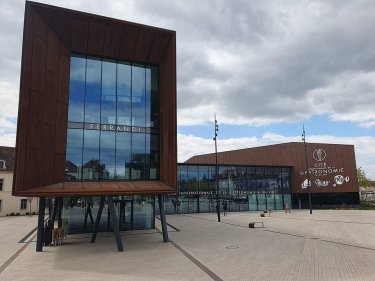
Located on the site of Dijon’s former general hospital, the International City of Gastronomy and Wine promotes the French gastronomic meal and Burgundy vineyard climats, both listed by UNESCO. It forms part of Dijon’s role in the city of gastronomy network.
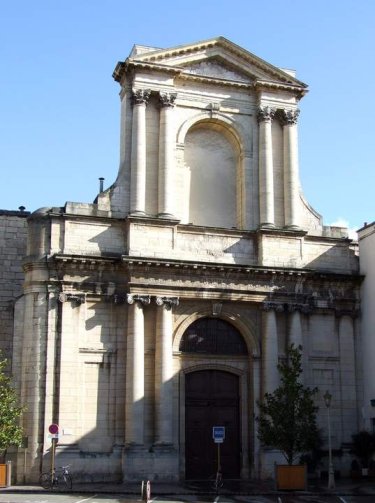
Eglise Saint-Etienne (ancienne) is an ancient Catholic church in Dijon, noted as a heritage site and historical monument. It now houses the musée Rude, the bibliothèque Colette, and other cultural services, including the documentation center of the musée des Beaux-Arts.
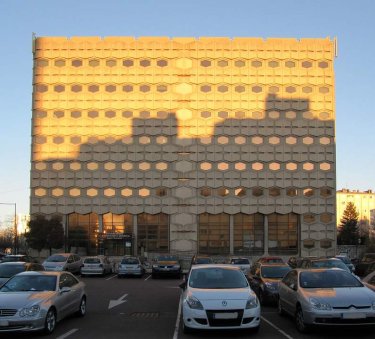
The Conservatoire à rayonnement régional de Dijon, also known as the Conservatoire Jean-Philippe Rameau, is a regional conservatory in Dijon, Côte-d'Or, France. It is a state-approved artistic education establishment offering music, choreography, and dramatic art.
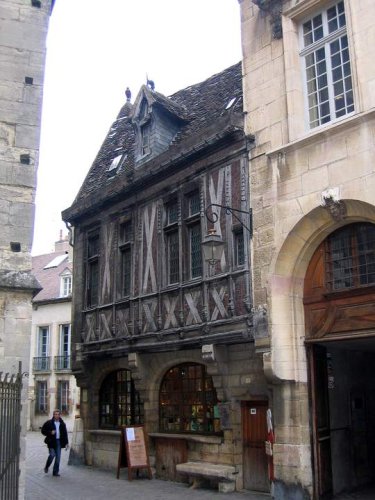
Maison Millière is a half-timbered house in Gothic style at 10 rue de la Chouette in Dijon. Built in 1483, it was classified as a historic monument in 1943.
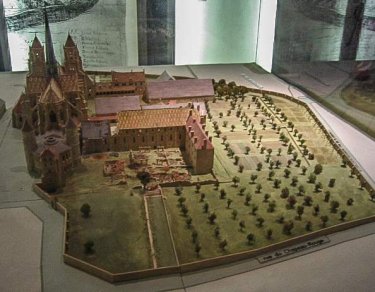
Abbaye de Saint-Bénigne is an ancient Benedictine abbey in central Dijon, founded in the 6th century. Partly destroyed, it retains Romanesque remains and has housed the Dijon archaeological museum since 1930.
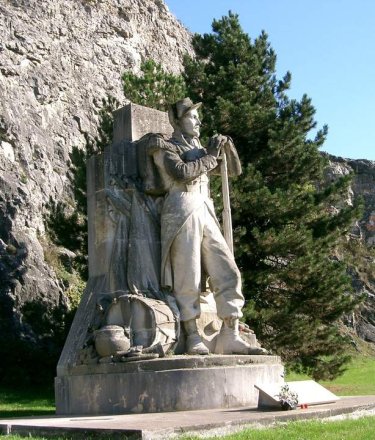
The Grenadier is a statue by Georges Diebolt, created in 1856 for the former Pont de l’Alma in Paris. It depicts Michel Lerasle, a 19th-century French army grenadier, and is now installed in Dijon, Côte-d'Or.
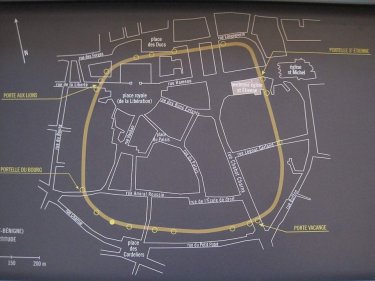
The castrum de Dijon is an ancient Gallo-Roman urban enclosure built between the late 3rd century and the beginning of the 4th century. Archaeological remains survive in Dijon, including the visible tour du Petit Saint-Bénigne.
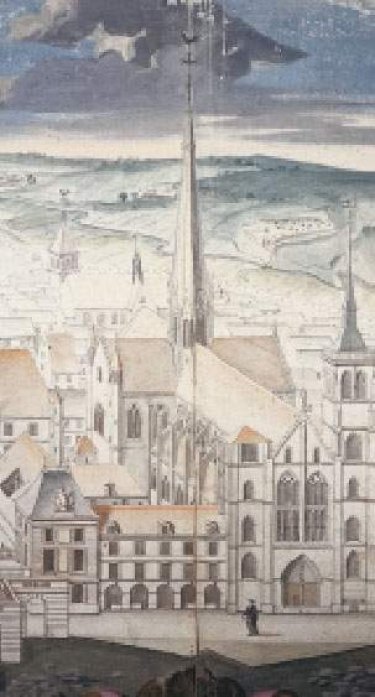
Sainte-Chapelle de Dijon was the private chapel of the dukes of Burgundy and later the seat of the Order of the Golden Fleece. Closely linked to Burgundy’s history, it was used for solemn services, princely funerals, and ceremonial displays before its destruction in 1802.
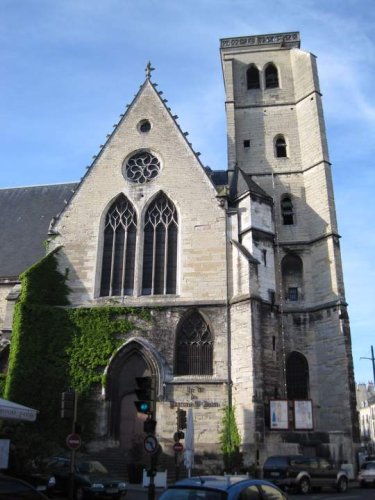
Église Saint-Jean de Dijon is a disused Catholic church in Dijon, Côte-d'Or, built in the 15th century in the Flamboyant Gothic style. Dedicated to Jean l’Apôtre, it has been a historical monument since 1862 and has housed the Théâtre Dijon-Bourgogne since 1974.

Place du Trente-Octobre is a circular square in Dijon where several major roads converge. Its surroundings show varied architecture, from Haussmannian buildings near boulevard Carnot to more contemporary styles. The square is linked to local history and remembrance.
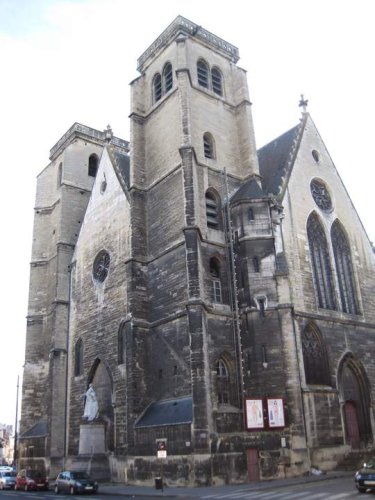
Théâtre Dijon-Bourgogne is the national dramatic center of Dijon. It is located at Place Bossuet in the former Saint-Jean church, with a smaller hall, salle Jacques Fornier, on rue d’Ahuy.
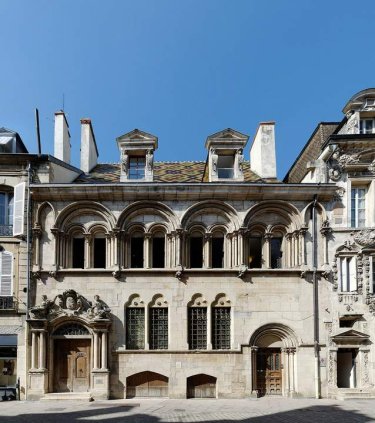
Hôtel Aubriot is a private mansion in Dijon, attached to the Maison Maillard at 40, rue des Forges. Dating from the early 14th century, it is noted for its glazed Burgundy tile roof and a vaulted cellar on octagonal pillars.
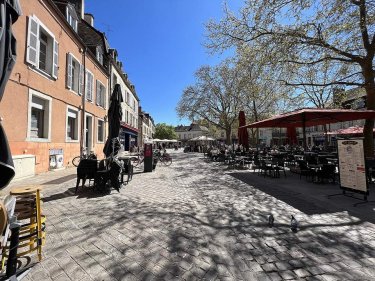
Place Émile-Zola is a square bordered by rue Monge and reached by rue François-Jouffroy and cour Madeleine. It has plane trees and a stone basin sculpted with aquatic animals, and it was long the neighborhood market square.
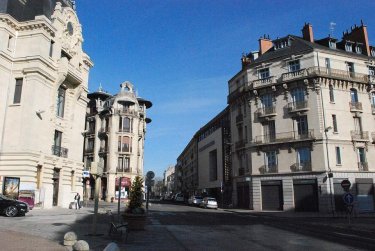
Place Grangier is a square in Dijon whose site was occupied from the end of the Middle Ages by the Dijon castle. It was later redeveloped in the early 20th century and includes buildings, a monument, and contemporary sculpture.
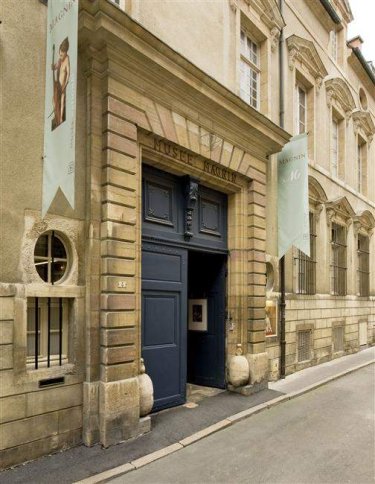
Musée Magnin is an art museum in Dijon, Côte-d'Or, in Bourgogne-Franche-Comté. It presents the art collection assembled by Maurice Magnin and Jeanne Magnin in their family mansion, Hôtel Lantin.
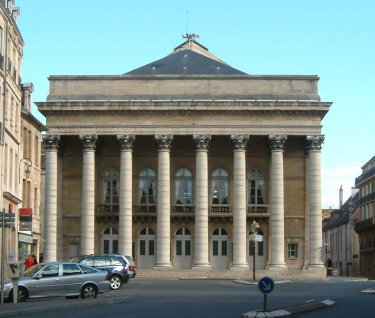
Opéra de Dijon is an opera company and arts organization in Dijon, France. It administers the Grand Théâtre de Dijon and the Auditorium de Dijon, and stages operas, ballets, and classical music concerts.
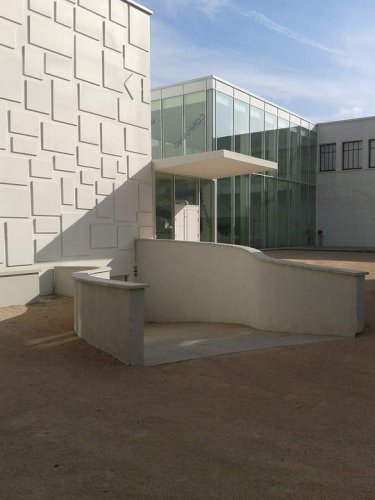
Le Consortium is a contemporary art center in Dijon. Founded in the mid-1970s and moved several times within the city, it is dedicated to producing and exhibiting contemporary works and enriching public heritage.
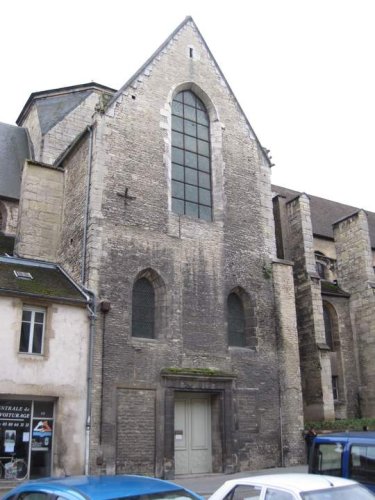
Musée Rude is a museum in Dijon, Côte-d'Or, located in the former Saint-Étienne church. Founded by the city in 1947, it combines an art museum devoted to sculptor François Rude with an archaeological section on the old castrum of Dijon.
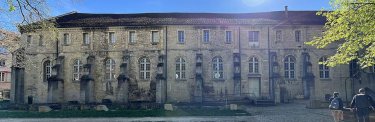
The Musée archéologique de Dijon is a museum of Burgundian archaeology founded in 1832 in Dijon, Côte-d'Or. It presents material evidence from Prehistory to the Middle Ages, as well as Paleochristian, sacred, and Christian architectural collections.
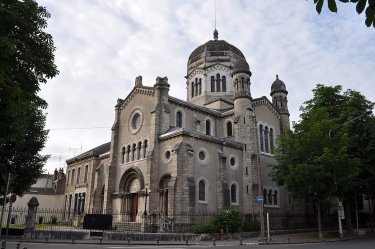
The Synagogue of Dijon is a synagogue located in Dijon, in the French department of Côte-d'Or. It is fully registered in the Supplementary Inventory of Historical Monuments by prefectural decree. The building reflects the city's Jewish history and worship practices.