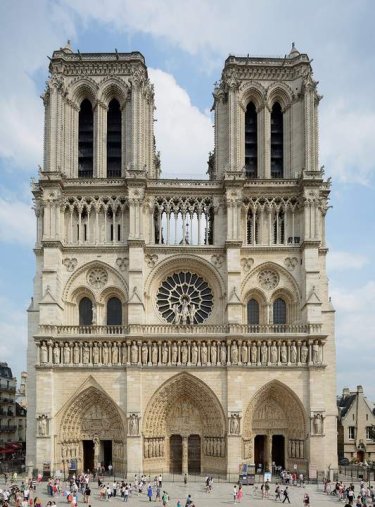
Notre-Dame de Paris
Notre-Dame de Paris is a Catholic cathedral dedicated to the Virgin Mary in Paris, France, on the Île de la Cité in the Seine. It is one of Paris’s most popular monuments and a major Gothic landmark.
Notre-Dame de Paris is a Catholic cathedral dedicated to the Virgin Mary in Paris, France, on the Île de la Cité in the Seine. It is one of Paris’s most popular monuments and a major Gothic landmark.
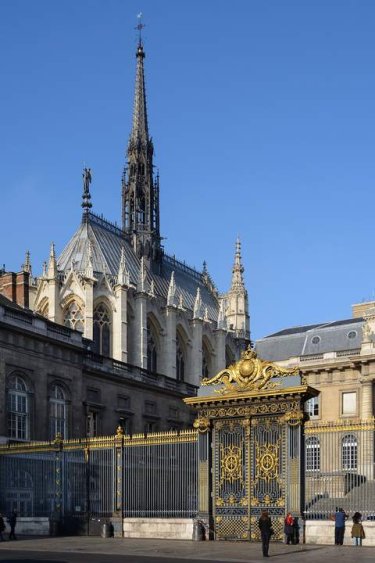
Sainte-Chapelle is a royal chapel in the Gothic style within the medieval Palais de la Cité on the Île de la Cité in Paris. Commissioned by Louis IX, it was built to house Passion relics and is known for its extensive 13th-century stained glass.
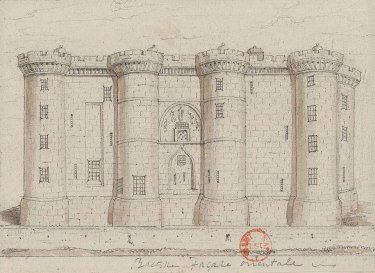
The Bastille was a medieval fortress in Paris, known as the Bastille Saint-Antoine. Built to defend the eastern approach to the city, it later served as a state prison and became a symbol of the French Revolution.
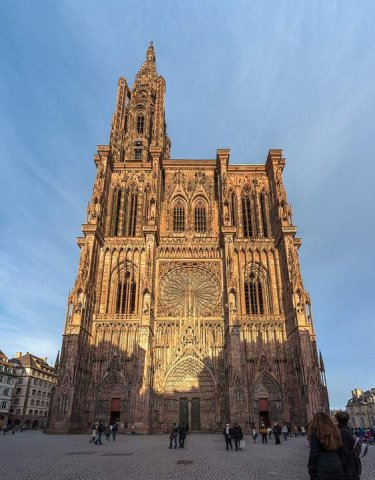
The Cathedral of Our Lady of Strasbourg is the most important Catholic temple in Strasbourg. Built in red sandstone between 1176 and 1439, it combines late Romanesque, early French Gothic, and mature German Gothic styles.
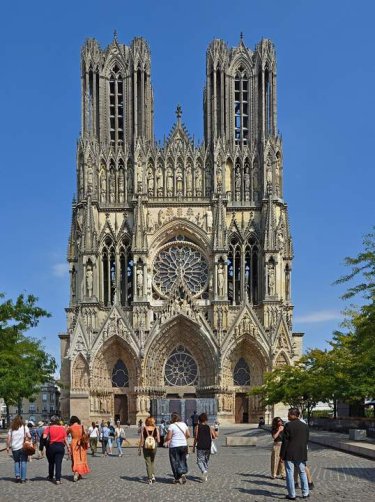
Reims Cathedral is a Gothic cathedral in the French city of Reims. Built mainly between 1208 and 1311, it was later used for the coronation of almost all French monarchs and is known for its vertical design and extensive sculpture.
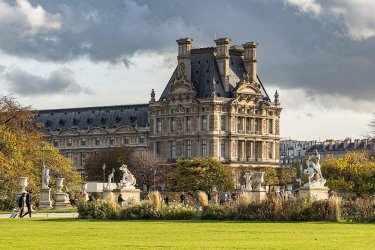
The Louvre Palace is an ancient royal palace in Paris, on the right bank of the River Seine. It stands between the Tuileries Gardens and the Church of Saint Germain of Auxerre, and its structure has evolved in stages since the 16th century.
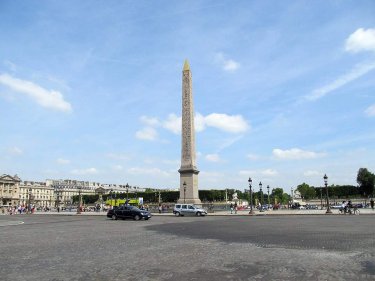
The Luxor Obelisk is an obelisk from the temple of Amon in Luxor, Egypt. It was erected at Place de la Concorde in Paris in 1836, offered by Egypt, and classified as a historic monument in 1937.
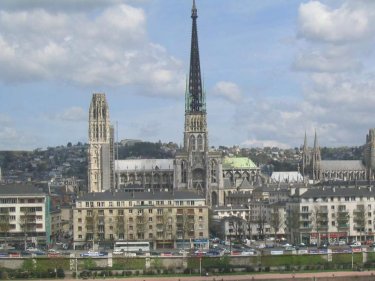
Rouen Cathedral is a Catholic church in Rouen, Normandy, France, and the see of the Archbishop of Rouen, Primate of Normandy. It is marked by three towers in different styles and a long building history.
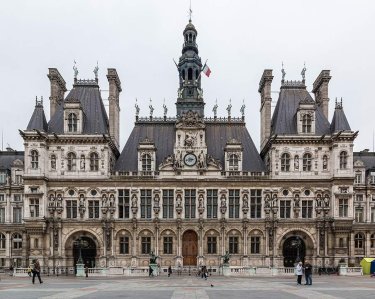
Hôtel de Ville is the city hall of Paris and the seat of the city’s municipal institutions since 1357. Its history begins with earlier municipal jurisdictions before the Maison aux Piliers became the center of government. It is also associated with moments of unrest in Paris.
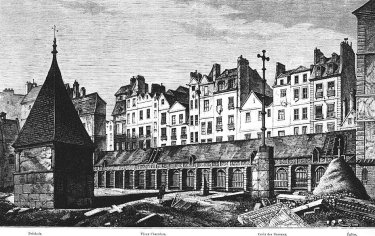
Saints Innocents Cemetery, or Il cimitero degli Innocenti, was a medieval Latin Rite Catholic cemetery in Paris. It was one of the city’s largest parish cemeteries and stood near the Halles district, close to Saint-Eustache and Notre-Dame.
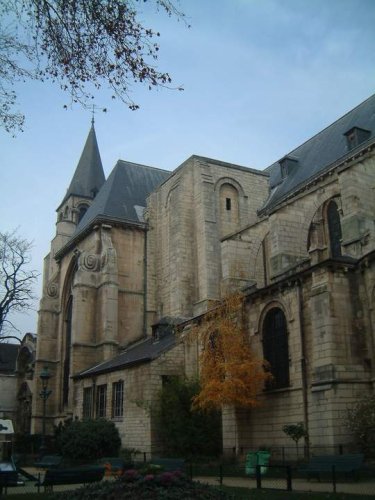
The Royal Abbey of Saint-Germain-des-Prés is a Catholic parish church in the Saint-Germain-des-Prés quarter of Paris. Originally the church of a Benedictine abbey, it is considered the oldest existing church in Paris.
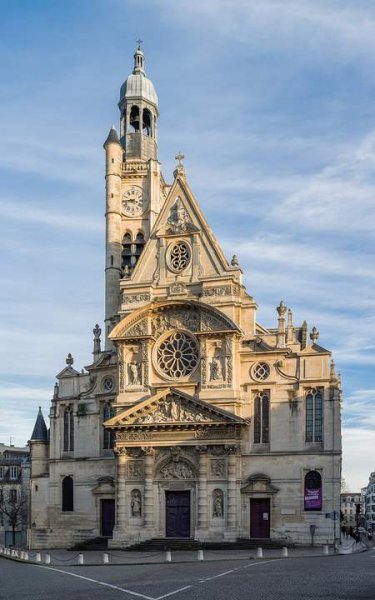
Saint-Étienne-du-Mont is a church building on the Montagne Sainte-Geneviève in Paris 5e, near the Lycée Henri-IV and the Panthéon. It replaced a 13th-century building and remained in use as a parish church.
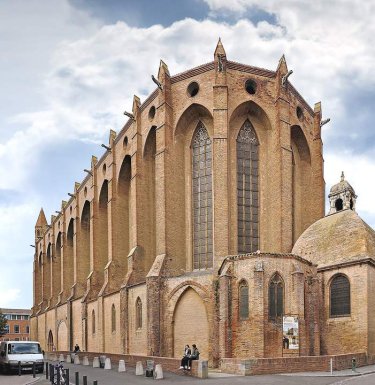
The Monastery of the Jacobins is a secularized convent in central Toulouse, France, between the Capitole and the Garonne. Its brick complex includes the church, cloister, chapter house, refectory, and chapelle Saint-Antonin.
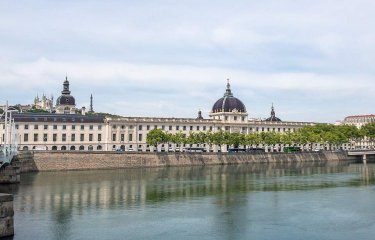
Hôtel-Dieu de Lyon is a historic building complex on the peninsula of Lyon, on the west bank of the Rhône in the Bellecour district. Formerly a hospital, it has been converted into a mixed-use site.
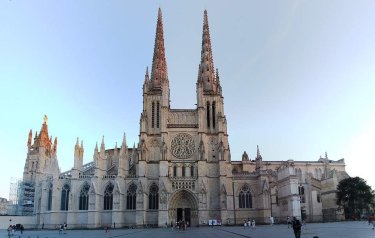
Bordeaux Cathedral is a Catholic cathedral in Bordeaux, historically linked to Saint-André and documented from 814. It became an important church in Aquitaine, with Romanesque origins, later Gothic rebuilding, and association with Eleanor of Aquitaine.
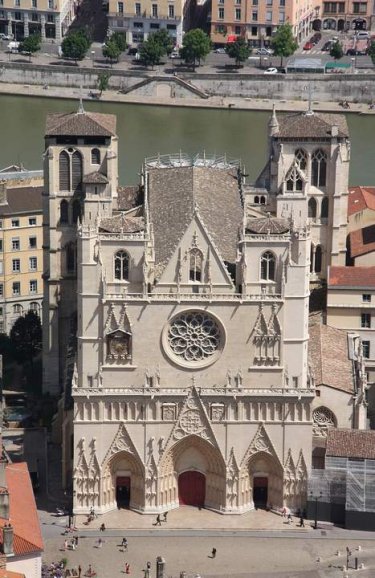
Lyon Cathedral is the seat of the archdiocese of Lyon and holds the status of cathedral and primatial church. It stands in the fifth arrondissement of Lyon, in the medieval and Renaissance district of Vieux Lyon.
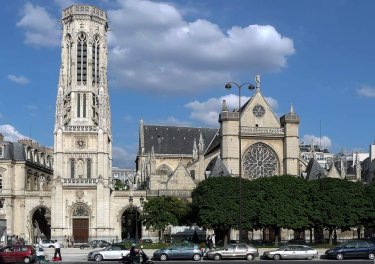
Saint-Germain l’Auxerrois is a Catholic church in the 1st arrondissement of Paris. Also called Saint-Germain-le-Rond, it has been known as the “paroisse des artistes” since the Ancien Régime and is named in honor of Bishop Saint Germain d’Auxerre.
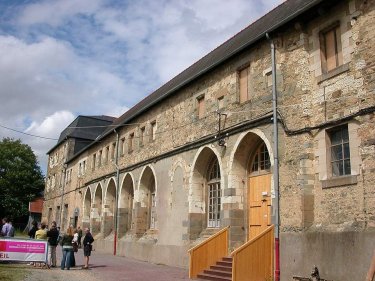
Couvent des Jacobins is an ancient religious building and former barracks in downtown Rennes. It includes a church, a cloister, and convent buildings, and since 2018 it has housed the Rennes Metropole congress center.
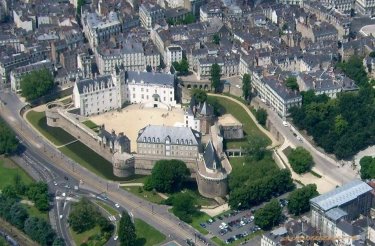
The Château des ducs de Bretagne is one of the emblematic buildings of Nantes. Founded in the 13th century, it became a ducal residence, then a royal fortress, and later a museum site housing the Nantes History Museum.
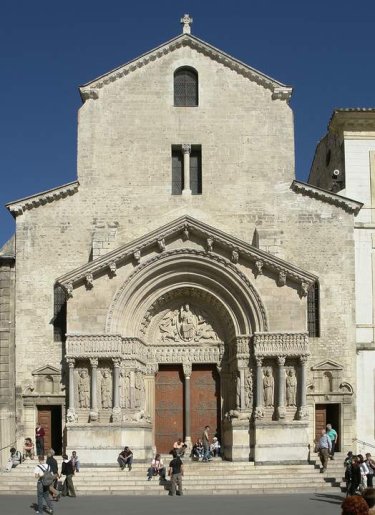
The Church of St. Trophime is a primatial basilica in Arles, built from 1100 on late Antiquity remains. It is known for its Provençal Romanesque architecture, sculpted portal, and attached cloister.
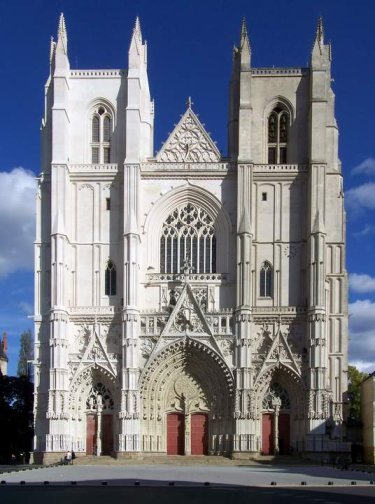
Nantes Cathedral is a Catholic cathedral at Place Saint-Pierre in Nantes, Loire-Atlantique. It is the cathedral of the Diocese of Nantes and the seat of the bishop of Nantes, and it has been classified as a historic monument since 1862.
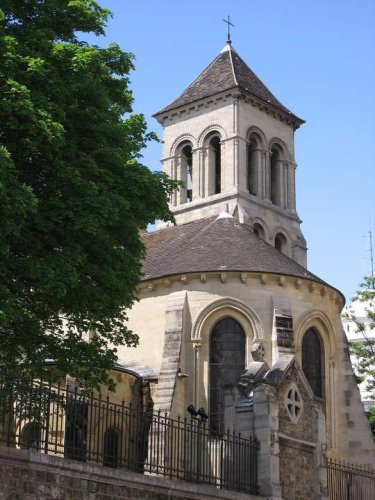
Saint-Pierre de Montmartre is a Roman Catholic parish church in the 18th arrondissement of Paris, west of Sacré-Cœur in Montmartre. It is one of two parish churches in the district and has long been associated with the history of Montmartre.
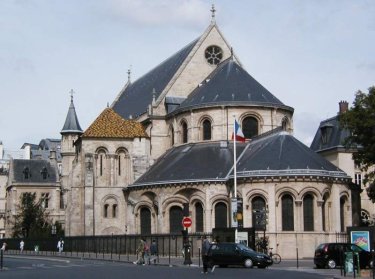
St-Martin-des-Champs Priory is a former Catholic abbey and priory in Paris. Founded in 1059 and entrusted to the Cluniacs in 1079, it became an important medieval dependency with royal protection, donations, and extensive possessions.
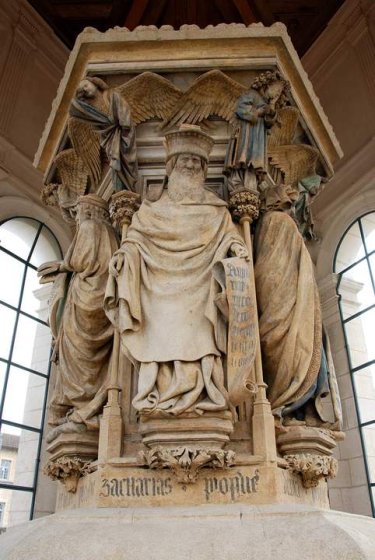
The Well of Moses is the surviving lower part of a calvary once set in a well at the centre of the grand cloister of Champmol. Created for Philippe II de Bourgogne, it is now in the park of the specialized hospital center of Dijon.
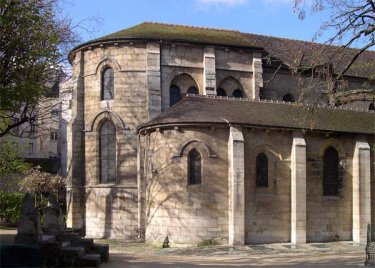
Saint-Julien-le-Pauvre is a medieval church on the left bank of the Seine in Paris’s Quartier Latin, on rue Saint-Julien-le-Pauvre in square René-Viviani. It has been entrusted to the Greek Melkite Catholic Church since the end of the 19th century and is assigned to the Byzantine rite.
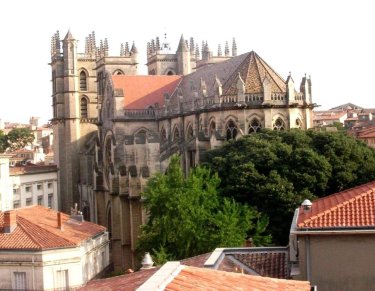
Montpellier Cathedral is a Catholic cathedral in the old town of Montpellier in Hérault. It is the city’s most important Gothic monument and the largest church in the former Languedoc-Roussillon region.
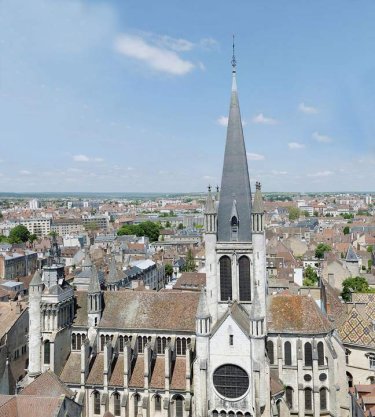
The Church of Notre-Dame of Dijon is a medieval Gothic church in the heart of Dijon’s protected historic sector. Built from 1229 to around 1250, it stands near the Palace of the Dukes and States of Burgundy and is decorated with the city’s Jacquemart and owl.
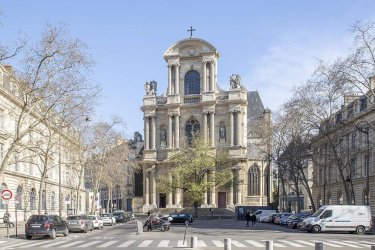
Saint-Gervais-Saint-Protais is a church in the Saint-Gervais district of Paris, east of the Hôtel de Ville. Its history reaches back to the earliest known place of worship on the right bank of Paris.
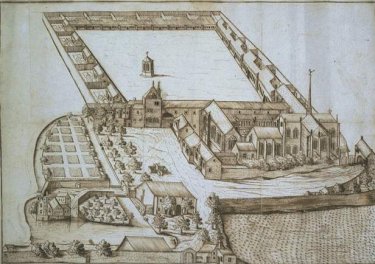
Champmol was a Carthusian monastery on the outskirts of Dijon, founded in 1383 by Duke Philip the Bold as a dynastic burial place for the Valois Dukes of Burgundy. It was richly decorated with artworks.
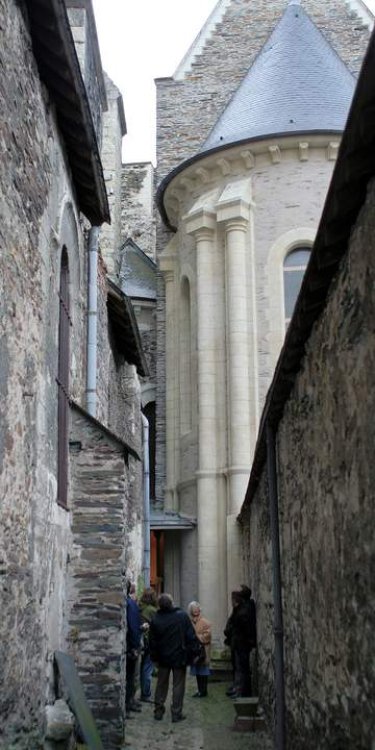
Abbaye du Ronceray d'Angers is a Benedictine nunnery in Angers, in the Maine-et-Loire department of Pays de la Loire. Founded in the 11th century, it is the only female monastic establishment in Angers and among the most important in the diocese.
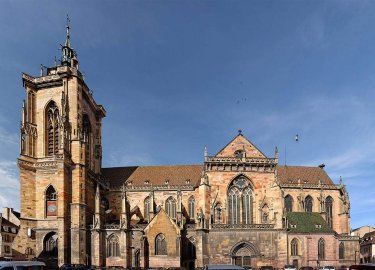
St Martin's Church, or Saint-Martin de Colmar, is the most important religious building in Colmar. Frequently called a cathedral, it is a Gothic collegiate church and one of the largest churches in Haut-Rhin.
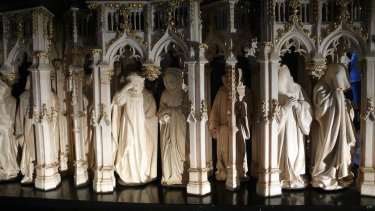
The Mourners of Dijon are 82 alabaster statuettes in ronde-bosse from 15th-century Burgundy. They belonged to the tombs of Philippe le Hardi and of Jean sans Peur and Marguerite de Bavière.
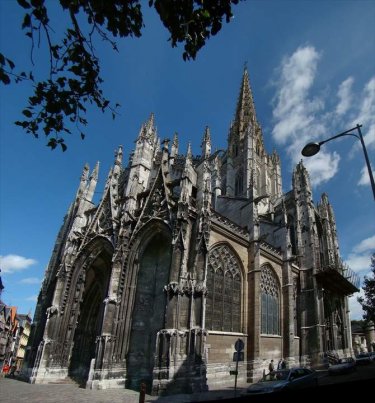
The Church of Saint-Maclou is a Catholic place of worship in the city center of Rouen, in Seine-Maritime, Normandy. Its history includes repeated rebuilding after fires, reconstruction in the 15th century, and later damage and restoration.
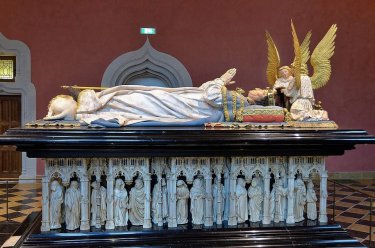
The Tomb of Philip the Bold is a funerary monument commissioned in 1378 for the Duke of Burgundy, who chose the Chartreuse de Champmol near Dijon as his burial site. It is known for its recumbent figure and mourning pleurants.
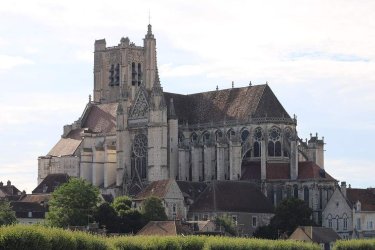
Auxerre Cathedral is a French Catholic cathedral in Auxerre, Yonne. Dedicated to Saint Étienne, it is a Gothic monument protected as a historical monument since 1840, with notable portals, a crypt, and 13th-century stained glass.
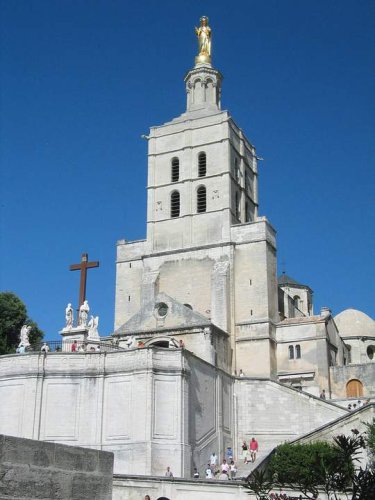
Notre-Dame-des-Doms is a Catholic cathedral and minor basilica in Avignon, France. Built in Provençal Romanesque style, it stands on the Rocher des Doms near the Palais des papes and has long shaped the city’s skyline.
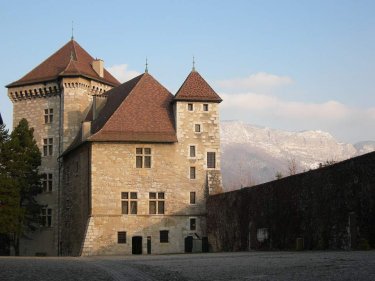
Château d'Annecy is a fortified castle from the 12th century in Annecy, Haute-Savoie, France. It once served as a residence for the counts of Geneva and the dukes of Savoy-Nemours.
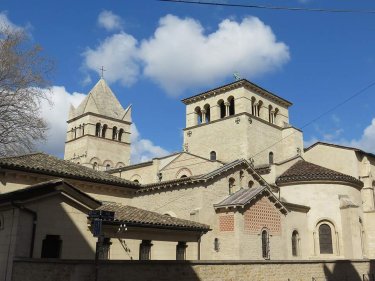
The Basilica of Saint-Martin d'Ainay is an ancient Romanesque former abbey church in the Ainay district on the Lyon peninsula. Classified as a historical monument in 1840, it was elevated to the rank of basilica in 1905. Its central apse and apsidiole were worked on by Hippolyte Flandrin in 1855.
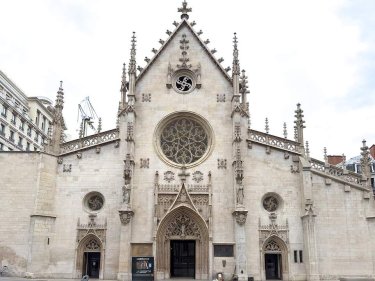
Saint-Bonaventure Basilica is a Catholic church building in Lyon’s Presqu'île, in the Cordeliers district. It is the only medieval building remaining in the north of the 1st arrondissement and has been an urban sanctuary since 1971.
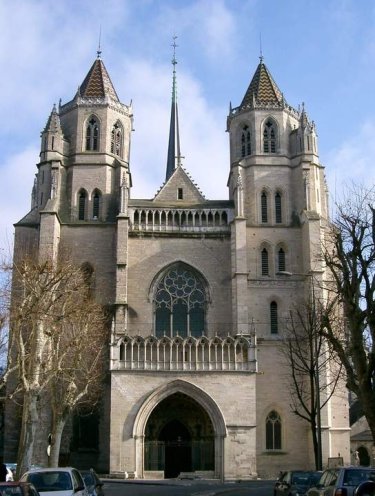
Dijon Cathedral is the Roman Catholic cathedral of Dijon, west of the city center. It is a Burgundian Gothic church that became a cathedral in 1792 and originated as the abbey church of Saint-Bénigne monastery.
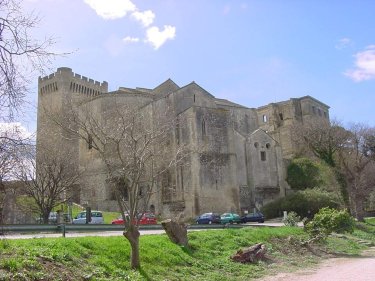
Montmajour Abbey is a Benedictine abbey founded in 948 about four kilometers northeast of Arles. It grew through religious and military buildings from the 10th century to the early 14th century and was later abandoned.
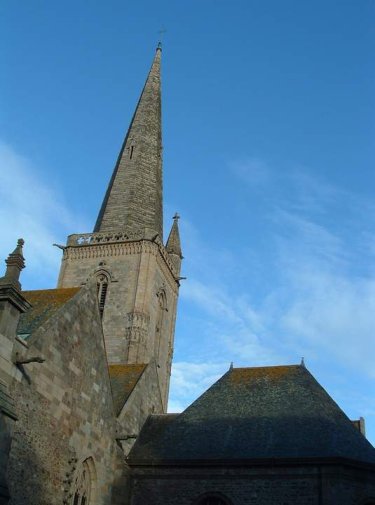
Saint-Malo Cathedral is a Catholic cathedral in Saint-Malo, Brittany, France. Dedicated to Saint Vincent of Saragossa, it is a national monument built in Romanesque and Gothic styles on the site of an older church.
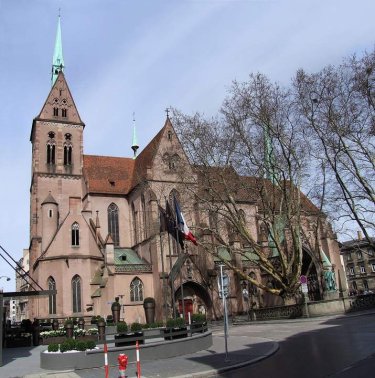
Saint-Pierre-le-Jeune Protestant Church is a Lutheran place of worship in Strasbourg, in the historic center on Place Saint-Pierre-le-Jeune. Classified as a historical monument since 1862, it reflects a long religious history shared between Catholic and Protestant communities.
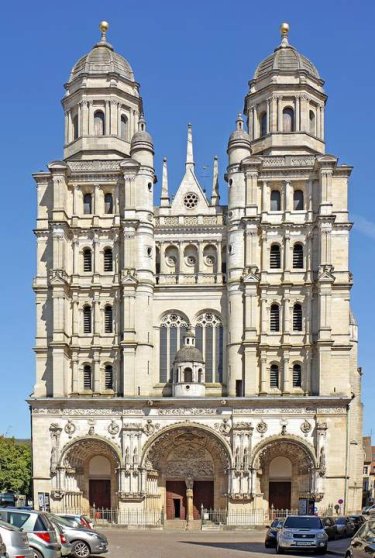
Saint-Michel Church in Dijon stands in the secteur sauvegardé and is known for its Renaissance façade. Classified as a monument historique in the 1840 list, it combines Gothic and Renaissance elements.
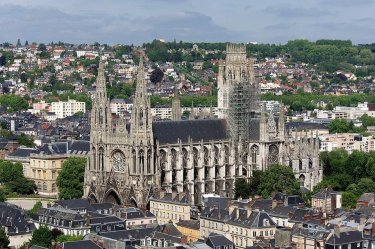
Abbey Church of Saint-Ouen is a Catholic place of worship and a main monument in Rouen, France. Formerly the abbey church of a Benedictine monastery, it is known for its monumental organ by Aristide Cavaillé-Coll and its status as a French historical monument since 1840.
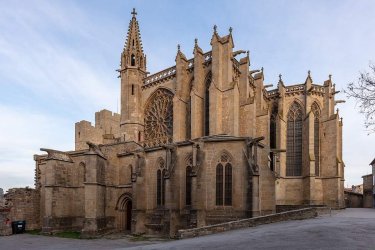
The Basilica of St. Nazaire and St. Celse is a Catholic church in the cité de Carcassonne, France. Formerly a cathedral, it has been a minor basilica since 1898 and preserves Romanesque remains from the 11th and 12th centuries.
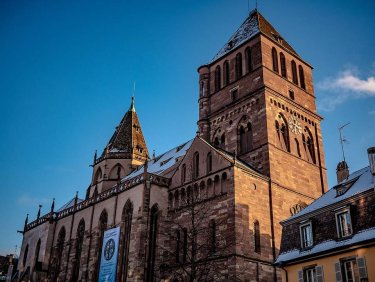
Saint Thomas Church, also called Thomaskirche, is a historic church in Strasbourg’s center near Petite France. It is one of the city’s most important monuments for cultural history and architecture.
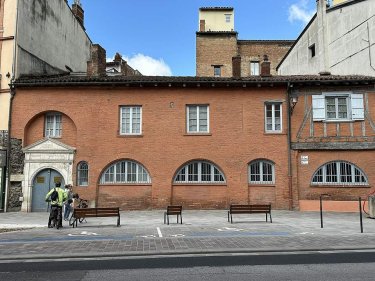
Maison Seilhan is a historic residence in Toulouse, France, associated with the founding of the Dominican Order. It preserves artistic works, Saint Dominic’s room, and memorabilia linked to Henri-Dominique Lacordaire.