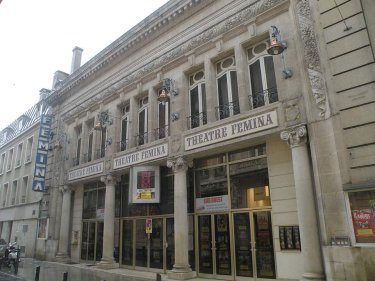
Théâtre Femina
Théâtre Femina is a performance hall in Bordeaux, located at 10 rue de Grassi. Founded in 1921 by Victor Bonneterre and Ulysse Sédard, it became a cinema in the 1930s before returning to theater use at the end of the 1970s.
Théâtre Femina is a performance hall in Bordeaux, located at 10 rue de Grassi. Founded in 1921 by Victor Bonneterre and Ulysse Sédard, it became a cinema in the 1930s before returning to theater use at the end of the 1970s.
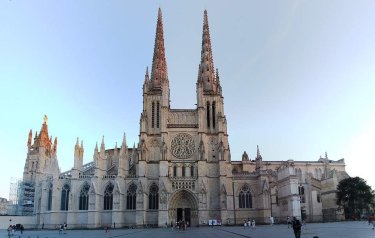
Bordeaux Cathedral is a Catholic cathedral in Bordeaux, historically linked to Saint-André and documented from 814. It became an important church in Aquitaine, with Romanesque origins, later Gothic rebuilding, and association with Eleanor of Aquitaine.
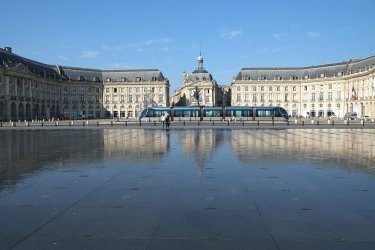
Place de la Bourse is an open square in Bordeaux, originally named Place Royale. Designed between 1730 and 1755, it is bordered by the palais de la Bourse and the hôtel des douanes, both of which retain their original functions.
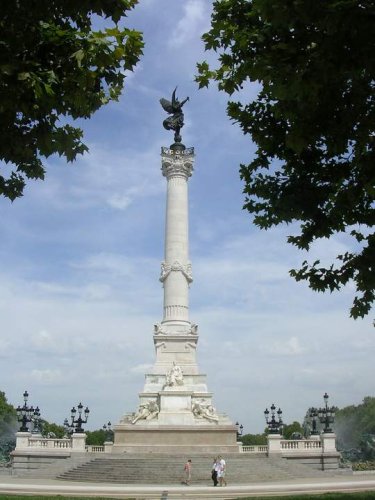
The Monument aux Girondins stands at Place des Quinconces in Bordeaux. Built between 1894 and 1901, it honors the Girondin deputies who were victims of the Terreur. It is classified as a historical monument and is also known locally as the colonne des Girondins.
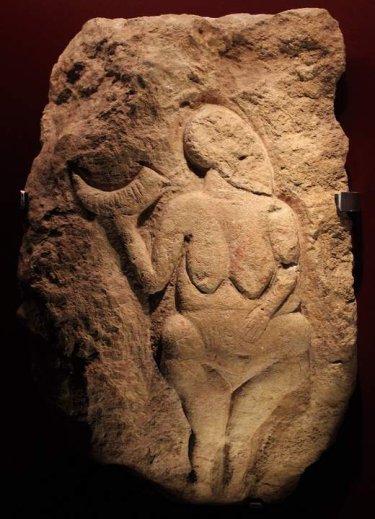
The Venus of Laussel is a Gravettian Venus figurine from the Upper Paleolithic, found in 1911 at the Laussel shelter in Marquay, Dordogne. It is a bas-relief sculpture on limestone, painted with red ochre, showing a nude female figure holding a bison horn.
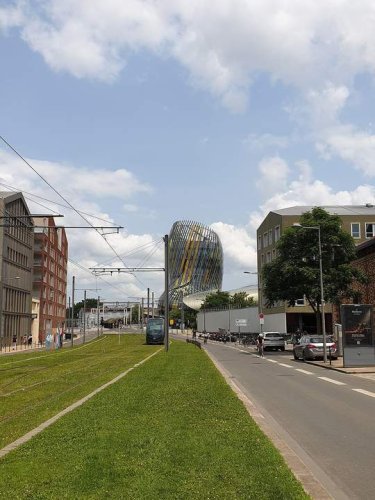
Cité du Vin is a museum in Bordeaux, Gironde, France, at 134–150 quai de Bacalan on the esplanade de Pontac. Designed by Agence XTU, it was developed as a cultural and tourist wine centre and received 400,000 visitors in 2019.
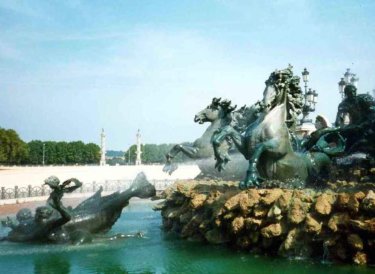
Place des Quinconces is a main square in the city center of Bordeaux, France. With a 12-hectare esplanade, it hosts fairs, carnivals, concerts, and other public events.
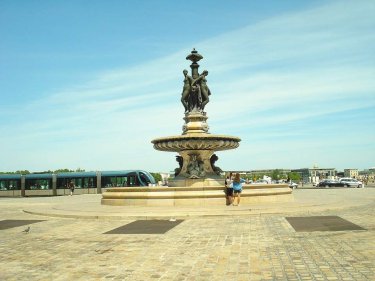
Fontaine des Trois Grâces is a fountain in Place de la Bourse featuring bronze figures of the three Graces—Aglaé, Euphrosyne, and Thalie—on a Jura marble pedestal with a cast-iron basin.
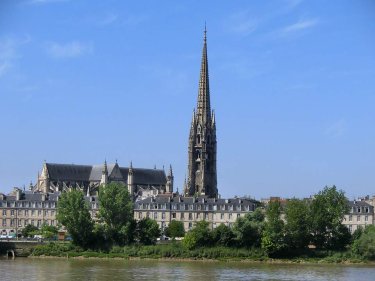
The Basilica of St. Michael is the second largest Catholic church in Bordeaux, southwestern France. Built between the 14th and 16th centuries, it is characteristic of the flamboyant Gothic style and gave its name to the surrounding neighborhood.
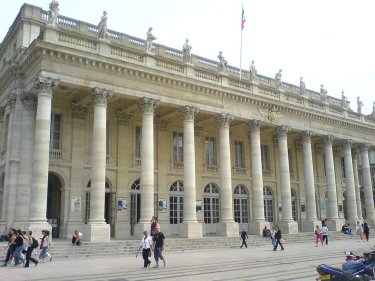
Le Grand Théâtre de Bordeaux is a neo-classical opera house commissioned by Marshal de Richelieu and built by architect Victor Louis. It features a peristyle with 47 columns, an Italian-style performance hall, and an interior restored in blue, gold, and white marble.
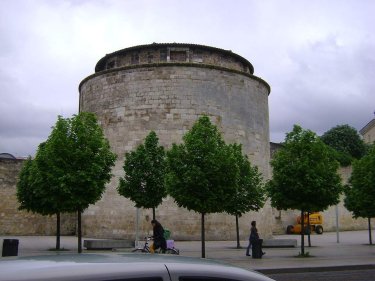
Fort du Hâ in Bordeaux was built by order of King Charles VII immediately after 1453. The fortress played a role in the control of the city and later served as a royal residence and military site. Its remaining towers are listed as historical monuments.
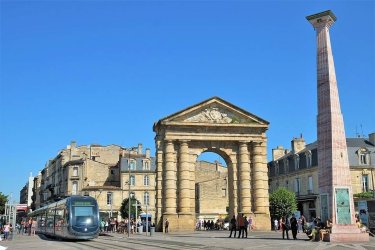
Place de la Victoire is a square in Bordeaux shaped in the second half of the 18th century by Louis-Urbain-Aubert de Tourny. It is bordered by stone neo-classical buildings and centered on the Porte d’Aquitaine, an ancient-style gate.
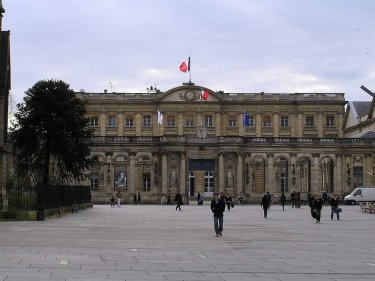
Palais Rohan is a palace in Bordeaux built for Archbishop Ferdinand-Maximilien-Mériadec, prince de Rohan, between 1771 and 1784. It later served as a prefecture, imperial and royal palace, and city hall.
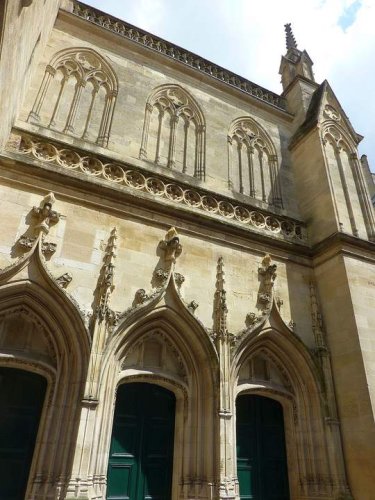
Église Saint-Éloi is a historic church in Bordeaux, Gironde, set against the porte de la Grosse cloche. Once the church of the Jurade de Bordeaux, it is classified as a monument historique.
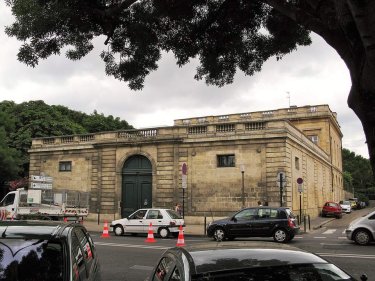
Hôtel de Basquiat is an 18th-century hôtel particulier on cours d’Albret in Bordeaux, France. Built between 1778 and 1781 by François Lhote for Joseph de Basquiat de Mugriet, it later served as the official residence of the rector of the académie de Bordeaux.
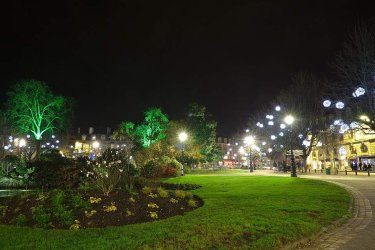
Place Gambetta is one of the main squares in Bordeaux, Gironde. It is noted for its ordered façades and its place among the city’s most important urban architectural ensembles.
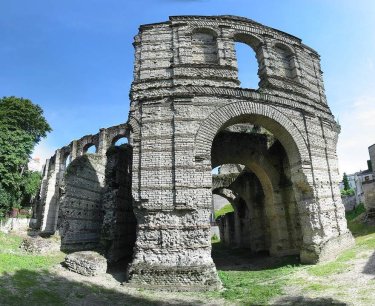
Le palais Gallien is an ancient Roman amphitheatre in the Gallo-Roman city of Burdigala, now Bordeaux. Built at the beginning of the 2nd century, it could hold about 15,000 spectators and preserves only part of its original structure.
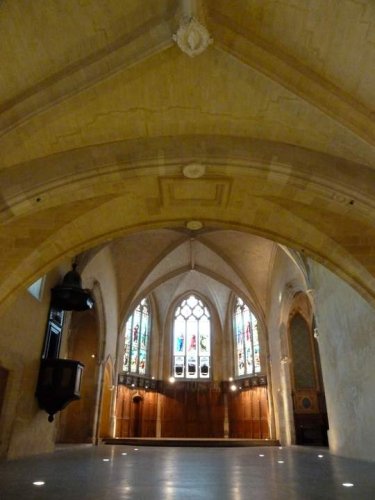
The former Couvent des Annonciades is located at 54 rue Magendie in Bordeaux. Founded in 1520, it was built for nuns from Albi and retains a Renaissance character, with chapel, portal, cloister, and walls protected as historic monuments.
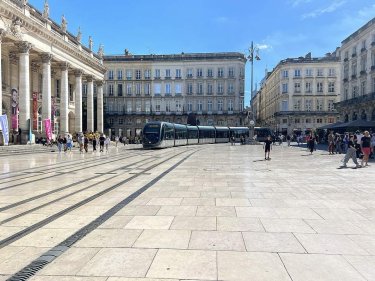
Place de la Comédie is a pedestrian square in the city centre of Bordeaux, Gironde. It links rue Sainte-Catherine to allées de Tourny and is crossed by a tram line near Grand Théâtre station.
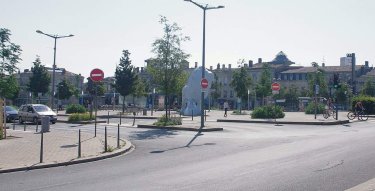
Place de Stalingrad is a square at the north exit of the Pont de Pierre in Bordeaux’s Bastide district, on the right bank of the Garonne. It is a major traffic and transit area, used by pedestrians, bicycles, buses, and taxis.
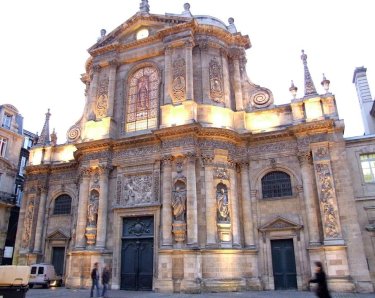
Église Notre-Dame de Bordeaux is a baroque-style church located at Place du Chapelet near the Grand Théâtre. Originally named Saint-Dominique, it features remarkable acoustics and underwent major renovation after partial vault collapse.
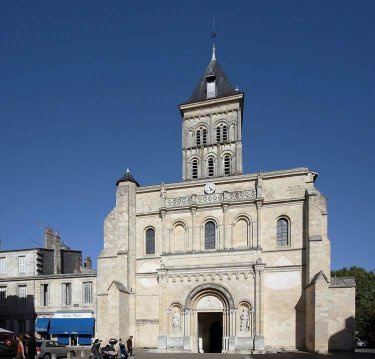
The Basilica of Saint-Seurin is a minor basilica in Bordeaux, classified as a historical monument and inscribed on the UNESCO World Heritage List. It contains relics of several saints and is linked to early Christian burial remains.
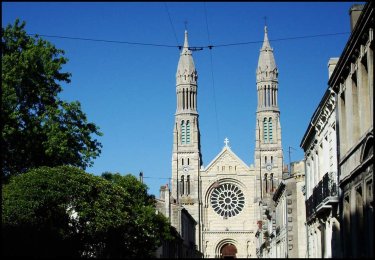
Église du Sacré-Cœur de Bordeaux is a church building in Gironde, France, located on Place du Cardinal Donnet in the Saint-Jean Belcier district. Built by architect Jean-Jules Mondet, it is dedicated to the devotion of the Sacred Heart.
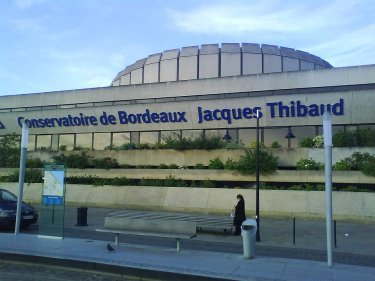
Conservatoire de Bordeaux Jacques Thibaud is a regional outreach conservatory in Bordeaux, Gironde, approved and controlled by the French State. It offers training in music, theater, and dance.
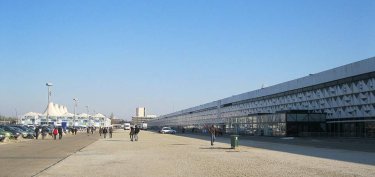
Parc des expositions de Bordeaux is an exhibition park spread over more than thirty hectares. It includes four main halls and faces the Palais des Congrès across the lake. The site has hosted major fairs and recurring professional and public events.
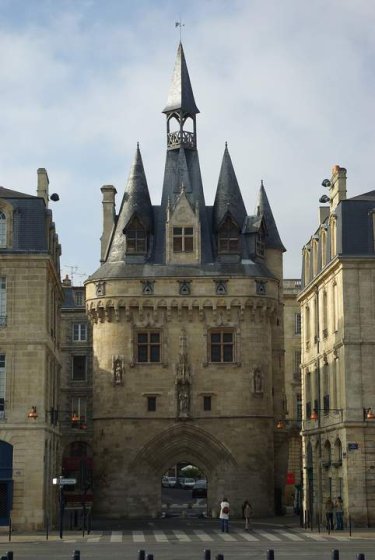
Porte Cailhau is a late 15th-century city gate in the historic center of Bordeaux, France. Standing on the bank of the Garonne, it consists of two connected towers and has been listed as a French historical monument since 1883.
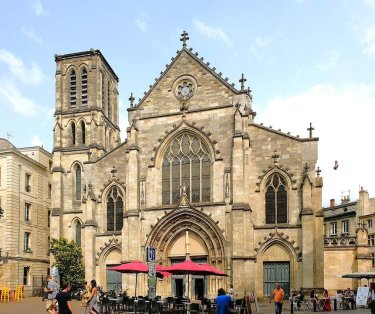
Église Saint-Pierre de Bordeaux is a church building in Bordeaux, in the French department of Gironde, located at place Saint-Pierre. Its history is linked to the city’s early riverside development, medieval rebuilding, later restructuring, and 20th-century heritage protection.
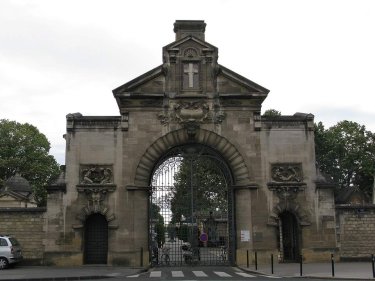
Chartreuse Cemetery is a 25.7-hectare cemetery in Bordeaux, created at the end of the 18th century on the former gardens of a Carthusian convent. It contains a range of 19th-century funerary monuments and was classified as a historical monument in 1921.
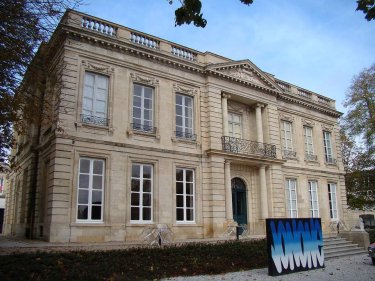
Château Labottière, also called Hôtel Labottière or Maison Tivoli, is an 18th-century hôtel particulier at 29 rue Labottière in Bordeaux. Built for the Labottière brothers, it now houses the Institut culturel Bernard-Magrez.
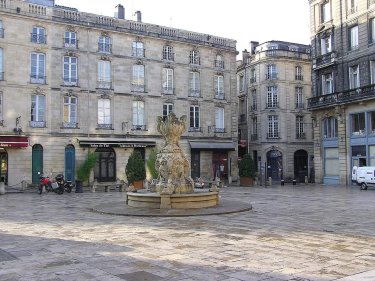
Place du Parlement is a square in Bordeaux’s city center, in the Saint Pierre district near Place de la Bourse. Created in 1760, it has changed names over time and was repaved in 1980 with large golden limestone slabs.

Rock School Barbey is a scène de musiques actuelles (SMAC) in Bordeaux, located at 18 cours Barbey. It combines a concert hall, a club, a recording studio, rehearsal rooms, and a music school.
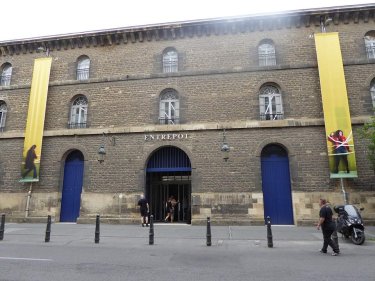
CAPC musée d'art contemporain de Bordeaux is a museum dedicated to contemporary and conceptual art. Opened in 1984, it is located in Bordeaux’s Chartrons district in the former Entrepôt Lainé.
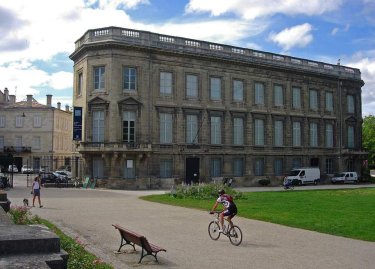
The Muséum d'histoire naturelle de Bordeaux is a natural history museum in Bordeaux, Gironde, Nouvelle-Aquitaine. It is controlled by the Ministry of National Education, Higher Education and Research and supported by the Regional Directorate of Cultural Affairs of Aquitaine.
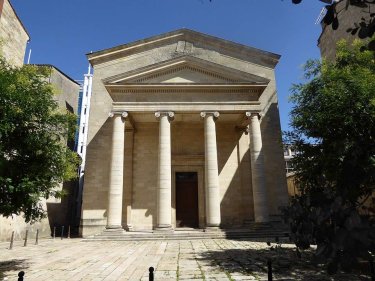
Temple des Chartrons is an ancient Protestant temple in Bordeaux’s Chartrons district. Built in 1835 in a neoclassical style, it was decommissioned in the 1970s and later reopened to the public for an exhibition.
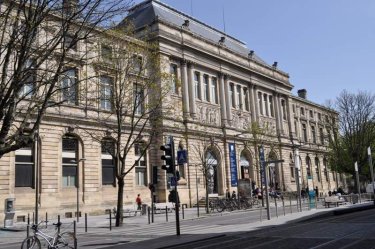
Aquitaine Museum is a history museum in Bordeaux, located on cours Pasteur in the city centre. Its collections span prehistory, ancient and medieval periods, world cultures, Atlantic trade, and slavery.
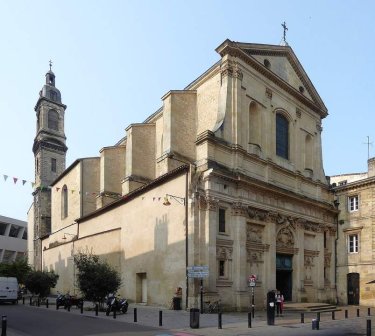
Saint-Paul-Saint-François-Xavier is a church in central Bordeaux, Gironde, in Nouvelle-Aquitaine. Used for Catholic worship since its construction, it is classified as a historic monument and reflects Baroque religious architecture.
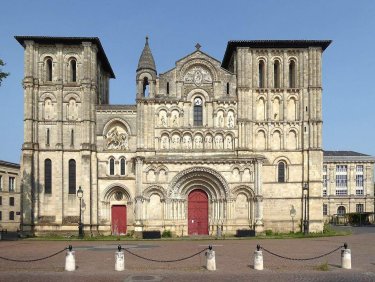
The Church of the Holy Cross is a Romanesque church building constructed in the late 11th and early 12th centuries. It has a Latin cross plan, a Saintongeais facade, and later restorations and artworks.
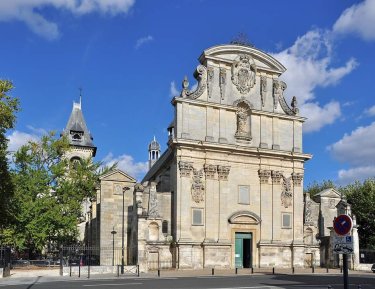
Église Saint-Bruno is a Catholic church in the city center of Bordeaux, dedicated to Saint Bruno. Built from 1611, it is the first Baroque church in the city and has been listed as a historical monument since 1862.
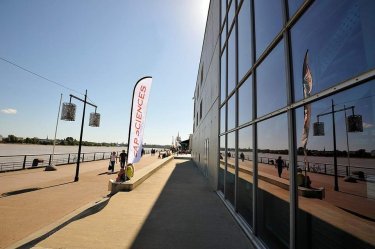
Cap Sciences is a Centre de culture scientifique, technique et industrielle in Bordeaux. Located on the banks of the Garonne near the Pont Jacques-Chaban-Delmas, it presents exhibitions and public activities on scientific phenomena, industrial applications, and technological know-how.
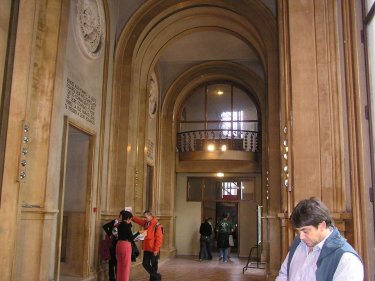
Located in Bordeaux’s Victoire district, the Bourse du Travail is an Art Deco trades hall initiated by Mayor Adrien Marquet and designed by Jacques D’Welles. It includes meeting rooms, offices, classrooms, and conference rooms.
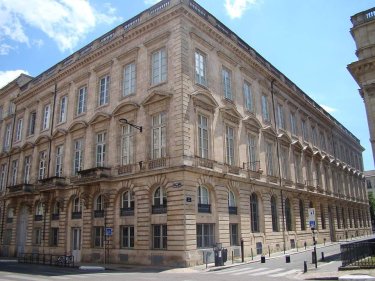
Hôtel Saige is an hôtel particulier in Bordeaux, France, built between 1775 and 1777 by the architect Victor Louis for François-Armand de Saige. It later served as the Gironde prefecture seat and is now divided into several apartments.
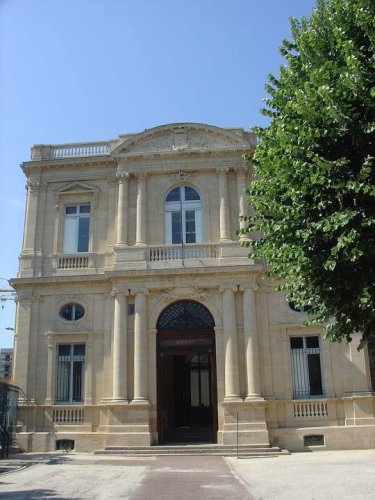
The Musée des Beaux-Arts de Bordeaux is an art museum founded in 1801 in Bordeaux, Gironde, France. Its collection mainly consists of paintings, and also includes sculptures and graphic arts. It is located at two separate sites.
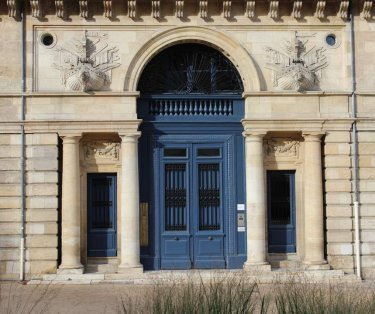
Hôtel Fenwick is a private mansion in Bordeaux, built between 1793 and 1800 by Jean-Baptiste Dufart. It hosted the first United States consulate in the world and was listed as a Historical Monument in 1935.
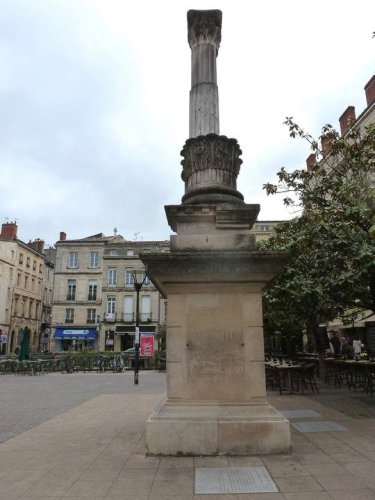
Place Camille Jullian is a square opened in 1934 in the dense urban fabric of the city center. It occupies the space left vacant after the demolition of an unhealthy block and was later studied, renovated, and adapted.
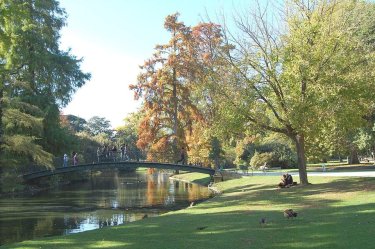
Jardin Public is an urban park in the center of Bordeaux. Planned in 1746 by intendant Tourny, it was later redesigned in English garden style in 1856 and has retained that character. It is listed as a historical monument.
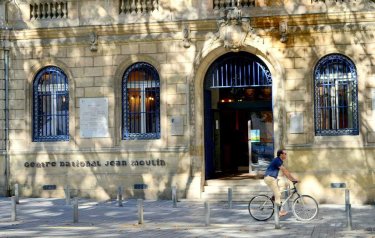
Center Jean Moulin is a museum and documentation center in Bordeaux dedicated to World War II history. It focuses on the French Resistance, deportation, and the history of the Free French Forces.
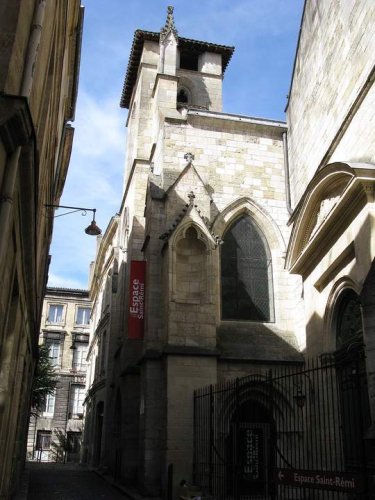
Église Saint-Rémi is a Romanesque church built in the 12th century, with part of the building rebuilt in Gothic style in the 14th century. Located in central Bordeaux, it now serves as an exhibition space.
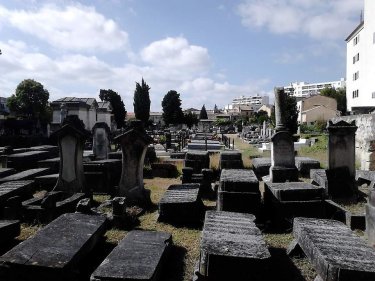
Bordeaux has three Israeli cemeteries, registered as historical monuments since 1995. They are located on cours de la Marne, cours de l’Yser, and rue Sauteyron; only the cemetery on cours de l’Yser is functional and regularly open to the public.