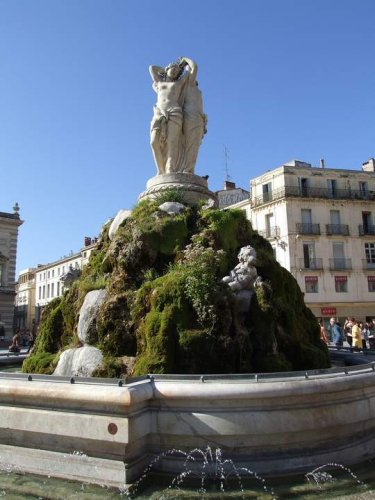
Fontaine des Trois Grâces
Fontaine des Trois Grâces is a marble group sculpture created by Étienne Dantoine in 1777 and located in Montpellier. It represents the Three Graces from Greek mythology and is classified as a monument historique.
Fontaine des Trois Grâces is a marble group sculpture created by Étienne Dantoine in 1777 and located in Montpellier. It represents the Three Graces from Greek mythology and is classified as a monument historique.
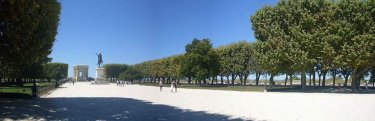
The Promenade of Peyrou is a historic esplanade and square in the west of Montpellier’s Écusson district. Classified as a historical monument, it includes terraces, the Peyrou Gate, an equestrian statue of Louis XIV, an aqueduct, and later additions.
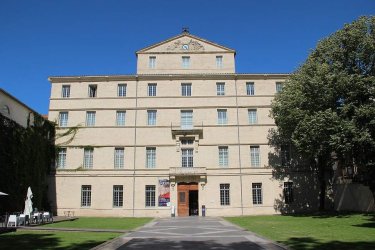
Musée Fabre is the principal art museum of Montpellier. It was created after François-Xavier Fabre proposed donating his collections to the city in 1824, on the condition that a museum be built to house them. The museum opened after three years of work financed by the municipality.
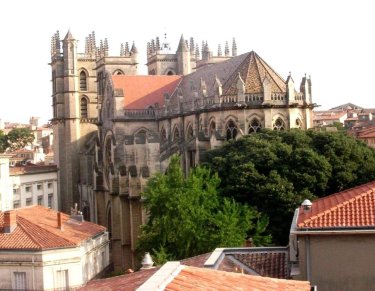
Montpellier Cathedral is a Catholic cathedral in the old town of Montpellier in Hérault. It is the city’s most important Gothic monument and the largest church in the former Languedoc-Roussillon region.
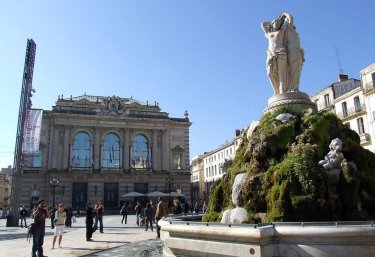
Comédie Square is a major urban square in Montpellier, shaped as a long rectangle and linked to Esplanade Charles-de-Gaulle. It is widely associated with the Three Graces fountain and its role as a central meeting place.
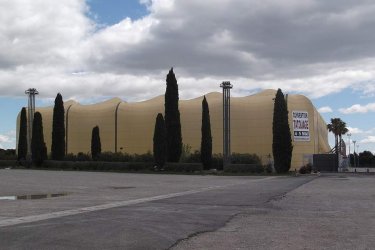
Zénith Sud is a performance hall in Montpellier, built by Chaix & Morel et associés as a Zénith venue. Inaugurated in 1986, it was the first Zénith type performance hall constructed outside Paris and can accommodate spectators.
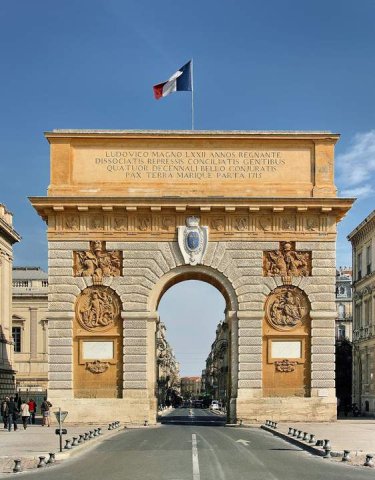
The Gate of Peyrou is the Arc de Triomphe of Montpellier, erected in 1691 by Augustin-Charles d'Aviler. It stands on the Promenade du Peyrou and was designed from drawings by François II d'Orbay.
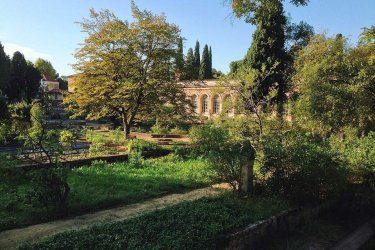
Jardin des plantes de Montpellier is a botanical university garden founded in 1593 in Montpellier. Part of the Faculty of Medicine and the University of Montpellier, it combines botanical, historical, and university functions.
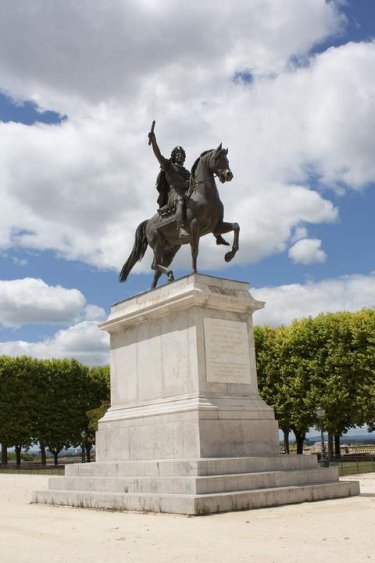
The equestrian statue of Louis XIV is a bronze sculpture erected in 1828 in Montpellier’s Promenade du Peyrou. It represents King Louis XIV and is the second such representation in the city, replacing an earlier version destroyed during the French Revolution.
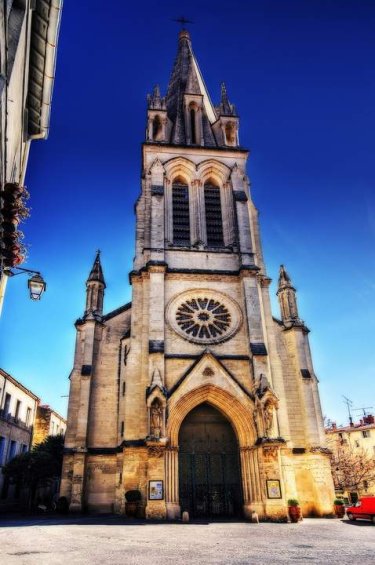
Sainte-Anne Church is an ancient parish church in Montpellier, France. Built in the 15th century, it was destroyed and rebuilt several times before being deconsecrated and turned into the cultural venue Carré Sainte-Anne.
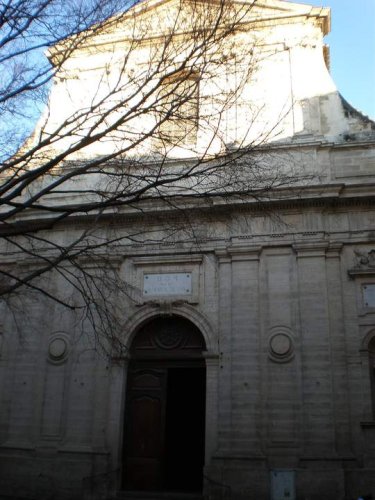
Basilique Notre-Dame des Tables is a Baroque church in the heart of Montpellier on rue du Collège. Begun in 1707 by Jean Giral and finished in 1748, it was formerly the chapel of the Jesuit college and became the parish church in 1802.
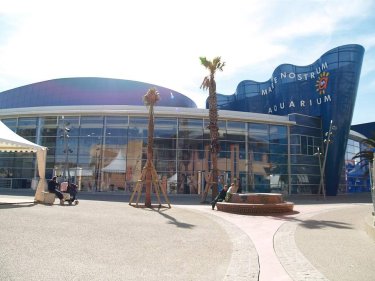
Planet Ocean Montpellier is a complex in Montpellier’s Odysseum entertainment zone that combines an aquarium and a planetarium. Its aquarium and planetarium were once managed independently, under the names Mare Nostrum and Galilée.
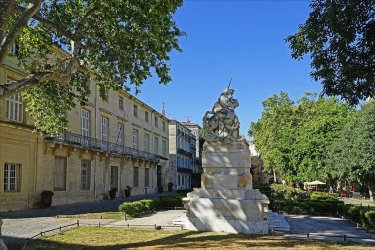
Place de la Canourgue is a rectangular square in Montpellier’s l’Écusson, in the Centre-Ville district. It is bounded by four streets and has five access streets, including one beside the hôtel Richer de Belleval.
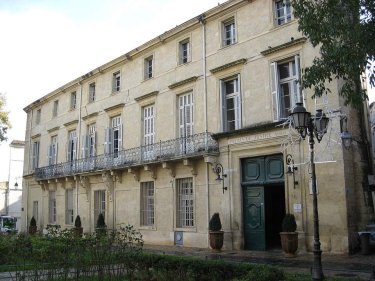
L’Hôtel Richer de Belleval, also known as hôtel de Belleval and hôtel de Boulhaco, is a private mansion on Place de la Canourgue in Montpellier. Registered as a historic monument, it reopened after major rehabilitation and now includes a hotel, restaurant, and contemporary art foundation.
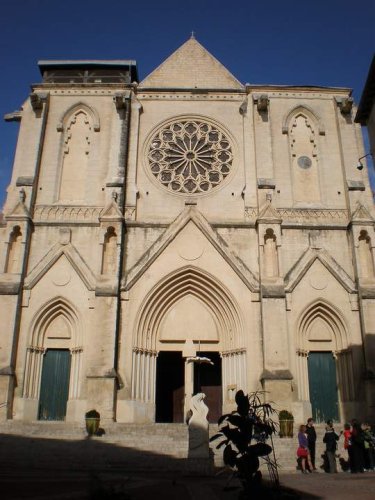
Saint-Roch Church is a 19th-century neo-Gothic church in the heart of Montpellier, France. Dedicated to Saint Roch, it is a diocesan sanctuary and a place of pilgrimage.
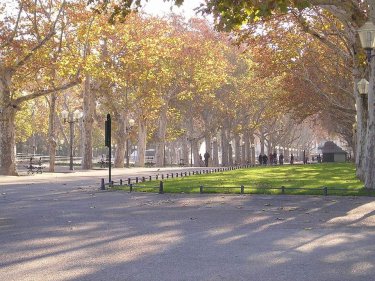
Esplanade Charles de Gaulle is a square in the city centre of Montpellier. It extends Place de la Comédie and is bordered by plane trees, fountains, and the wooded Jardin du Champ-de-Mars.
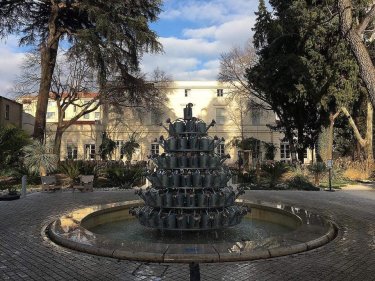
MO.CO. is a contemporary art institution in Montpellier. It was established as a public cultural cooperation establishment and operates as a multi-site structure with educational and exhibition functions.
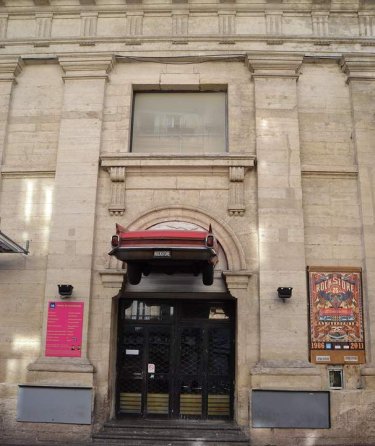
Rockstore is a venue in the center of Montpellier occupying a 19th-century building with a long religious and civic history. It has served as a Franciscan convent, Protestant temple, cinema, garage, and concert hall.
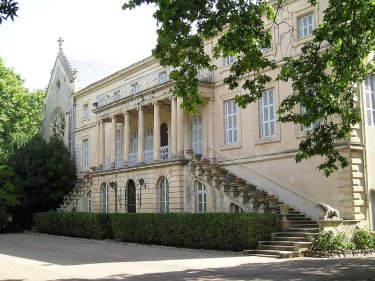
Domaine de Grammont is a château and former Grandmont priory on the east side of Montpellier, near the Lez and the boundary with Saint-Aunès. It later became a viticultural property and, since the 1980s, a place for spectacles and sports.
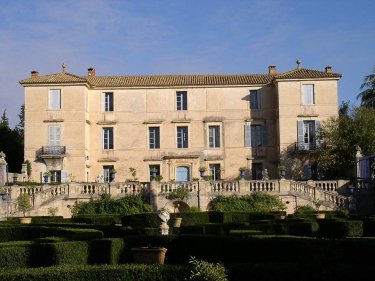
Château de Flaugergues is a folly from 1696 in Montpellier, Hérault. Classified as a historical monument, it belongs to the Colbert family and forms the center of a vineyard estate in an urban setting.
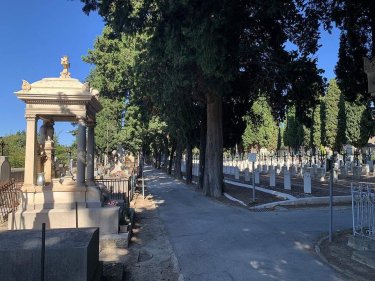
Saint-Lazare Cemetery is the largest cemetery in Montpellier, Hérault. Established in 1846 on the former Saint-Lazare hospital grounds, it includes military sections, a Jewish section, and notable tombs and vaults.
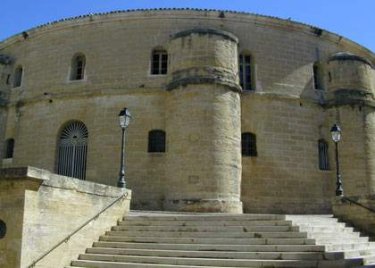
The Convent of the Ursulines of Montpellier is a former convent in the rue Sainte-Ursule district of Montpellier, Hérault. Transformed into a prison in the 19th century, it is now occupied by Agora, Cité internationale de la danse.
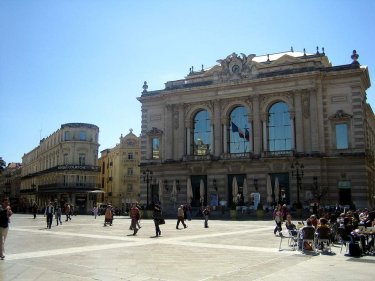
Opéra national de Montpellier is a large Italian-style opera house in Montpellier. Its building includes a decorated facade, a grand foyer, a monumental staircase, and domes painted by Ernest Michel.
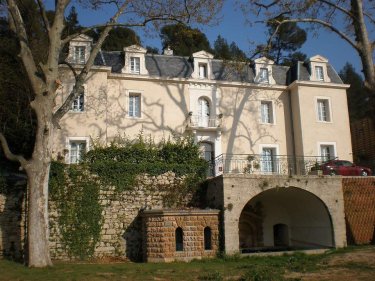
The Château de Bionne is a late-18th-century folly in Montpellier, west of the city in Hérault. Located at the end of rue de Bionne, it was modified in the 19th century and later used for several different functions.
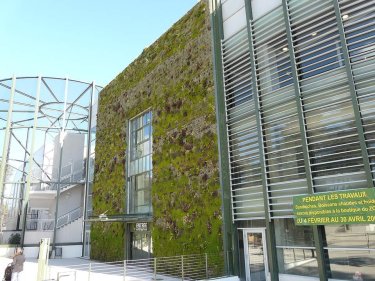
Parc zoologique de Montpellier is a zoological park in the Lunaret park area, north of Montpellier in the Occitanie region. Founded in 1964, it covers 80 hectares and presents about 170 animals from 29 species.
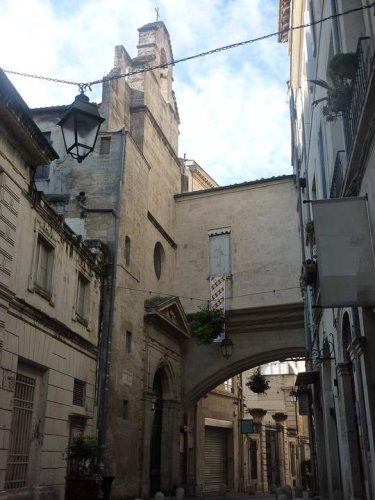
La chapelle Sainte-Foy is a church at 14, rue Jacques Cœur in Montpellier, dedicated to Sainte Foy. Founded in the Middle Ages, it preserves a baroque interior, a 17th-century painted ceiling, and a bell dated 1401.