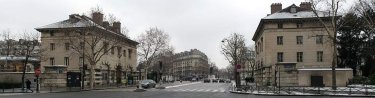
Denfert-Rochereau Square
Denfert-Rochereau is a public square in Paris’s 14th arrondissement, in the Montparnasse district. It is one of the largest squares on the left bank and is known for the Lion of Belfort and the Paris Catacombs museum.
Denfert-Rochereau is a public square in Paris’s 14th arrondissement, in the Montparnasse district. It is one of the largest squares on the left bank and is known for the Lion of Belfort and the Paris Catacombs museum.
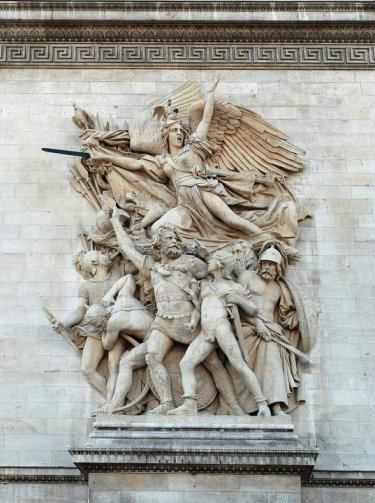
The Departure of the Volunteers of 1792 is a monumental stone bas-relief by François Rude, created between 1833 and 1836. Installed on the Arc de Triomphe in Paris, it shows volunteers moving left under an allegorical winged Victory.
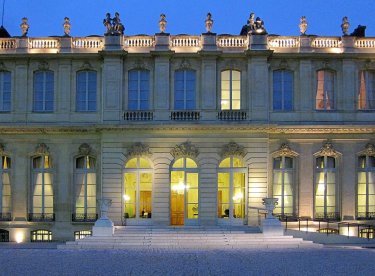
Hôtel de Lassay is an 18th-century hôtel particulier in the 7th arrondissement of Paris. It stands next to the Palais Bourbon and serves as the residence of the President of the French National Assembly.
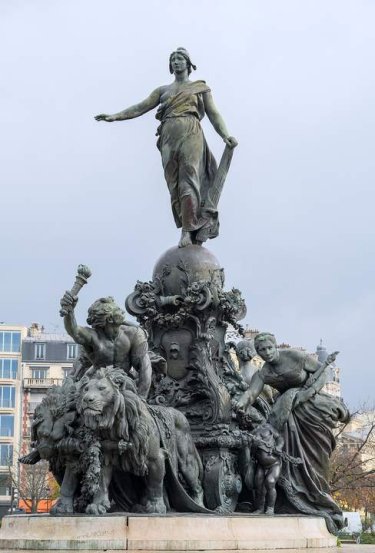
The Triumph of the Republic is a bronze monument and fountain at Place de la Nation in Paris. Created by Jules Dalou, it shows a Republic on a chariot pulled by two lions, guided by the Genius of Liberty and surrounded by allegories of Labor, Justice, and Peace.
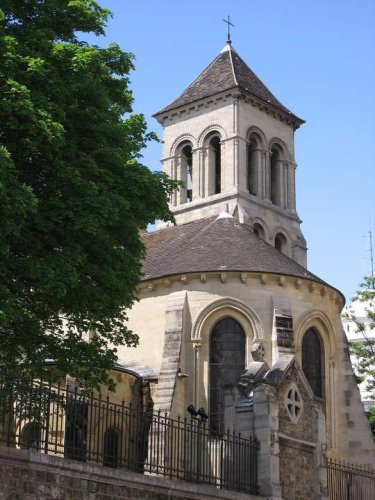
Saint-Pierre de Montmartre is a Roman Catholic parish church in the 18th arrondissement of Paris, west of Sacré-Cœur in Montmartre. It is one of two parish churches in the district and has long been associated with the history of Montmartre.
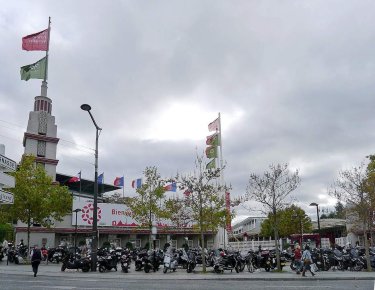
Paris Expo Porte de Versailles is a large exhibition park on the border of Paris, Issy-les-Moulineaux, and Vanves. Opened for exhibitions in 1923, it has hosted major fairs and trade shows and remains the second largest exhibition park in France.
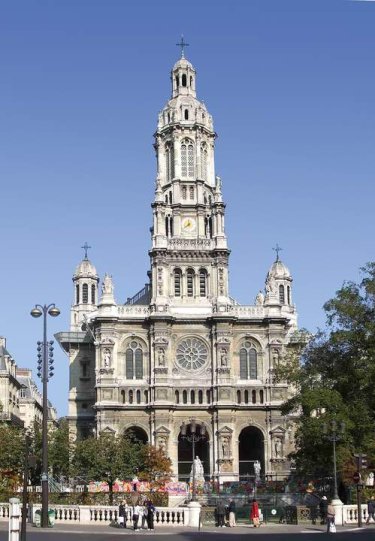
Église de la Sainte-Trinité is a Roman Catholic church in the 9th arrondissement of Paris, at 3 rue de la Trinité and place d’Estienne d’Orves. Built between 1861 and 1867, it features an ornate Neo-Renaissance, Second Empire style and a 65-meter belfry.
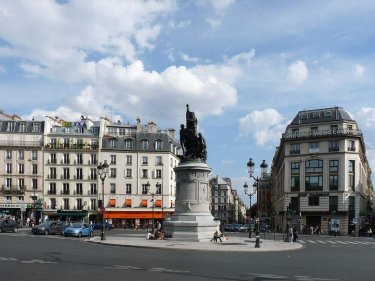
Place de Clichy is a square in Paris on the site of the former barrière de Clichy. It was known as place and barrière de Clichy from 1789 to 1814 and was later fully classified in the Paris roadway in 1864.
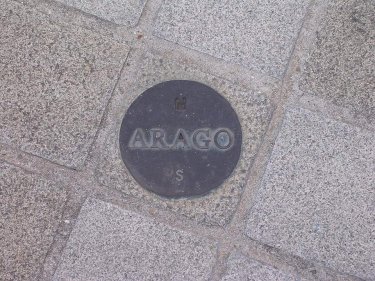
Hommage à Arago is a public artwork in Paris made up of bronze medallions embedded in the ground along the Paris meridian. Created in 1994, it honors French scientist and politician François Arago.
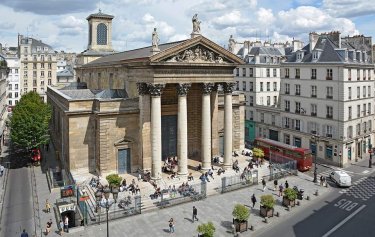
Notre-Dame-de-Lorette is a Catholic place of worship in Paris, located on rue de Châteaudun in the 9th arrondissement. It belongs to the parish of the same name in the Archdiocese of Paris and is near the Le Peletier and Notre-Dame-de-Lorette metro stations.
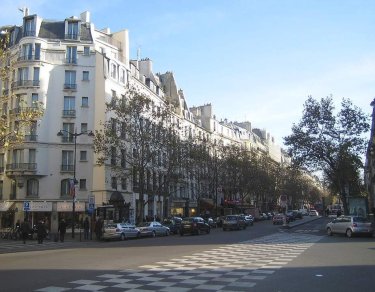
Boulevard Saint-Germain is a Paris boulevard on the Left Bank, near Saint-Germain-des-Prés. It forms part of the main route of the Latin Quarter and connects several central districts along the Seine.
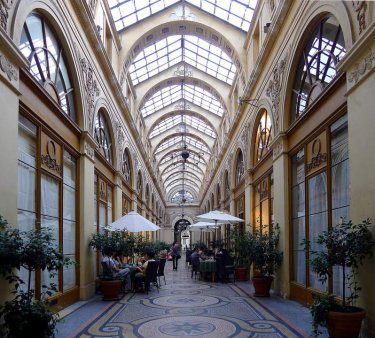
Galerie Vivienne is a covered passage in the 2nd arrondissement of Paris. It is privately owned but open to pedestrians during public hours, and is known for its Pompeian neo-classical decor, glass roof, and original gallery and rotunda.
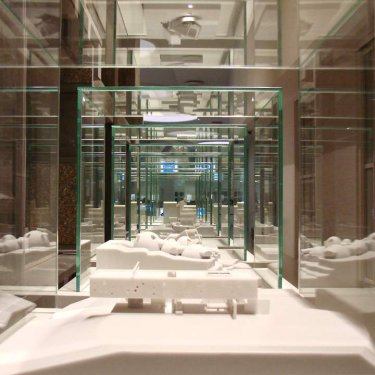
The Cité de l'architecture et du patrimoine is an architectural museum in the Palais de Chaillot in Paris. It is a public establishment under the supervision of the Ministry of Culture, devoted to French architecture, built heritage, and contemporary creation.
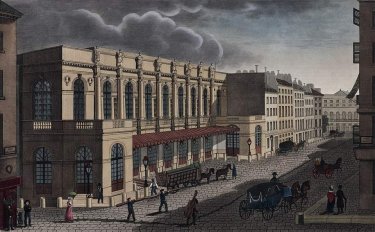
Salle Le Peletier was an opera house in Paris that housed the Paris Opera from 1821 until it was destroyed by fire in 1873. Designed by François Debret, it was built on the site of the garden of the Hôtel de Choiseul on rue Lepeletier.
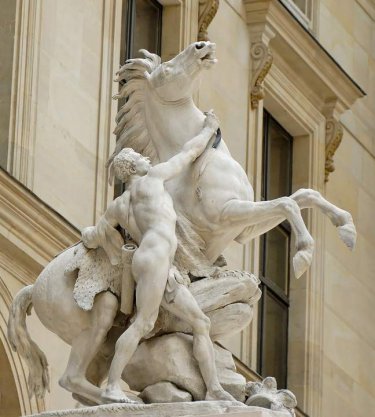
The Marly Horses are two symmetrical Carrara marble sculptural groups by Guillaume Coustou the Elder, made between 1743 and 1745. They depict rearing horses being restrained by charioteers and were commissioned for the Marly watering basin.
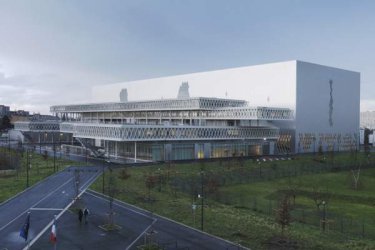
The Archives nationales are France’s national archives, created by decree of the Constituent Assembly in 1790. They preserve archives of the central organs of the French State, with headquarters in Pierrefitte-sur-Seine and additional holdings in Paris.
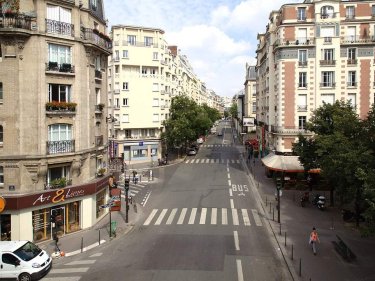
Rue de Vaugirard is a street crossing the 6th and 15th arrondissements of Paris. At 4.3 kilometres long, it is the longest street in Paris intra-muros and has 407 building numbers.
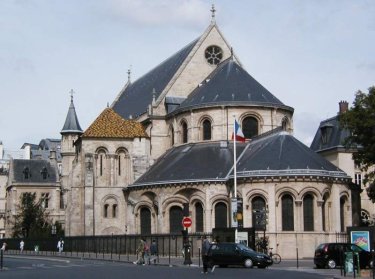
St-Martin-des-Champs Priory is a former Catholic abbey and priory in Paris. Founded in 1059 and entrusted to the Cluniacs in 1079, it became an important medieval dependency with royal protection, donations, and extensive possessions.
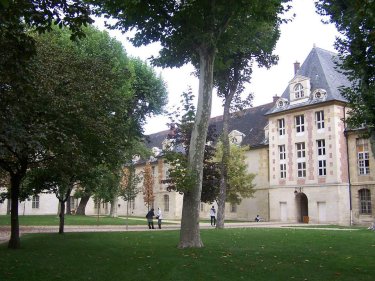
Hôpital Saint-Louis is an Assistance publique–Hôpitaux de Paris hospital in the 10th arrondissement of Paris. Founded by Henri IV in the early 17th century, it combines historic buildings with a modern hospital complex.
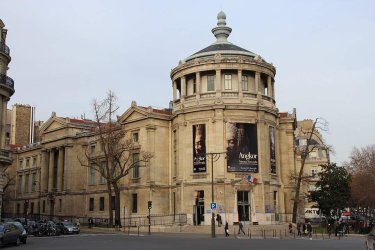
The Guimet Museum is the musée national des Arts asiatiques in Paris, at 6 place d’Iéna. Founded by Émile Guimet, it was inaugurated in 1889 and presents one of the most complete collections of Asian arts worldwide.
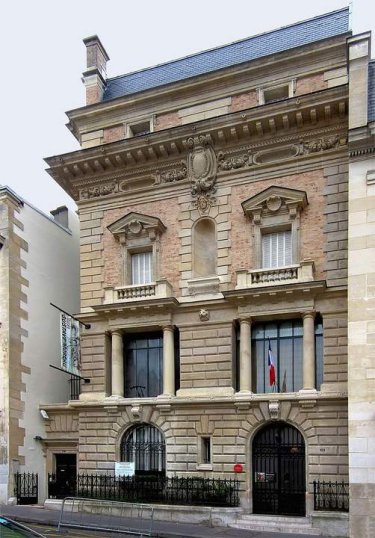
Musée Gustave Moreau is a national museum at 14 rue de La Rochefoucauld in Paris’s 9th arrondissement, set in the former studio of the symbolist painter Gustave Moreau. It preserves and presents his work and studio environment.
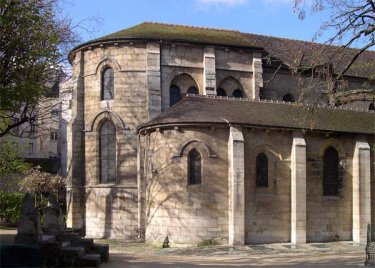
Saint-Julien-le-Pauvre is a medieval church on the left bank of the Seine in Paris’s Quartier Latin, on rue Saint-Julien-le-Pauvre in square René-Viviani. It has been entrusted to the Greek Melkite Catholic Church since the end of the 19th century and is assigned to the Byzantine rite.
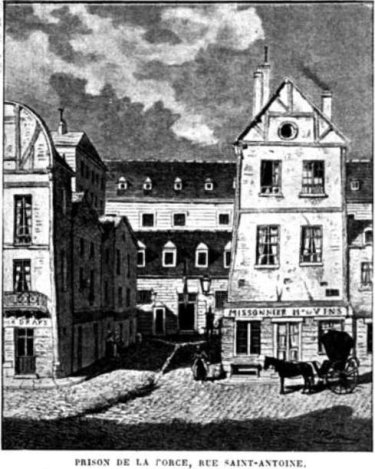
La Force Prison was a former hôtel particulier transformed into a maison de détention. It served as a prison for Paris between 1780 and 1845, and today the building is almost entirely destroyed.
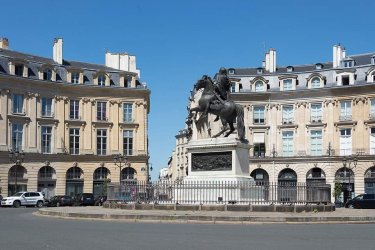
Place des Victoires is a square in the historical center of Paris. Created in honor of Louis XIV, it is the third Royal square built in the city, after Place Dauphine and Place des Vosges.
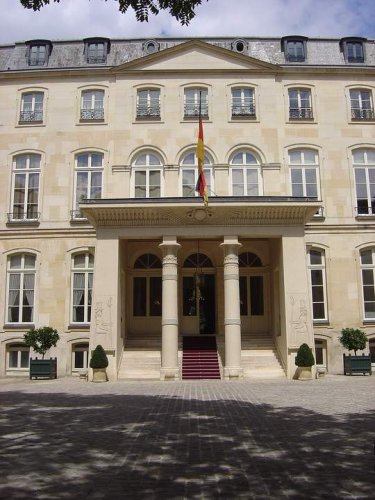
Hôtel Beauharnais is a historic hôtel particulier in Paris’s 7th arrondissement. Designed by Germain Boffrand and completed in 1714, it was later rebuilt in the Empire style by Eugène de Beauharnais and now serves as the official residence of the German ambassador to France.
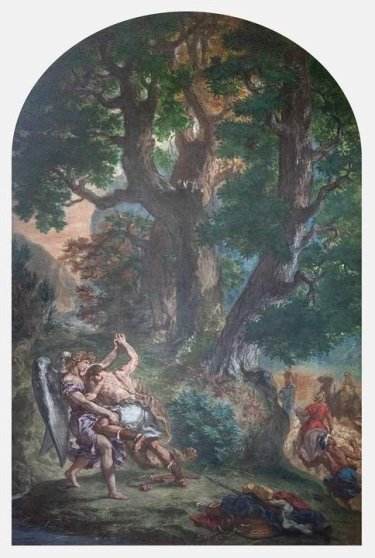
Jacob Wrestling with the Angel is a mural painting by Eugène Delacroix, completed in 1861 for the chapel of the Saints-Anges at Saint-Sulpice in Paris. It is one of the painter’s last masterpieces and is classified as a historical monument object.
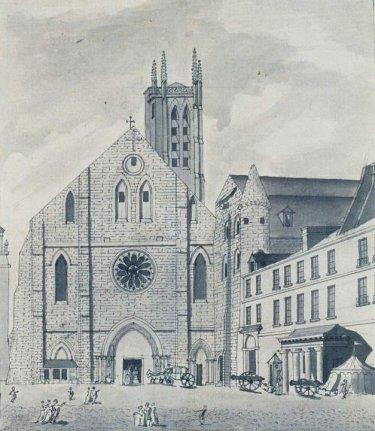
The Abbey of St Genevieve was a church building in Paris founded by Historique in 508 near the former palace of the Thermes. It became associated with the burial of its founder and with the relics of Saint Genevieve.
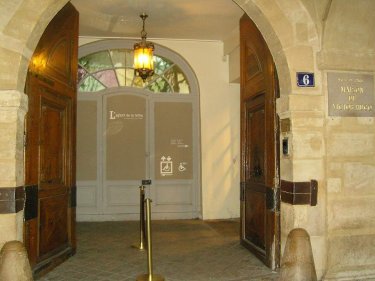
Maison de Victor Hugo is a monographic Paris museum at 6, place des Vosges. It preserves the former hôtel de Rohan-Guémené, where Victor Hugo rented an apartment on the second floor from 1832 to 1848.
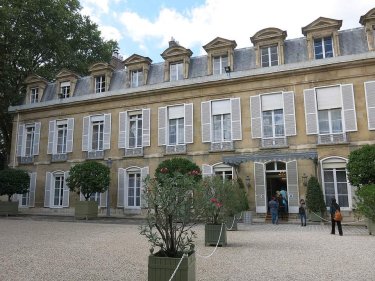
Petit Luxembourg is a private mansion in the 6th arrondissement of Paris, west of the Palais du Luxembourg on Rue de Vaugirard. It has served as the residence of the President of the French Senate since 1825.
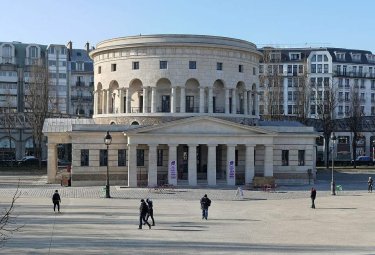
Place de la Bataille-de-Stalingrad is a square in Paris, located in the 10th and 19th arrondissements, in the quartiers of l'Hôpital-Saint-Louis and de la Villette. Created in 1945 and redeveloped in 1988, it combines urban landscaping, transit infrastructure, and commemorative elements.
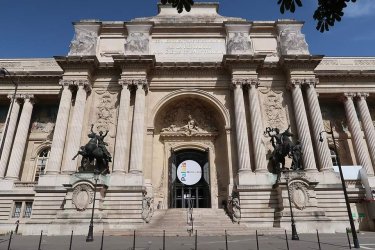
The Palais de la Découverte is a science museum created by Jean Perrin in 1937 to show science in the process of being made. Its displays include experiments in optics, biology, X-rays, and other fields.
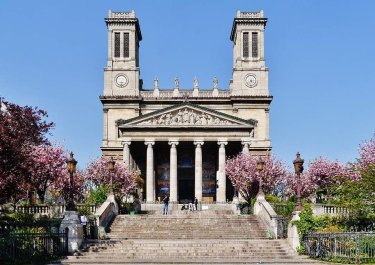
Saint-Vincent-de-Paul Church is a 19th-century church in Paris on Place Franz-Liszt. Dedicated to Saint Vincent de Paul, it dominates the neighborhood and stands on the former Saint-Lazare enclosure, where he lived and worked.
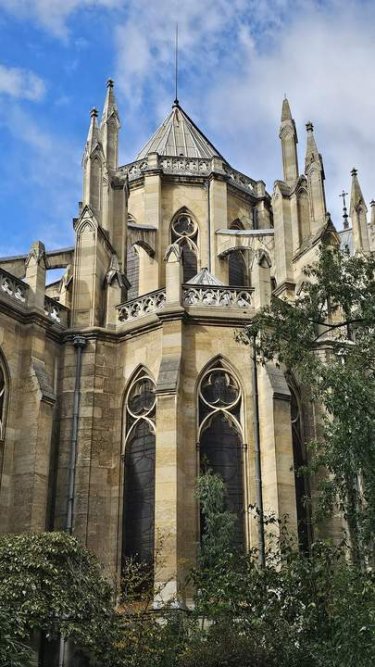
Sainte-Clotilde Church is a minor basilica on Rue Las Cases in Paris’s 7th arrondissement. Built between 1846 and 1857, it was the first neo-Gothic church in Paris and was later declared a minor basilica in 1896.
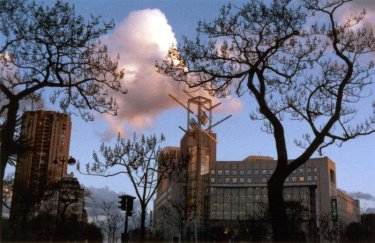
Place d’Italie is a square in Paris located at a major crossroads. Its history is tied to the ancient Roman road from Lutèce to Lugdunum, later road and boulevard development, and the former barrière d’Italie.
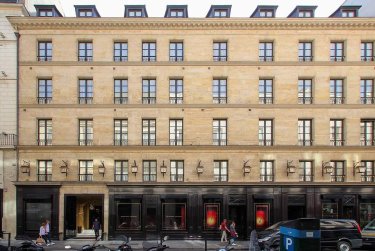
Hôtel Costes is a 5-star Parisian hotel with 84 rooms, a terrace and a spa. Founded by Jean-Louis and Gilbert Costes, it is known for its distinctive decoration, lounge atmosphere, and position as a luxury hotel with a strategy different from palaces.
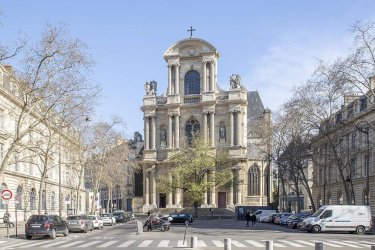
Saint-Gervais-Saint-Protais is a church in the Saint-Gervais district of Paris, east of the Hôtel de Ville. Its history reaches back to the earliest known place of worship on the right bank of Paris.
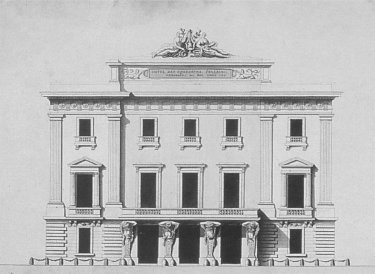
Hôtel de Bourgogne was a theatre built in Paris in 1548 for the Confrérie de la Passion. Located on rue Mauconseil, it became a major French stage before closing in 1783.
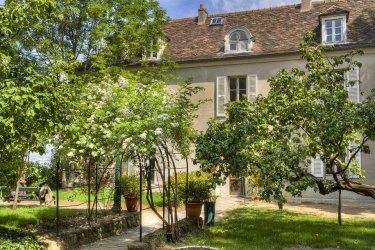
The Musée de Montmartre is a French art museum in the Montmartre district of Paris’s 18th arrondissement. It is housed in a group of historic buildings and presents the history of Montmartre and its artists.
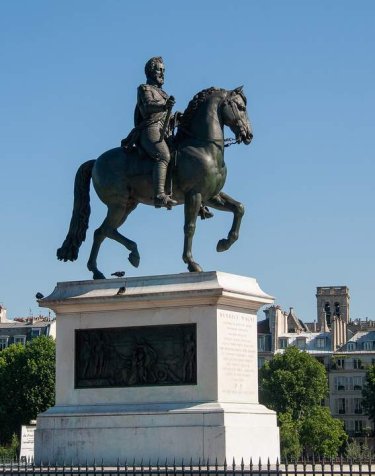
The equestrian statue of Henri IV is a bronze monumental sculpture on Place du Pont-Neuf in Paris. Inaugurated in 1818, it shows Henri IV on horseback, crowned with laurel and holding a scepter. It replaced earlier versions destroyed or removed.
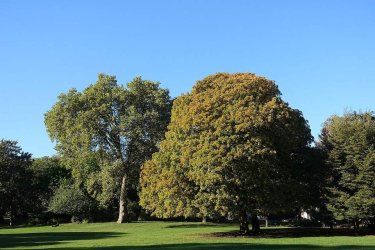
Parc Montsouris is a large urban park in the 14th arrondissement of Paris, opposite the Cité Universitaire de Paris. Established in 1869, it features an English-style landscape with a lake, lawns, planted trees, statues, monuments, and a restaurant.
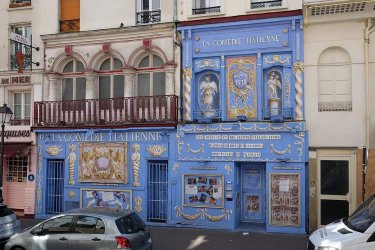
Comédie-Italienne was a French name used for Italian-language theatre and opera performed in Paris. It is associated with commedia dell’arte troupes, Italian-born royal patrons, and later changes in company name and repertory.
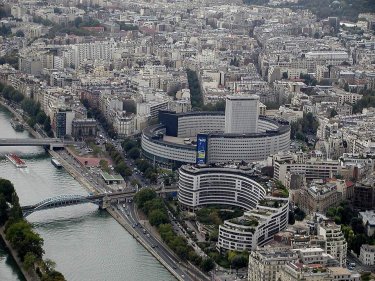
Maison de la Radio is a circular broadcasting house in Paris, designed by Henry Bernard to house French public radio-television. It has a central tower and a circumference of 500 meters.
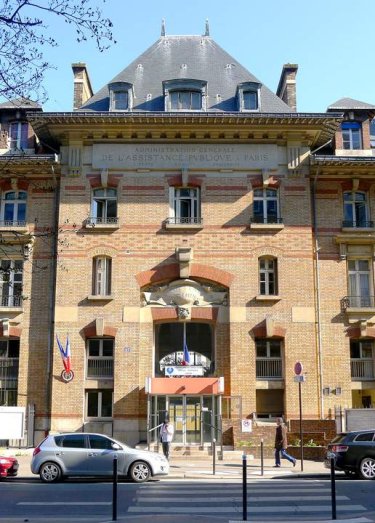
Hôpital Cochin is a hospital of Assistance publique - hôpitaux de Paris in Paris, at 27 rue du Faubourg-Saint-Jacques. It depends on the faculty of medicine of Université Paris-Cité and traces its origins to an 18th-century hospice founded by Jean-Denis Cochin.
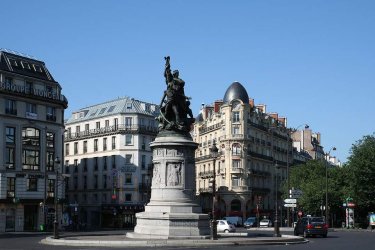
The Monument to Maréchal Moncey is a statue at Place de Clichy in Paris. It commemorates the defense of Paris against Russian troops in 1814 and was created by sculptor Amédée Doublemard with architect Edmond Guillaume.
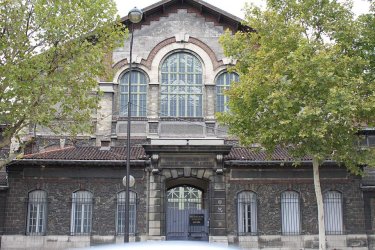
Ateliers Berthier is a set of buildings at 32 boulevard Berthier in Paris. Designed by Charles Garnier in the late 19th century, they were built as workshops and storage for the Opéra de Paris décor and now house the Odéon-Théâtre de l'Europe’s second auditorium.
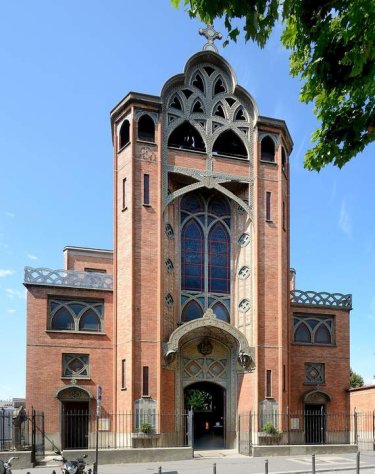
Saint-Jean-de-Montmartre is a Roman Catholic parish church at 19 Rue des Abbesses in Paris’s 18th arrondissement. Built from 1894 to 1904, it combines Art Nouveau forms with Gothic structural elements and pioneering reinforced concrete construction.
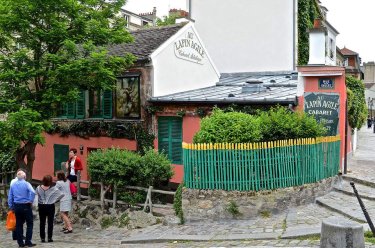
Au Lapin Agile is a cabaret at 22 rue des Saules in Montmartre, Paris, established in the second half of the 19th century. It became a gathering place for early 20th-century artistic bohemia and remains active today.
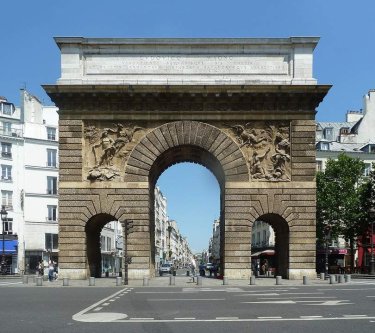
Porte Saint-Martin is a 17th-century triumphal arch on the Grands Boulevards in Paris, in the 10th Arrondissement. Built by Pierre Bullet, it was listed as a Monument historique in 1862.