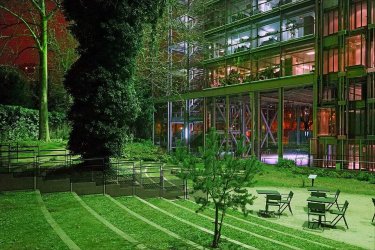
Fondation Cartier
Fondation Cartier pour l’art contemporain is a private institution dedicated to contemporary art. Founded in 1984, it has served as an exhibition and creation space for artists from around the world.
Fondation Cartier pour l’art contemporain is a private institution dedicated to contemporary art. Founded in 1984, it has served as an exhibition and creation space for artists from around the world.
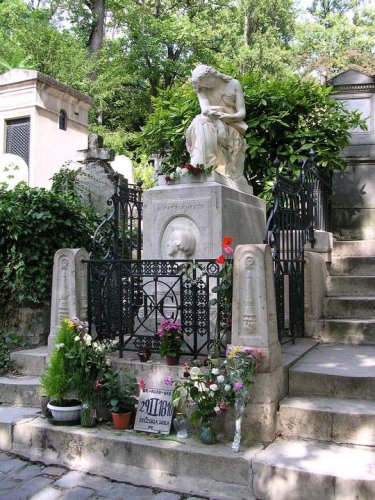
Frédéric Chopin’s tomb is a funerary monument by Auguste Clésinger in Père-Lachaise cemetery, Paris. Inaugurated in 1850, it is classified as a historical monument.
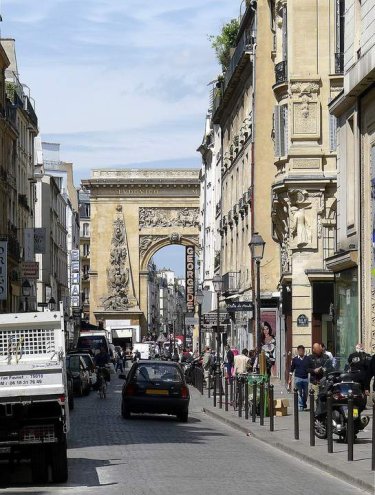
Rue Saint-Denis is a street in the 1st and 2nd arrondissements of Paris. Among the city’s oldest streets, its axis was traced by the Romans in the 1st century and it later served as a route for royal entries.
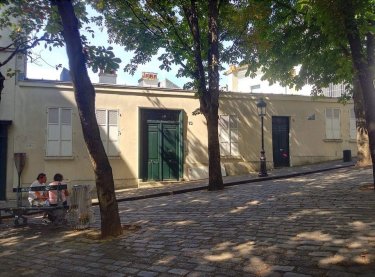
Le Bateau-Lavoir was a dilapidated house on Montmartre in Paris, where later famous artists rented studios around 1900. It became associated with early Cubism and was destroyed by fire in 1970.
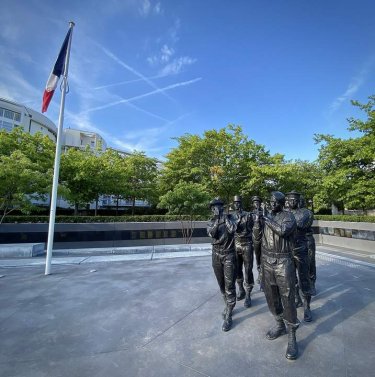
Inaugurated in Paris in the garden Eugénie-Djendi of the parc André-Citroën, this memorial honours soldiers who died for France in external operations (OPEX). It is part of the important places of national memory.
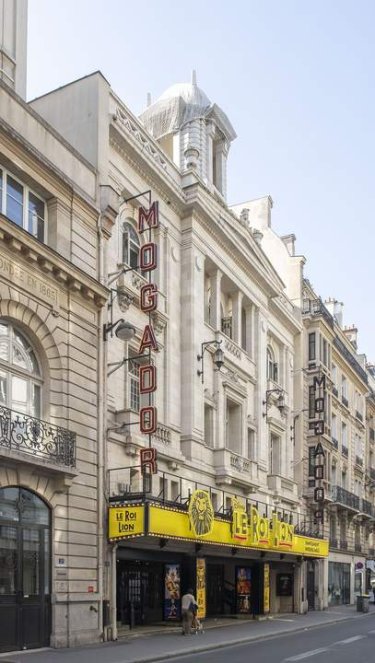
Théâtre Mogador is a performance venue in Paris. Built in 1913 and inaugurated in 1919, it has three levels named orchestre, corbeille, and balcon. Originally called Palace Théâtre, it was later renamed for its location on rue de Mogador.
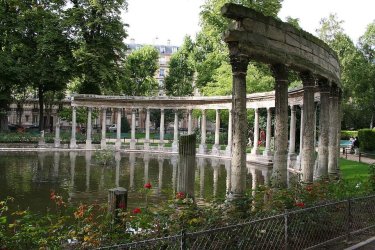
Parc Monceau is a garden in the Europe district of Paris, sometimes called parc de Monceau. It is surrounded by streets, avenues, and luxurious hôtels particuliers, and includes historic features such as the Naumachie, a Ledoux rotunda pavilion, and marble statues.
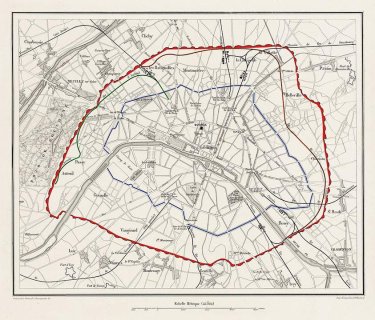
The Wall of the Farmers-General was one of the walls of Paris, built from 1784 to 1790. It was 24 kilometers long and served a fiscal function, allowing the Ferme Générale to charge taxes on goods entering the city.
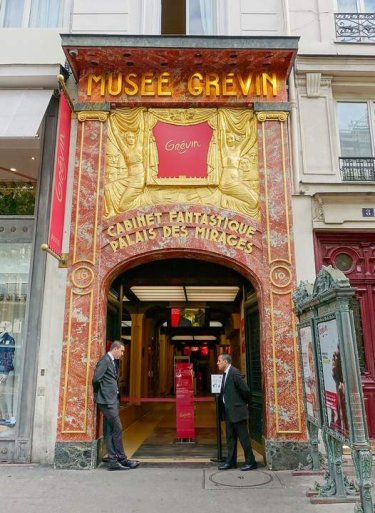
Musée Grévin is a private wax museum in the 9th arrondissement of Paris, created by Arthur Meyer. It contains wax reproductions of famous personalities, recreated French historical scenes, and attractions including the Grévin theater and the Palais des Mirages.
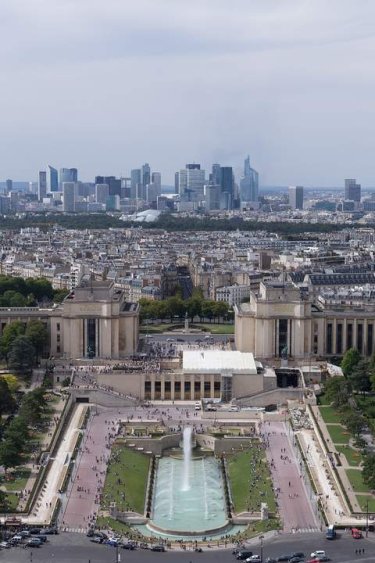
The Jardins du Trocadéro are an urban park in Paris facing the Seine. Created for the 1937 Exposition spécialisée, they occupy the site of the former garden of the palais du Trocadéro and are bordered by the palais de Chaillot.
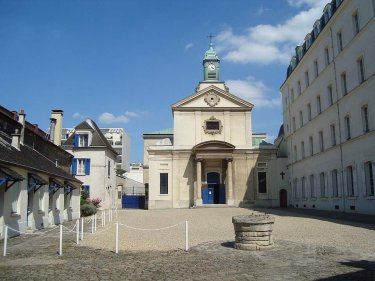
Picpus Cemetery is the largest private cemetery in Paris, located in the 12th arrondissement. Created from confiscated convent land during the French Revolution, it contains the graves of 1,306 victims executed in 1794 and the tomb of Marquis de Lafayette.
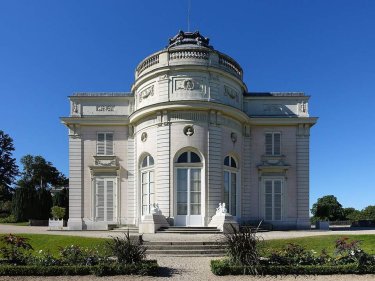
Château de Bagatelle is a pleasure pavilion, or folie, built in 1777 by architect François-Joseph Bélanger for the comte d'Artois. It is located in the parc de Bagatelle in the Bois de Boulogne, now annexed to Paris.
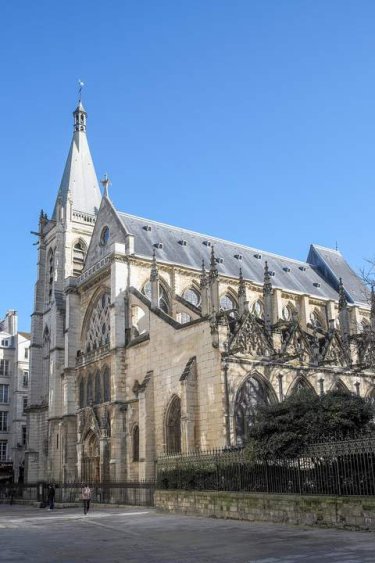
Saint-Séverin is a Catholic church in the 5th arrondissement of Paris, in the Latin Quarter on the left bank of the Seine. Its oldest parts date to the 13th century, and its present character mainly reflects Flamboyant Gothic work from the 15th century.
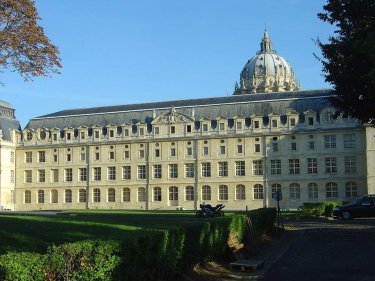
Val-de-Grâce was a former French military teaching hospital located in Val-de-Grâce. It served social security beneficiaries, accepted referred patients, and took part in the public hospital service mission with AP-HP.
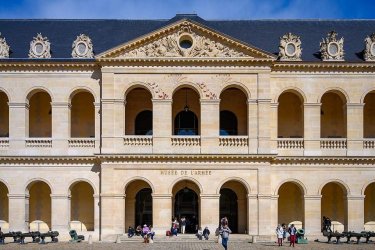
The Musée de l'Armée is a French military museum and national museum located at the Hôtel des Invalides. Created in 1905, it brought together the Artillery Museum and the Historical Army Museum and later acquired major wartime objects.
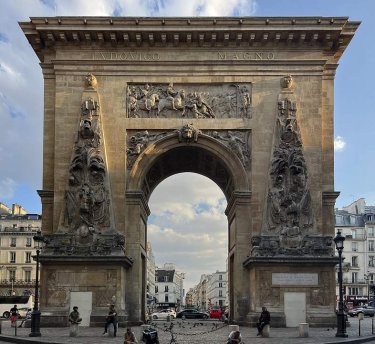
Porte Saint-Denis is a triumphal arch in Paris, built in 1673 by François Blondel to honor Louis XIV. It stands at the site of a former gate of Charles V’s enclosure and is a representative monument of the official art of its era.
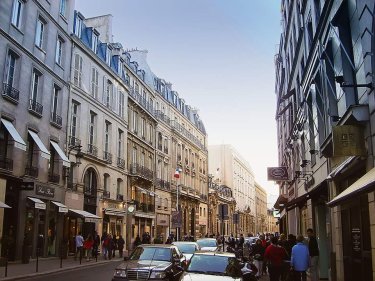
Rue du Faubourg-Saint-Honoré is a Paris shopping street stretching from rue Royale to place des Ternes. It includes the Élysée Palace and is lined with embassies, luxury stores, haute couture shops, galleries, and antique shops.
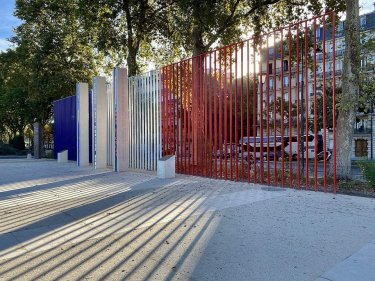
This memorial on quai Jacques-Chirac in Paris faces the Eiffel Tower. It commemorates the Algerian War and the conflicts in Morocco and Tunisia, and honors the dead for France, including French, harkis, and civilian victims.