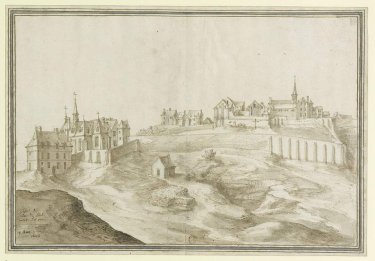
Royal Abbey of Montmartre
The Royal Abbey of Montmartre, or Notre-Dame de Montmartre, was an abbey for Benedictine nuns founded by King Ludwig VI in 1133/34. Its complex stood on Montmartre and was later abandoned.
The Royal Abbey of Montmartre, or Notre-Dame de Montmartre, was an abbey for Benedictine nuns founded by King Ludwig VI in 1133/34. Its complex stood on Montmartre and was later abandoned.
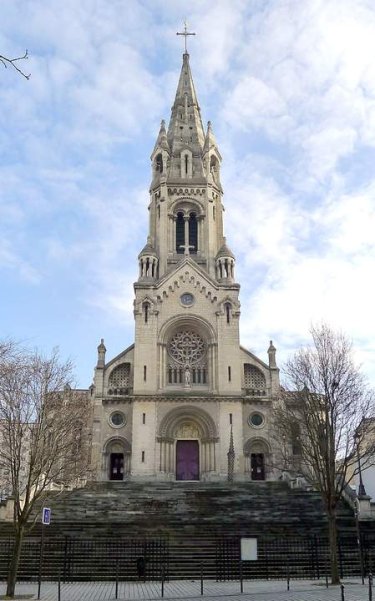
Église Notre-Dame-de-la-Croix de Ménilmontant is a Catholic church in Paris’s 20th arrondissement. It combines neo-Romanesque and neo-Gothic elements, features a 65-metre bell tower and a monumental staircase, and is listed as a historic monument.
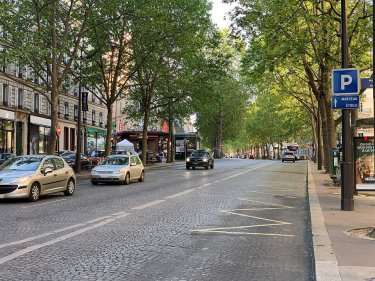
Avenue Marceau is a major street in western Paris, France. It runs from Place Charles de Gaulle toward Avenue du Président-Wilson and forms the boundary between the 8th and 16th arrondissements. The avenue is primarily an upscale residential street.
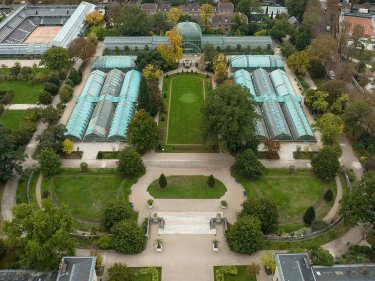
Jardin des serres d’Auteuil is a public botanical garden at the edge of the Bois de Boulogne in Paris. Redesign in the late 19th century brought cast-iron greenhouses, a fountain by Jules Dalou, and mascarons by Auguste Rodin.
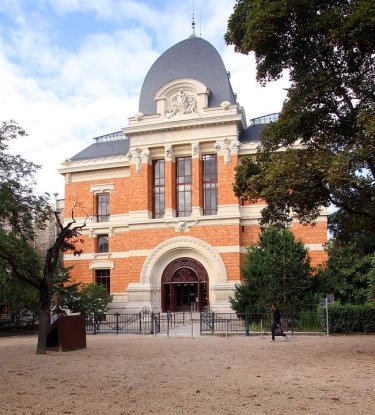
The Galerie de Paléontologie et d'Anatomie comparée is a gallery of the National Museum of Natural History in Paris. It stands east of the Jardin des Plantes, at the beginning of Rue Buffon, in a building designed by Ferdinand Dutert.
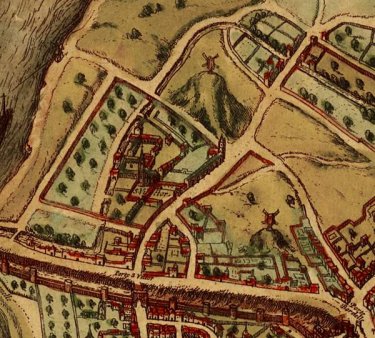
Abbey of St. Victor was a Paris abbey of regular canons founded by Guillaume de Champeaux. It became an important center of medieval theology and philosophy before being suppressed in 1790 and demolished in 1811.
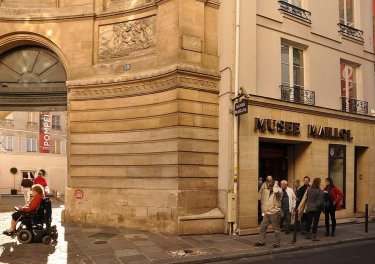
Musée Maillol is a private museum at 61 rue de Grenelle in Paris. Created by Dina Vierny, it presents works by Aristide Maillol and a 20th-century modern art collection, with temporary exhibitions devoted to modern and contemporary art.
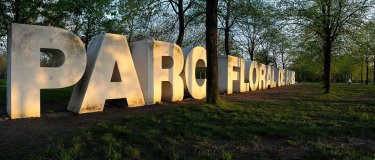
Parc floral de Paris is a public park and botanical garden in the Bois de Vincennes in Paris’s 12th arrondissement. Created in 1969, it remains a legacy of an international horticultural exposition and is one of the city’s four botanical gardens.
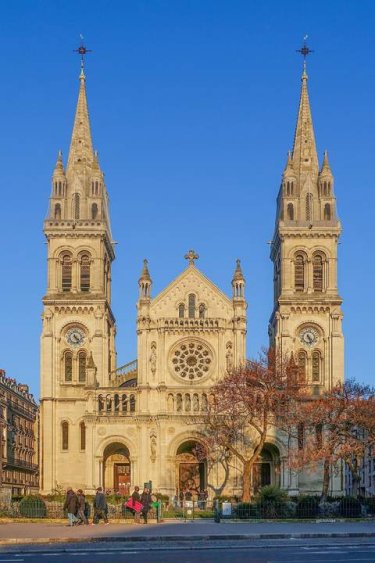
Saint-Ambroise is a Roman Catholic parish church in the 11th arrondissement of eastern Paris. Dedicated to St. Ambrose, it gave its name to the quartier Saint-Ambroise and stands near the Saint-Ambroise Metro station.
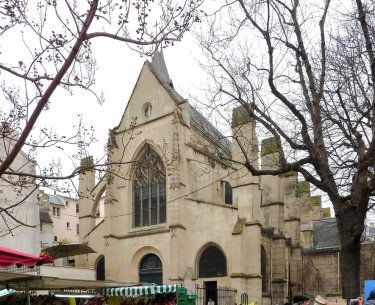
Église Saint-Médard is a Roman Catholic church at 141 Rue Mouffetard in the 5th arrondissement of Paris. Named for Saint Medard, it has medieval origins and a long construction history.
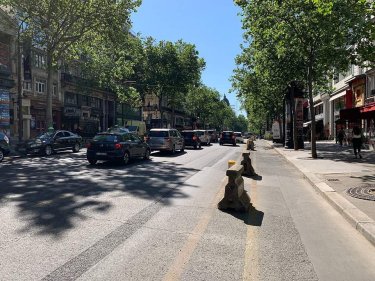
Boulevard Montmartre is a boulevard in Paris, located on the border of the 2nd and 9th arrondissements. It forms part of the Grands Boulevards, a historic sequence of central Paris streets.
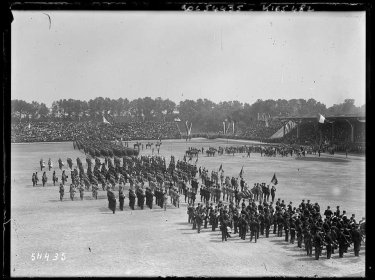
Stade Pershing is a sports venue in the east of Bois de Vincennes, built in 1919 and named for American General John Pershing. It began as a stadium for football, rugby, and athletics before becoming a complex used for multiple sports.
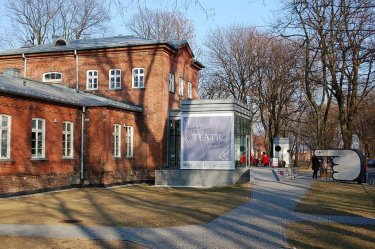
The International Theatre Institute is an international theatre network founded in 1948 under the auspices of UNESCO. It supports mutual exchange among theatre professionals and cultural understanding worldwide through national centres in many countries.
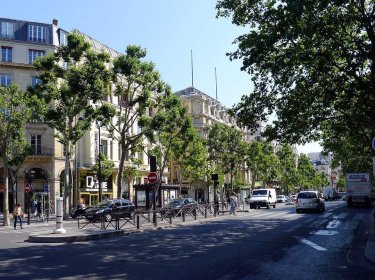
Boulevard de la Madeleine is a street in Paris that forms the boundary between districts I, VIII, and IX. It is part of the Grandes Bulevares chain and is served by the Opéra and Madeleine metro stations.
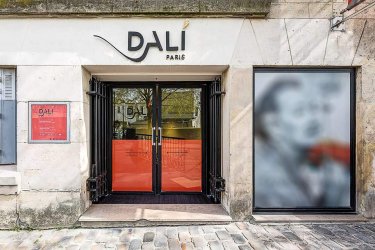
Dalí Paris is a museum exhibition in Montmartre, Paris, devoted to Salvador Dalí. Inaugurated in 1991, it presents around 300 original works, mainly three-dimensional sculptures and engravings.
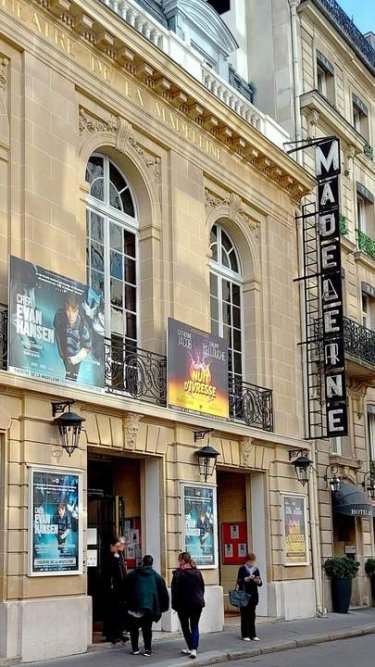
Théâtre de la Madeleine is a theatre building in Paris, built in 1924 on the site of a former horse-riding arena. It became known through its early success in 1925 and later associations with major theatre figures.
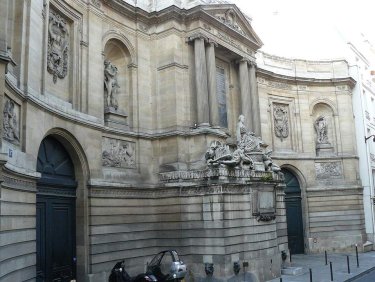
Fontaine des Quatre-Saisons is a monumental fountain in Paris, located at 57 and 59 Rue de Grenelle. Completed in 1745, it combines a classical facade, sculpted decoration, and water-spouting mascarons.
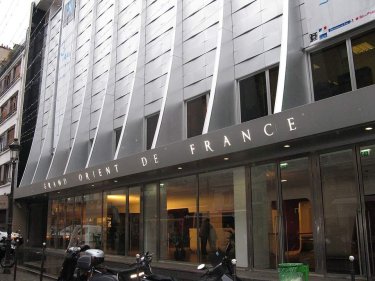
The Musée de la Franc-Maçonnerie is a Masonic museum at the Grand Orient de France headquarters. Its collections grew from the 19th century and include objects, medals, documents, and donations gathered over time.
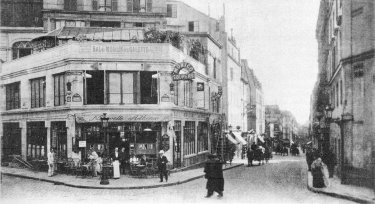
Café de la Nouvelle Athènes was a Paris café located at Place Pigalle No. 9 in the 9th Arrondissement, open since 1855. In the second half of the 19th century, it was frequented by artists, writers, and politicians.
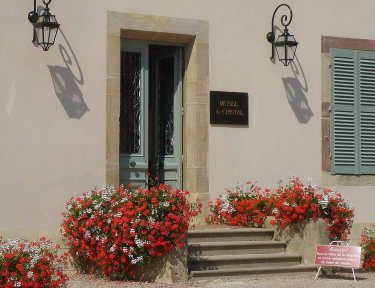
Musée Baccarat is located in an ancient Parisian mansion on Place des Etats Unis. Its modern interior was designed by Philippe Starck and includes vaulted spaces, a grand staircase, and museum halls with Baccarat exhibits.
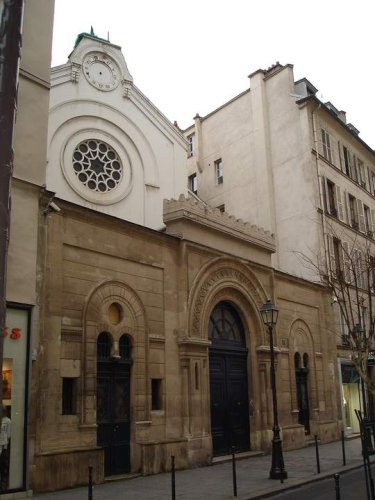
Synagogue de Nazareth is a 19th-century synagogue in Paris. It is the oldest of the city’s large synagogues and is attached to the Consistoire central israélite de France.
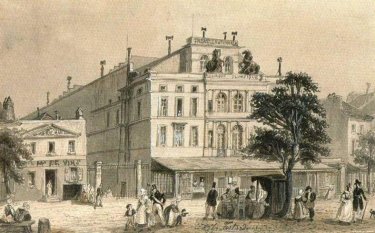
Cirque Olympique, also known as Cirque Franconi, was a French equestrian theatre company founded in 1782 by Philip Astley. Originally called Cirque d'Astley or Cirque Anglais, it is recognized as the first permanent circus in France.
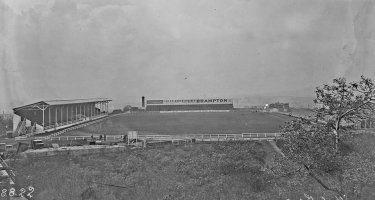
Stade Bergeyre is a stadium associated with Sporting Club de Vaugirard and later Olympique de Paris. It was developed on an isolated hill at Buttes-Chaumont after the club’s former ground was requisitioned near World War I, and its construction was slowed by the war.
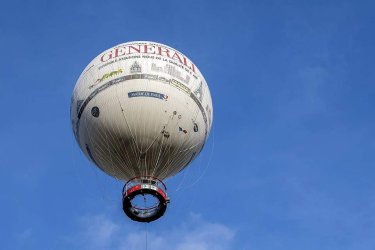
Ballon Generali is a captive balloon installed in André-Citroën Park in Paris. Designed by Aerophile, it serves as a tourist attraction and an air quality awareness tool.
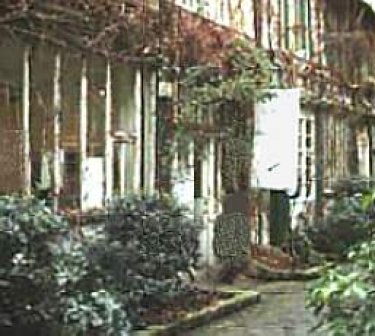
Musée du Montparnasse is an art museum at 21 Avenue du Maine in Montparnasse, Paris. Opened in 1998, it occupies a 1900 building that once housed the studio of Marie Vassilieff.