The Venus of Laussel is a Venus figurine dated to the Gravettian period of the Upper Paleolithic. It was found in 1911 at the Laussel shelter in the commune of Marquay, Dordogne, within the prehistoric site of Laussel on the right bank of the Grande Beune. The figure was sculpted in bas-relief on a limestone block and painted with red ochre. It represents a nude female figure holding an object interpreted as a bison horn in the right hand. The figurine is conserved at the Musée d'Aquitaine in Bordeaux.
The Laussel site forms part of a landscape with several other prehistoric locations in the Vézère valley and around Les Eyzies downstream on the same watercourse. Excavations at Laussel began in 1908, and the Venus with the horn was discovered by workers led by Raymond Peyrille. Several engraved works were also discovered in 1911. After its discovery, the figurine was transported to J.-G. Lalanne’s private museum in Le Bouscat, where it remained after his death in 1924. The Lalanne collections were donated to Bordeaux’s archaeological museum in 1960 and are part of the future Musée d'Aquitaine.
Discovery and Description
The Venus of Laussel is a Venus figurine dated to the Gravettian period of the Upper Paleolithic. It was found in 1911 in the Laussel shelter in the commune of Marquay, Dordogne. The figure was sculpted in bas-relief on a limestone block and painted with red ochre. It represents a nude female figure holding an object interpreted as a bison horn in the right hand. The work is conserved at the Musee d'Aquitaine in Bordeaux.
Location and Nearby Prehistoric Sites
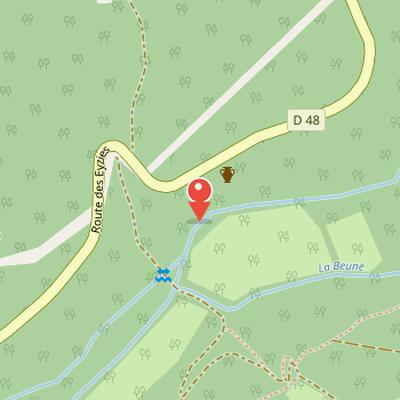
The prehistoric site of Laussel is located in the commune of Marquay, on the right bank of the Grande Beune. It lies upstream from the chateau de Laussel and west of the bourg. The site is part of a wider concentration of prehistoric places in the area, with the abri sous roche du Cap Blanc downstream and west of Laussel, and the abri de la Greze also downstream. Farther downstream on the same watercourse, the area around Les Eyzies includes sites such as Les Combarelles and Font-de-Gaume. Other prehistoric sites in the Vezere valley west of Laussel include La Mouthe, abri Pataud, abri de Cro-Magnon, abri du Poisson, Laugerie-Basse, and Laugerie-Haute. The surrounding area is also associated with prehistoric figurines named le chasseur, venus a la tete quadrillee, venus de la carte a jouer, and venus de Berlin.
Discovery and Later History
The Venus of Laussel was discovered at the archaeological site of Laussel in 1908, during excavations begun that same year. Historique rented the Laussel site and the Cap Blanc shelter for the work, with the latter located less than one kilometer west of Laussel. Because J.-G. Lalanne was professionally occupied, he delegated the continuation of the excavation to workers. The Venus with the horn was found by workers led by Raymond Peyrille, and several engraved works were also discovered in 1911.
After its discovery, Historique transported the Venus to J.-G. Lalanne's private museum in Le Bouscat. The object remained there after Lalanne's death in 1924. In 1960, Historique's family donated the Lalanne collections to Bordeaux's archaeological museum, and these collections are part of the future Musee d'Aquitaine. The bas-reliefs at Laussel were classified as historical monuments by decree of President Gaston Doumergue. The Venus was also exhibited at the American Museum of Natural History in New York in 1986 and at the Musee national des beaux-arts du Quebec.
Dating and Attribution
The absolute dating of the Venus of Laussel could not be determined. Its attribution is instead based on stylistic and stratigraphic grounds, which place it in the Gravettian. This means that the object has been identified through comparison of its form and its archaeological context rather than through a precise absolute date. The available evidence therefore supports a cultural and chronological placement, but does not provide an exact date of creation.
Form and Visual Details
The Venus of Laussel is described as having relatively large dimensions, and it was detached from its supporting block so that it could be sheltered. It is represented facing forward. In its right hand, it holds a lunar crescent or bison horn, and this horn contains 13 notches. The available images highlight details of the head, as well as the right arm and horn and the left arm and hand. These recorded features emphasize the figure's frontal presentation and the careful attention given to its carved details.