Place de la Victoire is an important square in Bordeaux and a major point where employees, tourists, and students cross each day. Its appearance was shaped by Louis-Urbain-Aubert de Tourny in the second half of the 18th century. The square is bordered by stone buildings inspired by neo-classical style and by modest bourgeois buildings not exceeding two floors. At its center stands the Porte d’Aquitaine, an ancient city gate inspired by ancient triumphal arches. The square also includes later buildings, such as the former faculty of medicine and pharmacy, built in 1880 and designed by architect Jean-Louis Pascal, now used for human science programs of the University of Bordeaux. Place de la Victoire is a venue for concerts and performances and is popular with students and young people for nightlife. It is surrounded by bars, cafes, brasseries, restaurants, and small food shops, and it is one of the main accesses to rue Sainte-Catherine.
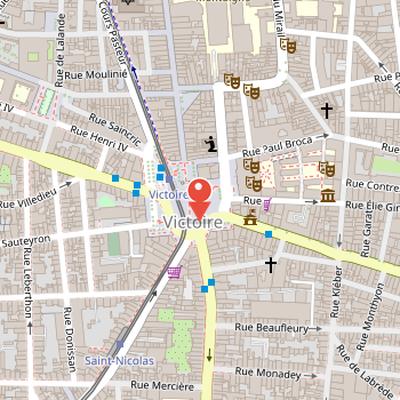
Nearby Objects
-
 Porte d'Aquitaine 30 m away
 -
 Synagogue 350 m away
 -
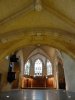 Couvent des Annonciades 400 m away
 -
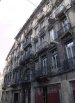 Hôtel Saint-François 400 m away
 -
 Bourse du Travail 400 m away
Architecture and Urban Role
Place de la Victoire is an important urban center where employees, tourists, and students cross each day. Its appearance was shaped by Louis-Urbain-Aubert de Tourny in the second half of the 18th century. The square is bordered by stone buildings inspired by neo-classical style, as well as more modest bourgeois buildings that do not exceed two floors. At its center stands the ancient city gate known as the porte d'Aquitaine, which was inspired by ancient triumphal arches. The square lies in continuation of major axes including rue Sainte-Catherine, cours de la Somme, and cours de la Marne.
Several buildings in the square were designed by architect Andre Portier and follow similar plans, with a ground floor, first floor, and slate mansard roofs. Later additions include the former faculty of medicine and pharmacy, built in 1880 and designed by Jean-Louis Pascal. This building now houses human science programs of the University of Bordeaux. The square is also often used for concerts and performances, and it is popular with students and young people for nightlife. It is surrounded by many bars, cafes, brasseries, restaurants, sandwich shops, and kebab shops. Place de la Victoire is one of the main accesses to rue Sainte-Catherine, a major pedestrian street in Europe, with several hundred shops of various kinds.
The square also features a modern lighting system, combining classical street lamps with around one hundred low voltage Lyn 4 S and Lyn 4 T projectors embedded in the ground. These ground lights emit blue light to mark the space.
Access and Urban Connections
Place de la Victoire serves as a starting point for several major streets in the area, including cours de la Marne toward marche des Capucins and gare Saint-Jean, as well as cours de la Somme, cours de l'Argonne, cours Aristide-Briand, and cours Pasteur. It is also served by Bordeaux tramway Line B at the Victoire stop. These connections make the square a central access point within the local street network and public transport system.
Name Changes of the Square
The square was first named Place d'Aquitaine because of the Aquitaine gate. In 1793, during the Revolution, it was renamed Place de la Convention. After this temporary renaming, the original name Place d'Aquitaine was restored. Later, the square was renamed Place de la Victoire to celebrate the Allied victory over Germany in World War I.
From Medieval Fairground to Urban Square
Place de la Victoire occupies a site that was once a medieval fairground outside the city fortifications. A fortified gate stood nearby at the location associated with Porte d Aquitaine, also called Porte Saint-Julien. The area also had an earlier hospital history: Hospice Saint-Julien was built in 1231 to treat pilgrims and beggars and was served by the Hospitaliers. During construction of an underground parking lot, a barbican, identified as remnants of the old Porte Saint-Julien, was discovered.
The area was modernized in 1753 under intendant Louis-Urbain-Aubert de Tourny. At that time, obsolete ramparts were demolished and a modern arch-shaped gate replaced the medieval chatelet. This new gate, the Porte d Aquitaine, was built in homage to the deceased Duke Xavier de France, with construction beginning in 1753 and ending in 1756. The Porte d Aquitaine lost its two lateral ticket offices in 1902, but it remains a prominent monument toward which all eyes converge.
The square also reflects several later changes in name and use. During the Revolution, Place d Aquitaine was briefly renamed Place de la Convention, and the guillotine was moved there from Place Gambetta. After returning to its original name, it served as a marketplace for hinterland farmers. In the late 19th century, Spanish immigration significantly changed the neighborhood. In the early 20th century, the place became a center of student life, and it was later renamed Place de la Victoire on an unspecified date.
Artworks and Pavement Design
Two artworks by Czech sculptor Ivan Theimer were inaugurated at Place de la Victoire, including a 16-meter red marble and bronze helix-shaped obelisk weighing more than 50 tons. The obelisk is decorated with two bronze turtles that feature grape cluster and wine appellation carvings. The pavement design of the square replicates that of Place du Capitole in Rome.