Place de Lenche is a square in Marseille whose name comes from the Lenche family, originally from Corsica. The family was established in Marseille and built a mansion on the square in the 17th century. The name is also associated with Thomas Lenche, who created the Magnifique Compagnie du corail from the Bastion de France in Algeria, and with Antoine de Lenche, who supported the royalists during the religious wars and was assassinated in 1588 after being elected second consul.
The square occupies a site with a long religious history. In the 5th century, Saint Cassien founded an abbey of nuns beside the Saint-Victor monastery outside the city walls. Initially named Saint-Cyr, the monastery was devastated by the Saracens in the 8th century. The nuns later settled in the city, in the early 10th century, in the monastery of Saint-Sauveur, located on the present-day Place de Lenche. Only the Saint-Sauveur cellars remain, and they were likely used for food storage. The square is also associated with other historic buildings and urban memory, including the former Riquetti de Mirabeau mansion to the east and references to the Théâtre de Lenche and a bakery on the place.
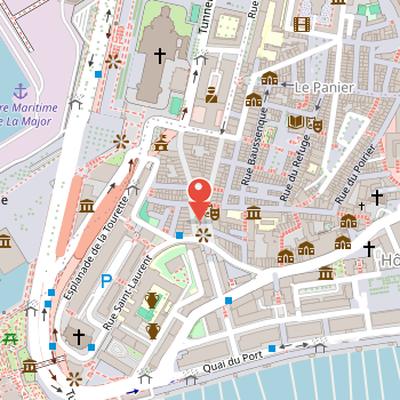
Nearby Objects
-
 Hôtel de police de Marseille 150 m away
 -
 Vieille Major 200 m away
 -
 La Major 250 m away
 -
 Eglise Saint-Laurent 250 m away
 -
 Notre-Dame-des-Accoules Church 300 m away
Origin of the Name
The name of Place de Lenche comes from the Lenche family, which was of Corsican origin. The family settled in Marseille and built a mansion on the square in the 17th century. Thomas Lenche, a member of the family, created the Magnifique Compagnie du corail from the Bastion de France in Algeria, and this company developed commercial links between North Africa and Marseille. Antoine de Lenche, Thomas Lenche's nephew, supported the royalists during the religious wars, was elected second consul, and was assassinated in 1588.
Early Monastic History of Place de Lenche
Place de Lenche occupies a site with a long religious and aristocratic history. In the 5th century, Saint Cassien founded an abbey of nuns beside the Saint-Victor monastery outside the city walls. This abbey was initially called Saint-Cyr. It was devastated by the Saracens in the 8th century, and local tradition recalls that the nuns, following Abbess Saint Eusebie, cut their noses to repel invaders. Because of this act, they were nicknamed desnarados. In the early 10th century, the nuns settled inside the city in the monastery of Saint-Sauveur, which stood on the site of the present Place de Lenche. Only the cellars of the Saint-Sauveur monastery remain, and they were likely used for food storage. To the east of the square stood the mansion of the Riquetti de Mirabeau family. Louis XIV stayed there during his visit to Marseille in 1660, and the mansion was demolished at the end of the 19th century.
Public Memory and Municipal Heritage
In Batissements remarquables et lieux de memoire, the building at number 17 is described as having cost the city more than one million euros before being resold to Marseille Habitat. The same source presents it as a symbol of poor management by Jean-Claude Gaudin of municipal heritage. The publication also references the Theatre de Lenche, a bakery on Place de Lenche, and Place de Lenche in Marseille at the beginning of the 20th century. These references place the square within a broader record of local buildings, everyday commerce, and historical memory.