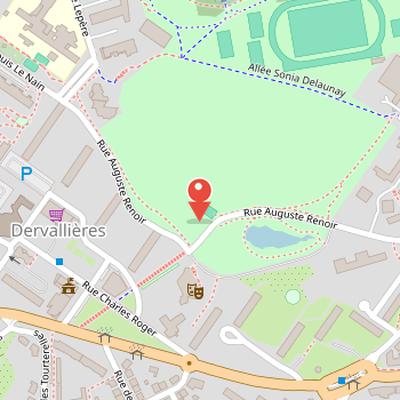
The Château des Dervallières was a noble residence in Nantes, located in the Dervallières-Zola district. Today, it is almost entirely disappeared. The history of the site is tied to the seigneurie des Dervallières, held by the family de Derval, a branch of the maison de Dinan-Laval. The family also had a manor in central Nantes, integrated into the hotel de ville buildings, and a country residence at les Dervallières. The fief is described as having the right of high justice and extending from la Contrie to the seigneuries de la Garoterie and de Carcouët in Saint-Herblain and Chantenay.
The domaine changed hands several times over the centuries. It was acquired in 1494 by Françoise de Dinan, comtesse de Laval, then given to Jean François de Cardonne. Later owners included Joachim Tissart, François d'Argy, the Morin family, the Bonnin de Messignac family, Louis Daussain, and Jean Stapleton, who enlarged the property for his son. In the 1820s, Michel Guillet de La Brosse built a new noble house in tuffeau next to the château. The property also included outbuildings, stables, greenhouses, gardens, and woods.
Nearby Objects
-
 Parc de Procé 1000 m away
 -
 Église Sainte-Thérèse 1600 m away
 -
 Place Canclaux 1900 m away
 -
 Hôtel Maës 1900 m away
 -
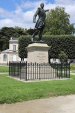 Place Général-Mellinet 2000 m away
Noble Residence in Nantes
Le chateau des Dervallieres was a noble residence located in Nantes, in the Dervallieres - Zola district. The site is now almost entirely disappeared, leaving only limited traces of the original building. Its surviving presence is therefore mainly historical, associated with the former urban landscape of the district.
Seigneurial Holdings of the Derval Family
The history of the Dervalli eres is linked to the seigneurie held by the family de Derval, a branch of the maison de Dinan-Laval. This family also possessed a manor in the center of Nantes, the manoir de Derval, which was integrated into the hotel de ville buildings, as well as a country residence called les Dervalli eres. The fief of les Dervalli eres had the right of high justice and extended from la Contrie to the seigneuries of la Garoterie and Carcouet in Saint-Herblain and Chantenay.
Ownership and Transformation of the Dervallieres Estate
The history of the Chateau des Dervallieres is marked by a long succession of owners and successive changes to the estate. In 1494, Francoise de Dinan, comtesse de Laval, acquired the domaine and gave it to Jean Francois de Cardonne, who was receveur general des Finances of the duchy of Brittany and died in 1539. He was succeeded in 1540 by Joachim Tissart, after his marriage to Anne de Cardonne. François d'Argy became owner in 1557, and in 1573 Claude d'Argy, wife of Rene du Breil, seigneur de Lire, is described as dame des Dervallieres and owner of the hotel des Derval. The properties were resold in 1578, after which the seigneurie passed to Georges Morin, sieur du Chapeau and treasurer of Brittany, and to Claude Morin, wife of Charles de Maille. In 1600, the property passed to Urbaine de Maille, wife of Jean-Francois Bonnin, and it remained in the Bonnin de Messignac family by alliance, including Charles Bonnin de Messignac in 1678. The family sold the property to Louis Daussain in 1699.
In 1701, Jean Stapleton, a wealthy Irishman from Nantes and slaveowner of plantations in Saint-Domingue, bought the property. He enlarged it for his son Jean II Stapleton, husband of Anne O'Shiell. In 1713, Jean Stapleton married his daughter Julienne to Jean-Baptiste Mac Nemara in the castle chapel. Later, in the 1820s, Michel Guillet de La Brosse built a new noble house in tuffeau next to the chateau des Dervallieres. The property also included many outbuildings, stables, greenhouses, gardens, and woods. The domaine then passed by inheritance to Charles de La Rochefoucauld-Bayers, son-in-law of Michel Guillet de La Brosse, before returning to the Guillet de La Brosse family.
The site was later altered on a large scale when a set of HLM was built there in the 1950s and 1960s. The chateau des Dervallieres was destroyed in the 1980s, but some parts of the old domaine remain, including part of the park, the pigeon house, the basin, and the facade of the central pavilion.