Église Sainte-Croix is a church in Nantes and the parish church of the Bouffay district since 1138. The building’s origin remains uncertain, although the site is associated with a priory owned by the Benedictines of Marmoutier and with a chapel linked to the Bouffay castle. A church was recorded during the episcopate of Geoffroi Pantin, and construction of the present building began in the 15th century. The church was later modified in the 16th century and further developed over time. Its nave was built in flamboyant Gothic style from 1669 to 1685, while the façade facing Place Sainte-Croix is decorated in a classical style with columns and an antique pediment. In 1839, Théodore Nau created the choir in flamboyant style, and in 1860 Henri-Théodore Driollet added a campanile and former city belfry above the façade. The south side is bordered by the Sainte-Croix passage. The parish register also contains the birth and baptism record of Jules Verne, dated 1828.

Nearby Objects
-
 Château du Bouffay 90 m away
 -
 Place du Bouffay 100 m away
 -
 Convent of the Carmelites 150 m away
 -
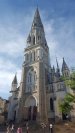 Basilique Saint-Nicolas 300 m away
 -
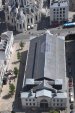 Marché de Feltre 350 m away
Architecture and History of Sainte-Croix
The church of Sainte-Croix in Nantes combines a Renaissance design with a Gothic choir. It was modified in the 16th century and has served as the parish church of the Bouffay district since 1138. The church is also noted for its parish register, which contains the birth and baptism record of Jules Verne dated 1828. On its south side, the building is bordered by the Sainte-Croix passage.
History and Architectural Layers of Eglise Sainte-Croix
The origin of the building is uncertain, but the Benedictines of Marmoutier in Tours owned a priory with a Saint Martin chapel at the site of the present choir. The building also served as a chapel for the nearby Bouffay castle. A church was recorded there during the time of Geoffroi Pantin, bishop of Nantes from 1198 to 1213, and construction of the current church began in the 15th century.
The nave was built in flamboyant Gothic style between 1669 and 1685, and the chevet then had three altars set against a flat wall. The facade facing Place Sainte-Croix is decorated in classical style with columns and an antique pediment. In 1839, architect Theodore Nau created the choir in flamboyant style.
In 1860, architect Henri-Theodore Driollet added a campanile and the former city belfry above the facade. This mixed construction was presented as a compromise between the city of Nantes and the parish. The belfry originally topped the polygonal Bouffay Tower, built in 1664 and destroyed in 1848 at the intersection of Rue du Bouffay and Belle-Image. The clock from the former belfry is surmounted by a lantern containing the bell named la Bouffay, cast in 1663 and weighing 800 kg. The lantern is decorated with an allegorical round of angels blowing trumpets. Jean-Baptiste Carrier also gave speeches from the pulpit there.
Interior Furnishings and Later Restorations
The church preserves a number of interior elements from different periods. According to Histoire, the right nave altar is the only surviving 15th-century altar, while the choir stalls date from the 18th century. The main altar, made of white marble and gilded wood, was created by sculptor Thomas Louis and consecrated on December 27, 1893. Its altar table, also in white marble, dates from 1903. The original organ dates from 1853 and has been restored and modified several times, most recently in 1979. The choir stained glass windows were destroyed in the 1943 bombing and replaced in 1947. A tribune stained glass window from 1872, representing the Triumph of the Cross, was severely damaged by hail on July 18, 1981.
Notre-Dame du Bon Secours in the Church
The sanctuary of Eglise Sainte-Croix invokes Notre-Dame du Bon Secours, who has been venerated in Nantes since 1664 on the Saulzaie island. The Histoire section recalls that a chapel dedicated to Notre-Dame du Bon Secours once stood at the corner of Quai Turenne and Rue Bon-Secours. Although this chapel was destroyed in 1793, parishioners saved the Virgin statue and kept it until 1920, when it was returned to the parish. During World War II, the statue was sheltered in the crypt of Nantes cathedral, but it was damaged by Allied bombings on June 16, 1944. It was restored in 1945 and now occupies the niche to the left of the altar of Notre-Dame de Bon-Secours. The altar itself houses a statue made in 1864 by the sculptor Emilien Cabuchet, installed there since 1903. The pilgrimage to Notre-Dame de Bon-Secours resumed after the French Revolution at the beginning of the 19th century, and numerous ex-voto covering the church walls testify to the continued veneration of the Virgin. The south lateral nave faces an 18th-century altar, with a statue of Saint Joseph placed to the right of it.
Religious Use and Community Life
The church is the seat of the Congregation of the Apostolic Benedictine Fraternity. The nuns of the congregation live in the former Sainte-Croix priory near the church at 6 rue Belle-Image. The church Sainte-Croix depends on the parish of Notre-Dame de Nantes. The nuns decided to leave the former Sainte-Croix priory for reasons related to insecurity.