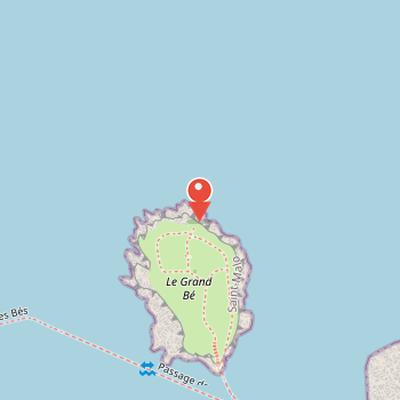
The tomb of Chateaubriand is located on the islet of Grand Bé at Saint-Malo, where François-René de Chateaubriand is buried. It was chosen to face the sea and the storm, in accordance with his wish to be buried on a small island, expressed from 1823. Chateaubriand requested the site from the mayor of Saint-Malo in 1828, but the municipal council initially refused the western point of Grand Bé. Approval was granted in 1831 after the intervention of Hippolyte de La Morvonnais, and the tomb was completed in 1838, ten years before Chateaubriand's death. The monument was originally surrounded by neo-Gothic iron railings, later replaced by a three-sided design by architect Raymond Cornon. It has no inscription, as Chateaubriand wished, although a non-nominative plaque on the rear wall pays homage to a great French writer. Classified as a historic monument since 1954, the tomb has been affected by erosion since 1924 and was partially damaged in 1944 by an artillery shell.
Nearby Objects
-
 Saint-Malo Cathedral 700 m away
 -

Location and Heritage Status
The tomb of Chateaubriand is the burial place of Francois-Rene de Chateaubriand. It is located on the islet of Grand Be at Saint-Malo. The tomb has been classified as a historic monument since 1954, reflecting its protected status within the local heritage record.
The Tomb at Grand Be
The tomb of Chateaubriand is located on the islet of Grand Be, at the western point near the cliff edge. It was chosen to face the sea and storm, in accordance with Chateaubriand's request. The site reflects his wish, expressed in 1823, to be buried on a small island. In 1828, he requested this location from the mayor of Saint-Malo, but the municipal council initially refused the western point. Approval was granted in 1831 after the intervention of Hippolyte de La Morvonnais. Construction was completed in 1838, ten years before Chateaubriand's death.
Erosion, Alterations, and Literary Visits
The tomb of Chateaubriand on the Grand Be has faced erosion since 1924, and the damage has continued to affect the monument's setting. A relocation was authorized by Chateaubriand's family, but it was never carried out because no expert consensus was reached. The tomb was also partially damaged in 1944 by an artillery shell. Its original neo-Gothic iron railings were later replaced by a three-sided design created by architect Raymond Cornon. The monument remains eroded today, and visitors cannot fully walk around it.
The tomb is notable for its deliberately restrained appearance. In accordance with Chateaubriand's wishes, it has no inscription. Instead, a non-nominative plaque on the rear wall offers homage to a great French writer. The burial site has also drawn literary attention over time. Flaubert visited the tomb, admired Chateaubriand, and described the burial facing the sea and surrounded by storms. The monument was also visited by Simone de Beauvoir and Jean-Paul Sartre, who referred to it in La Force de l'age. An 1848 painting by Valentin Louis Doutreleau depicted the tomb, but the work was destroyed in 1944.
In 2023, the municipality of Saint-Malo requested a conservation study for the site. The name of the tomb may refer to the Breton word for tomb, although Chateaubriand stated that he did not know this.