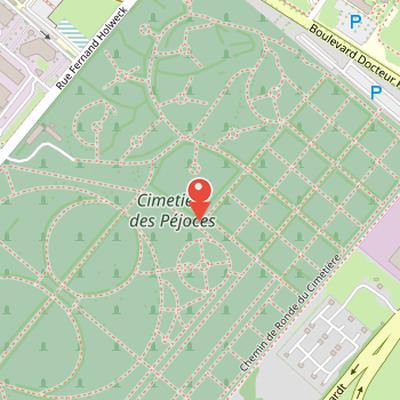
Péjoces Cemetery, or Le cimetière des Péjoces, is a cemetery in Dijon, in the Côte-d'Or department. It is one of the largest cemeteries in France and is sometimes described as the Père-Lachaise of Dijon because of its environment and the important personalities buried there. The cemetery follows the traditional French necropolis layout. A later extension, designed in 1974 by André Holodynski, was inspired by Anglo-Saxon landscaped cemeteries.
The cemetery is part of a longer history of burial spaces in Dijon. The city once had seven cemeteries around parish churches, which were later destroyed following a royal decree and replaced by a communal cemetery outside the city walls. That cemetery was blessed by the bishop of the diocese of Vogüé, then closed and transferred to the new Péjoces cemetery, designed by architect Ludovic Allaire. Péjoces received its first burial on 1, and graves from the old Montchapet cemetery were transferred there until 1920. From 1918, it also had to expand to bury soldiers who died in Dijon hospitals.
A Major Cemetery in Dijon
Le cimetière des Pejoces is a cemetery in Dijon, in the Cote-d'Or department, and it is described as one of the largest cemeteries in France. It is also considered the Pere-Lachaise of Dijon because of its environment and the important personalities buried there. This comparison reflects its public standing within the city and its association with notable burials.
From the Old Municipal Cemetery to Pejoces
Dijon once had seven cemeteries located around parish churches, but these were destroyed after a royal decree and replaced by a general communal cemetery outside the city walls. This municipal cemetery, blessed by the bishop of the diocese of Vogue, was located at the bottom of Avenue Victor-Hugo and covered six hectares in 1870. It was later closed and transferred to the new Pejoces Cemetery, designed by architect Ludovic Allaire. The first burial at Pejoces took place on 1, and graves from the old Montchapet cemetery were transferred there until 1920.
The cemetery required an expansion from 1918 in order to bury soldiers who died in Dijon hospitals, including foreigners. Its military square for the 1914-1918 period contains 1091 French graves, 837 German graves, 21 Russian graves, 14 Italian graves, 8 Commonwealth graves, 1 Polish grave, and 1 Belgian grave. The organization of the cemetery followed the traditional French necropolis layout. In 1974, André Holodynski designed an extension inspired by Anglo-Saxon landscaped cemeteries.