Opéra de Dijon is an opera company and arts organization based in Dijon, France. It administers the Grand Théâtre de Dijon and the Auditorium de Dijon, and presents operas, ballets, and classical music concerts. Opera had been performed in Dijon by travelling troupes from the 17th century, but the city did not have its own theatre before acquiring the tripot des Barres in 1717 with the intention of creating a municipal performing venue. The Salle de Comédie then served as Dijon’s main theatrical venue until 1828. In 1787, the Dijon architect Jacques Cellerier proposed a new theatre to replace it, and formal plans were submitted in 1803 after the demolition of the Sainte-Chapelle church and its cloister freed land in the city centre. The first stone was laid in 1810, and the completed theatre was inaugurated in 1828 as the Grand Théâtre de Dijon, also referred to as the Opéra de Dijon.
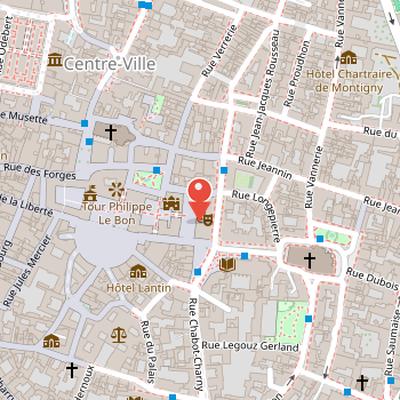
Nearby Objects
-
 Musée des Beaux-Arts de Dijon 40 m away
 -
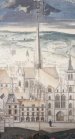 Sainte-Chapelle de Dijon 50 m away
 -
 Musée Magnin 100 m away
 -
 Église Saint-Étienne 100 m away
 -
 Musée Rude 100 m away
Opera and Arts Administration in Dijon
The Opera de Dijon is an opera company and arts organization based in Dijon, France. It administers the Grand Theatre de Dijon and the Auditorium de Dijon, serving as a managing body for both venues. Its activities include staging operas, ballets, and classical music concerts, placing it at the center of the citys performing arts life.
From Early Performance Venues to the Grand Theatre
Opera had been performed in Dijon by travelling opera troupes from the 17th century, but the city did not have its own theatre until it acquired the tripot des Barres in 1717 with the intention of creating a municipal performing venue. This later became the Salle de Comedie, which served as Dijon's main theatrical venue until 1828. Seating was installed there in 1817, reflecting its continued use before replacement. In 1787, the Dijon architect Jacques Cellerier proposed building a new theatre to replace the Salle de Comedie, and he formally submitted plans in 1803. The demolition of the Sainte-Chapelle church and its cloister in 1802 freed up land in the city centre, helping to make the project possible. The first stone of the new theatre was laid in 1810, but construction was halted between 1814 and 1823. The building was eventually completed and inaugurated in 1828 as the Grand Theatre de Dijon.
Administration and Recent History
The Grand Theatre was also referred to as the Opera de Dijon. It remained Dijon's only opera house until the end of the 20th century. During this period, Guy Grinda served as General Director from 1966 to 1978, followed by Pierre Filippi from 1978 to 2002. A second municipal auditorium and concert hall was constructed in Dijon in 1998, changing the city's performing arts landscape. In 2001, Duo Dijon was established to administer both the Grand Theatre and the Auditorium. Olivier Desbordes was the first General Director of Duo Dijon and held the post until 2007. In 2008, under Laurent Joyeux, the organization changed its name to Opera de Dijon.
The Opera House and Auditorium
The Opera de Dijon includes two major performance venues in different parts of the city. The earlier theatre is located at the Place du Theatre and was inaugurated on 4 November 1828 with the play Les deguisements, ou une folie des grands hommes. It was designed by Jacques Cellerier and Simon Vallot in the Neo-classical style, with an interior modelled after Italian opera houses. Its exterior was declared a monument historique of France in 1975, and its last major restoration took place in 2005. The theatre has a seating capacity of 692.
A second venue, the Auditorium, was planned from 1988 and opened officially on 20 June 1998 at the Place Jean Bouhey. It was designed by Arquitectonica and Bougeault-Walgenwitz, with acoustics engineering by Artec. The building is triangular in shape and resembles a grand piano, with two large glass-walled foyers. Its main auditorium is arranged on four levels and has 1611 seats. The exterior is covered in beige Chassagne limestone from local quarries. The inaugural concert was given by the Orchestre National de France, conducted by Charles Dutoit, in November 1998. The Auditorium also served as the venue for Opere de Dijon's 2013 production of Wagners Ring Cycle.
Opera Programming and Repertory
The Opera de Dijon repertory combines standard operatic works with rarely performed pieces, and some of these less common works are presented in concert version. Since 2007, its annual programming has also been organized around themes that include works by composers associated with a particular country. This approach was evident in the 2014/2015 season, which focused on Czechoslovakia and included performances of Kata Kabanova, Der Kaiser von Atlantis, Brundibar, and The Diary of One Who Disappeared. The repertory has also marked major historical anniversaries, including the 250th anniversary of the death of Jean-Philippe Rameau with productions of Castor et Pollux and a double bill of Daphnis et Egle and La Naissance dOsiris. Other notable presentations at Opéra de Dijon have included La Pellegrina, une fete florentine in the 2013/2014 season, for which a new libretto by Remi Cassaigne was commissioned to replace Girolamo Bargagli's text during the intermedi performance. Earlier presentations included Rameau's Dardanus, Gounod's Le medecin malgre lui, and Hindemith's Neues vom Tage in 2009, Busoni's Turandot in 2011, and Myslivecek's L'Olimpiade in 2013.
Administration, Ensemble Structure, and Funding
As of 2015, the General and Artistic Director of the Ope9ra de Dijon was Laurent Joyeux, who had held the post since 2007. The organization maintains its own chorus, directed by Mihe1ly Menelaos Zeke, but it no longer has its own orchestra. The Ope9ra de Dijon orchestra was transferred to Camerata de Bourgogne in 2009, and Camerata de Bourgogne later merged with Orchestre Dijon to form Orchestre Dijon Bourgogne. This ensemble is used for most larger-scale opera productions by the organization.
The Ope9ra de Dijon is overseen by an 18-member administrative council and is a member of the Reunion des Operas de France. Its funding comes mainly from a subsidy by the City of Dijon, which amounted to 7 million euros in 2013. The organization had an overall annual budget of about 10.5 million euros in 2013, with the remainder covered by corporate and private sponsors and ticket sales.