Musée Rude is a museum in Dijon, in the Côte-d'Or department of Bourgogne-Franche-Comté. Founded by the city of Dijon in 1947, it occupies part of the former Saint-Étienne church and is attached to the Musée des Beaux-Arts de Dijon, which manages it. The museum has been labeled Musée de France since an unspecified date.
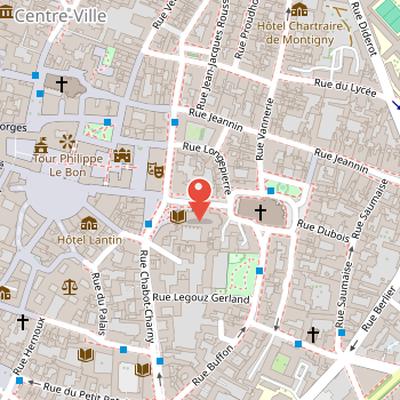
Its spaces are divided between the transept and the choir of the former church. The entrance is on the north facade of the transept, at 8 rue Vaillant. The art museum section in the transept is dedicated to the Dijon sculptor François Rude and displays life-size plaster casts of his main works, as well as casts of works preserved in other French museums or public spaces. Most of these plaster casts were commissioned by the city of Dijon between 1887 and 1910. Among them is a cast of Départ des volontaires de 1792, commissioned by the French State in 1938.
The archaeological section in the choir presents remains from the crypt and the former Saint-Étienne gate of the Dijon castrum.
Nearby Objects
-
 Église Saint-Étienne 0 m away
 -
 Saint-Michel Church 80 m away
 -
 Opéra de Dijon 100 m away
 -
 Musée des Beaux-Arts de Dijon 130 m away
 -
 Musée Magnin 140 m away
Musee Rude in Dijon
Musee Rude is a museum located in Dijon, in the Cote-d'Or department of Bourgogne-Franche-Comte. It is dedicated to the Dijon sculptor Francois Rude and also presents archaeology related to the old castrum of Dijon. The museum was founded by the city of Dijon in 1947 and established in part of the former Saint-Etienne church. It has been labeled as Musee de France since an unspecified date. Musee Rude is attached to the Musee des Beaux-Arts de Dijon, which manages it.
Location and Access
The Musee Rude is located in the transept and choir of the former Saint-Etienne church. Its entrance is on the north facade of the transept, at 8 rue Vaillant. This placement links the museum directly to the historic church structure, with the access point clearly set on the building's north side.
Plaster Casts in the Transept
In the transept of the museum, life-size plaster casts exhibit the main works of Francois Rude. The display also includes casts of his works that are located in other French museums or public spaces. Most of the plaster casts in the transept were commissioned by the Dijon municipality between 1887 and 1910. Among them is a plaster cast of Depart des volontaires de 1792, which was commissioned by the French State in 1938 out of concern that the original at the Arc de triomphe de l'Etoile might be destroyed during World War II.
Archaeological Exhibits in the Choir
The musee Rude includes an archaeological section in the choir, where it exhibits remains recovered from the crypt and from the former Saint-Etienne gate of the Dijon castrum. This display links the museum space to the citys earlier defensive and religious history through objects preserved from these earlier structures.