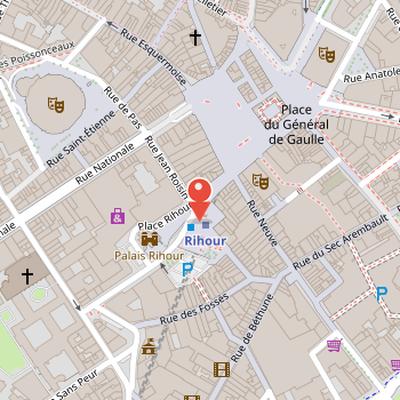
Place Rihour is a square located in the city center of Lille, next to Place du Général-de-Gaulle. It is connected to Jean-Roisin, Rue de la Vieille Comédie, and Rue du Palais-Rihour, and is served by Lille metro line 1 at the Rihour station beneath it.
The name Rihour appears in historical records from 1248, when it was mentioned in a deed concerning a house transferred to the hospice Comtesse by Bérard Rihout. It was also mentioned in 1374 in the cession of a meadow near the “neuf fossé,” and in 1398 in city accounts as a “riez.” In the 14th century, the area formed a wet terrain with meadows and trees inside the Rihour block. It was bordered by city walls and related waterways and passages. The square later expanded after the disappearance of the old Lille City Hall at Palais Rihour, destroyed by fire in 1916. Today, Place Rihour is also associated with major urban events, including the Lille braderie and the Christmas market.
Nearby Objects
-
 Palais Rihour 70 m away
 -
 Théâtre du Nord 90 m away
 -
 Grand'Place 140 m away
 -
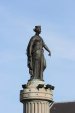 Column of the Goddess 140 m away
 -
 Place du Théâtre 200 m away
Location and Access
Place Rihour is located in the city center, adjacent to the place du General-de-Gaulle. It is connected to Jean-Roisin, Rue de la Vieille Comedie, and du Palais-Rihour. The square is also served by the Lille metro line 1, with the Rihour station located below it, making it directly accessible by public transport.
Historical Development of Place Rihour
The name of Place Rihour was first mentioned in 1248 in the deed of cession of a mansion to the Hospice Comtesse by Bérard Rihout. It appeared again in 1374 in the cession to the Hospice Comtesse of a meadow near the neuf fosse, and in 1398 in city accounts as a riez. In the 14th century, the area was described as a wet terrain with meadows and trees inside the Rihour block. It was bordered to the north-east by the Canal des Poissonceaux, to the south-east by an extension of the city walls later called Canal des Molfonds, and to the south-west by another section of the city walls parallel to the current rue de l'hopital-militaire. The place also entered historical records through a judicial execution: Charles de Renaucourt was hanged there on 20 May 1664 for theft of horses and other crimes. Its later urban configuration changed with the disappearance of the old Lille City Hall at Palais Rihour, destroyed by fire in 1916, which enlarged the site. Before that, it communicated with rue du Palais Rihour only through two narrow passages called contour de l'Hotel-de-Ville and cour du Frene. In 1999, it was registered by Insee as LR13 among the islets grouped for statistical information.
Events and Public Use
Place Rihour is used for major city events in Lille. The braderie de Lille takes place there every first weekend of September. Since 1995, FLCAS has organized the Christmas market there with Lille city. The market includes about 80 chalets. The Ferris wheel associated with the event is located at place du General-de-Gaulle.