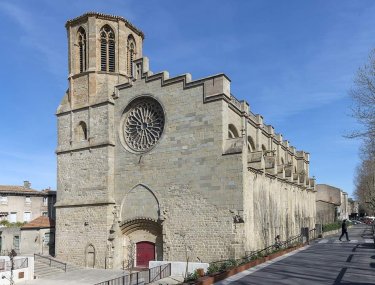
Carcassonne Cathedral
Carcassonne Cathedral is a Catholic cathedral in the bastide Saint-Louis of Carcassonne. It serves as the mother church of the diocese of Carcassonne and Narbonne and is built in the Southern Gothic style.
Carcassonne Cathedral is a Catholic cathedral in the bastide Saint-Louis of Carcassonne. It serves as the mother church of the diocese of Carcassonne and Narbonne and is built in the Southern Gothic style.
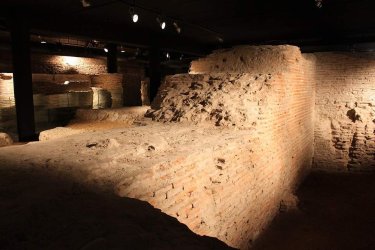
Château Narbonnais was the medieval castle of Toulouse. It later became a royal fortress and the seat of the parliament of Toulouse. Its remains are visible in the courthouse crypt, and a wall still stands in the salle des ...
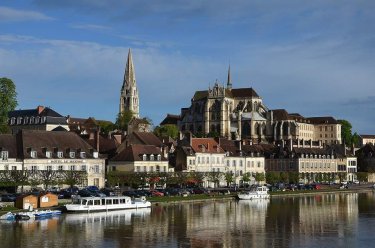
The Royal Abbey of Saint-Germain d’Auxerre is a religious community in Auxerre with origins linked to Saint Germain, bishop of Auxerre. It became an abbey during the Carolingian empire and was known for its crypt, relics, and influential school.
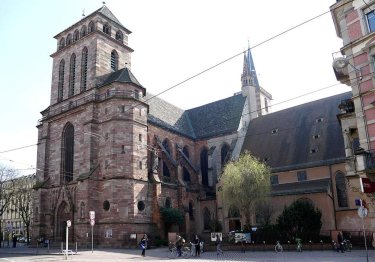
Old Saint Peter's Church is an ancient church in Strasbourg, built between 1381 and 1428 and later divided between Protestant and Catholic use. It became a simultaneum in 1683 and has been listed as a historical monument.
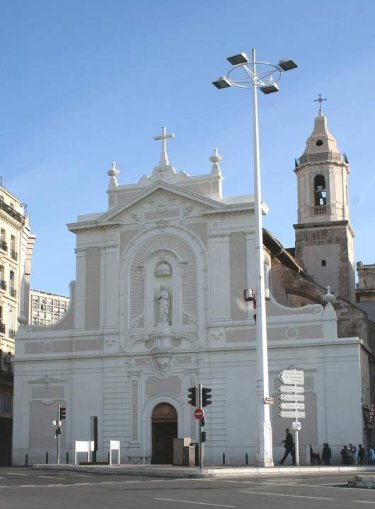
Église Saint-Ferréol les Augustins is a church building in the 7th arrondissement of Marseille, at quai des Belges near rue du Beausset, rue de la reine Élisabeth, and rue des Augustins. Since 1965, it has been entrusted to the Compagnie de Jésus by the archbishop of Marseille.
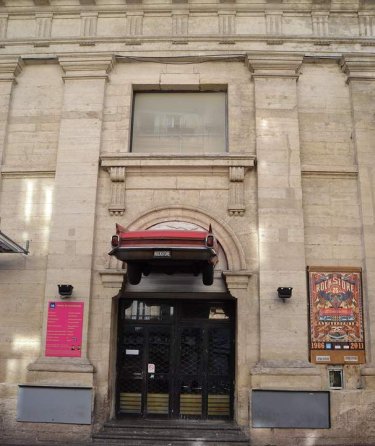
Rockstore is a venue in the center of Montpellier occupying a 19th-century building with a long religious and civic history. It has served as a Franciscan convent, Protestant temple, cinema, garage, and concert hall.
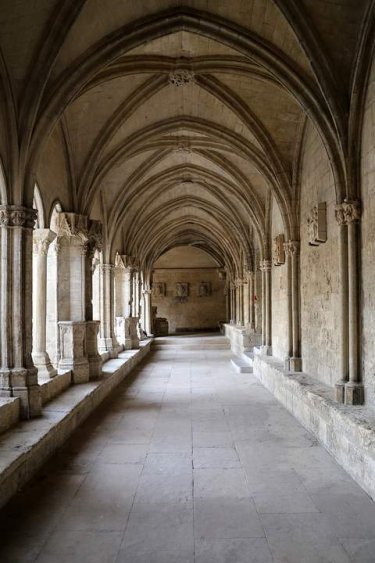
The Saint-Trophime cloister is part of the former cathedral of Arles. It has an approximately rectangular plan and communicates with the choir by a staircase of twenty-five steps. Its galleries combine Roman and Gothic construction, reflecting work from the 12th to the 14th century.
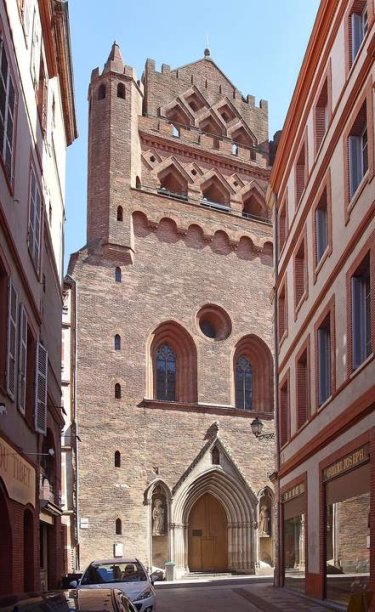
Notre-Dame du Taur is a Catholic church on rue du Taur in central Toulouse, between Place du Capitole and the Basilica of Saint-Sernin. It is a principal monument of southern Gothic art and a historical monument.
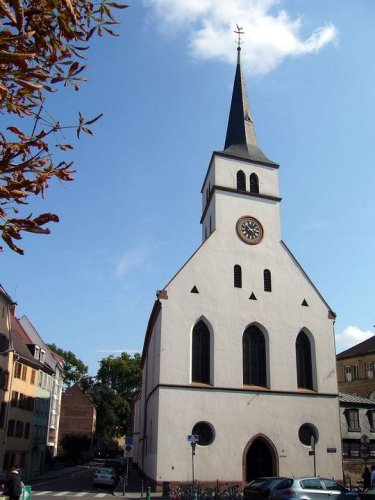
Saint William's Church, also called Wilhelmerkirche, is a Gothic church in Strasbourg at the junction of the Bateliers and Pêcheurs quays. It has hosted Lutheran worship since 1534 and is known for its skewed exterior and mixed interior.
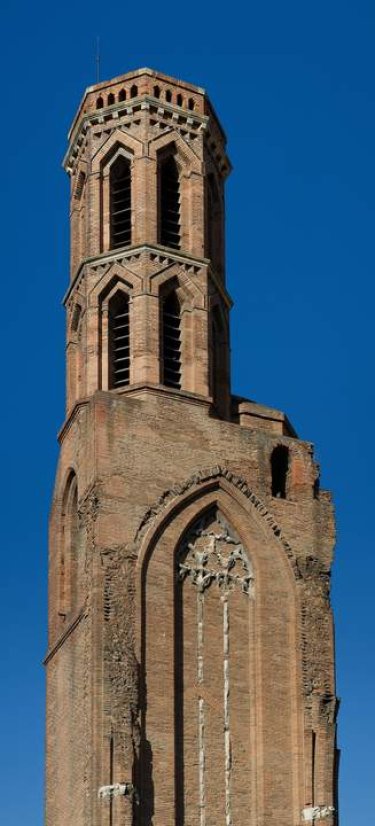
The Church of the Cordeliers in Toulouse was the former church of the Cordeliers convent. Closed after a fire in 1798, it was used by the military administration until 1871 and later suffered another fire. Its ruins have been classified as a historic monument since 1862.
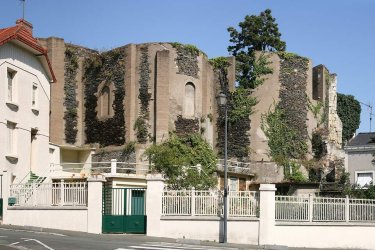
Église Saint-Laurent in Angers was founded in 1073 and has always been a cemetery chapel dependent on the Ronceray. Already ruined in 1576, it remained in ruins for more than four centuries.
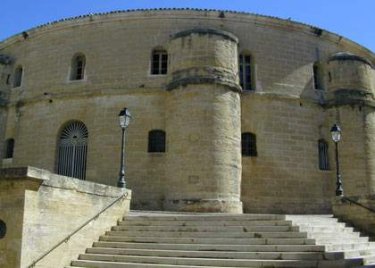
The Convent of the Ursulines of Montpellier is a former convent in the rue Sainte-Ursule district of Montpellier, Hérault. Transformed into a prison in the 19th century, it is now occupied by Agora, Cité internationale de la danse.
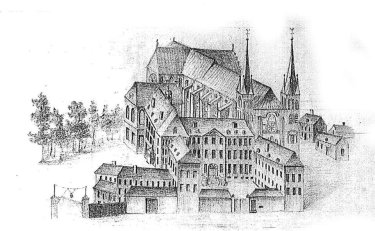
The Royal Abbey of Saint-Remi is an ancient Benedictine abbey in Reims, founded by Archbishop Tilpin around 760. It remained a Benedictine community until the French Revolution and is now the Saint-Remi Museum of Reims.
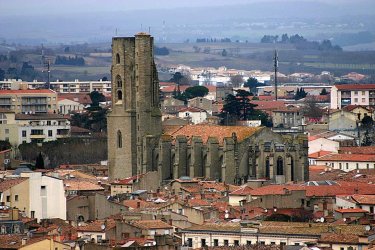
Église Saint-Vincent de Carcassonne is a church building in the new borough of Carcassonne. It was rebuilt in stages from the 14th century, later damaged, transformed for industrial use during the Revolution, and restored in the 19th and 21st centuries.
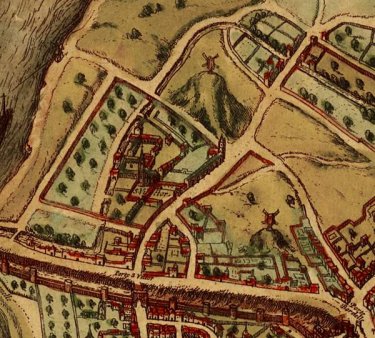
Abbey of St. Victor was a Paris abbey of regular canons founded by Guillaume de Champeaux. It became an important center of medieval theology and philosophy before being suppressed in 1790 and demolished in 1811.
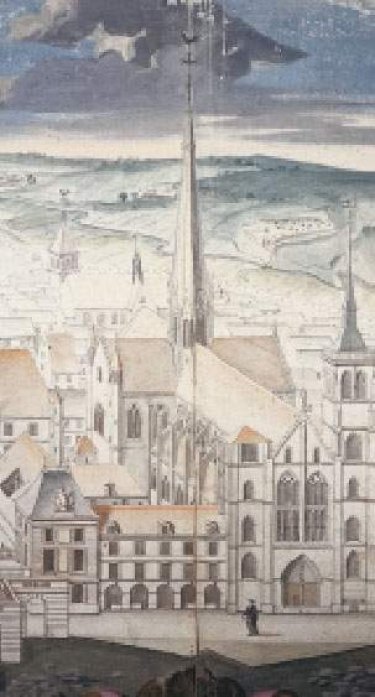
Sainte-Chapelle de Dijon was the private chapel of the dukes of Burgundy and later the seat of the Order of the Golden Fleece. Closely linked to Burgundy’s history, it was used for solemn services, princely funerals, and ceremonial displays before its destruction in 1802.
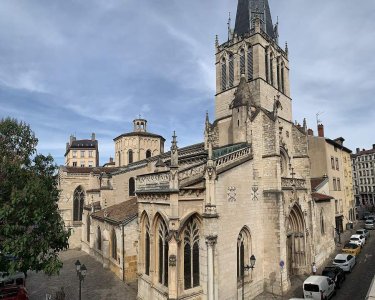
Église Saint-Paul is a Catholic church in Lyon’s Vieux-Lyon district, in the Saint-Paul area. Built in Romanesque and Gothic styles, it includes a lantern tower, a Romanesque porch, and later Gothic additions.
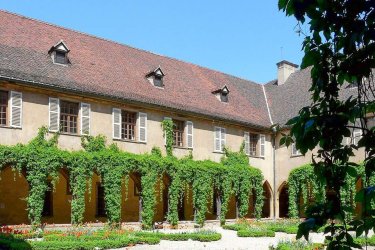
The Dominican Convent is a church on Dominican Square in the city. Its core is a square-shaped nave with six compartments, and its stained glass windows from the 14th and 15th centuries depict scenes from the life of Christ.
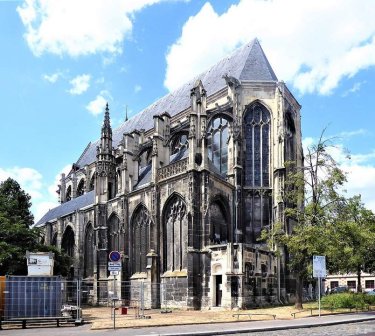
Saint-Éloi de Rouen is a Protestant temple in Rouen, located at place du Pasteur-Martin-Luther-King. Formerly a Catholic church until the French Revolution, it was assigned to the Reformed Church in 1803 and remains part of the United Protestant Church of France.
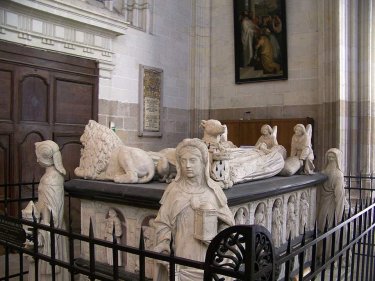
The Convent of the Carmelites was a Carmelite convent established in Nantes in 1318, then within the Duchy of Brittany. It was associated with Breton aristocratic burial traditions and was gradually destroyed beginning with the French Revolution.
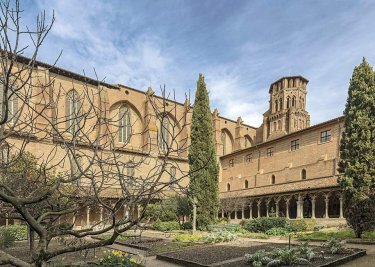
The Augustinian Convent in Toulouse was founded in 1268 for the Augustinians and later rebuilt inside the city walls between 1310 and 1341. Suppressed in 1790, it now houses the musée d'art de Toulouse, and its medieval parts are listed as historic monuments.
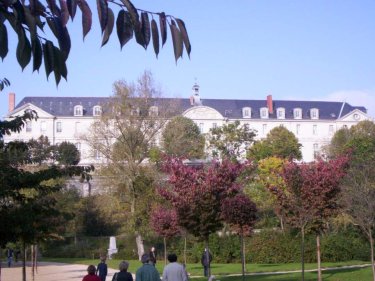
Abbaye Saint-Nicolas in Angers is a historic abbey founded around 1021 by Foulques Nerra. It later housed several different institutions and now contains a retirement home and the motherhouse of the Congregation of Our Lady of Charity of the Good Shepherd.
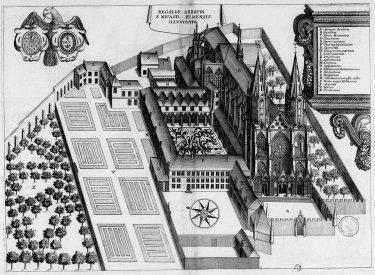
The Old Church of Saint-Nicaise de Reims was the church of the Benedictine abbey of Saint Nicaise in the southern part of the old town of Reims, in the Marne department. It was destroyed in 1793 and is remembered for its Gothic architecture.
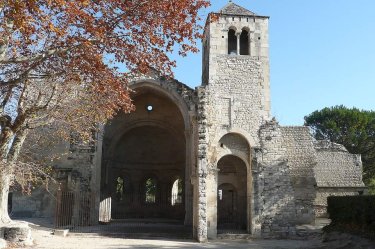
Abbaye de Saint-Ruf d'Avignon was a house of canons regular in Avignon from the 11th to the 18th century. It served as the mother house and original headquarters of the Order of Saint-Ruf and was reduced to a priory after 1158.
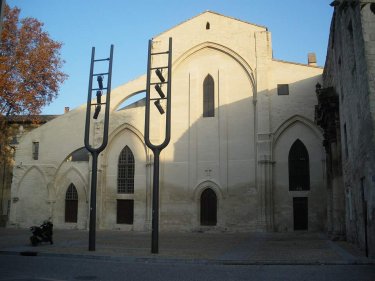
The Church of the Célestins of Avignon is a convent church on Place des Corps-Saints. Built from 1389 near Pierre de Luxembourg’s tomb, it belongs to the former Célestins complex, which also included a cloister and other monastic buildings.
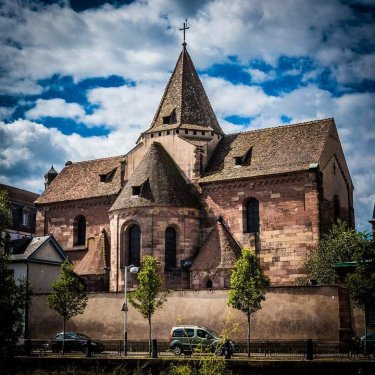
Saint Stephen’s Church is located at Place Saint-Étienne in the episcopal college courtyard in Strasbourg’s historic center. Classified as a historical monument since 1862, it reflects a long sequence of religious, architectural, and institutional changes.
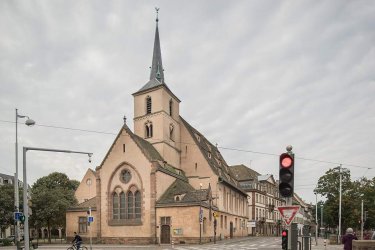
Saint-Nicolas Church is a small Gothic church in Strasbourg. It belongs to the evangelical Lutheran Protestant Church of Augsburg Confession of Alsace and Lorraine and is listed as a Monument historique. The church is associated with Calvin, Huguenot worship, and Albert Schweitzer.
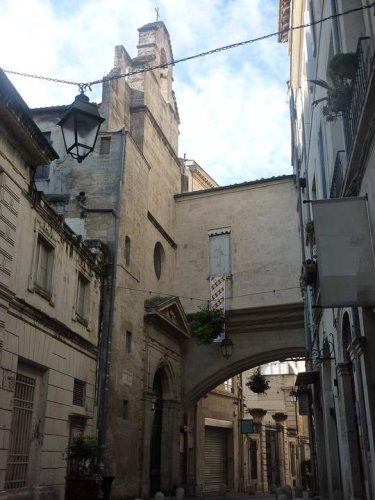
La chapelle Sainte-Foy is a church at 14, rue Jacques Cœur in Montpellier, dedicated to Sainte Foy. Founded in the Middle Ages, it preserves a baroque interior, a 17th-century painted ceiling, and a bell dated 1401.
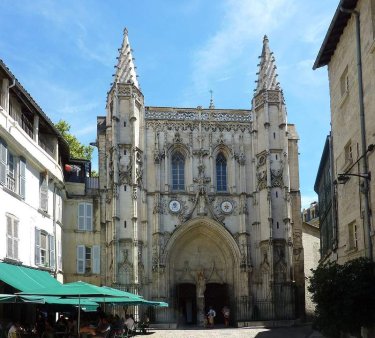
Église Saint Pierre is a Gothic Roman Catholic church in Avignon, southern France. Formerly a collegiate church of the Archdiocese of Avignon, it is a protected monument and holds the title of Basilica minor.