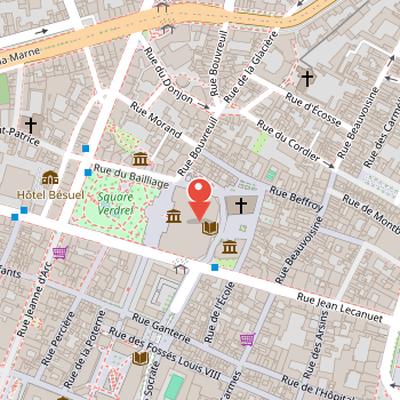
The Musée des Beaux-Arts de Rouen is an art museum located in the heart of Rouen, in Normandy, facing Square Verdrel. Created in the wake of the French Revolution and established by decree in 1801 under the Consulate of Napoléon Bonaparte, it is one of the main museums of France and one of the richest of its kind in the provinces. Its collections were modest at first but were considerably enriched during the 19th century.
The museum now holds an exceptionally rich and extensive collection, with permanent displays spread across more than sixty rooms. Its holdings include paintings, sculptures, and graphic arts, with the 17th and 18th centuries particularly well represented. The cabinet of graphic arts contains eight thousand works and has an international reputation. The museum also regularly organizes temporary exhibitions, some with international impact, and provides online educational resources for visitors. The museum building was designed in two stages by architect Louis Sauvageot, with a first wing built from 1877 to 1880 and a second phase from 1884 to 1888. The building underwent complete renovation finished in 1994.
Nearby Objects
-
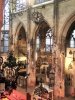 Musée Le Secq des Tournelles 40 m away
 -
 Église Saint-Godard 60 m away
 -
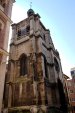 Saint-Patrice Church 250 m away
 -
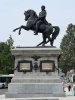 Monument to Napoléon Ier 350 m away
 -
 Chapelle Corneille 400 m away
Museum Profile and Significance
The Musee des Beaux-Arts de Rouen is located in the city center of Rouen, in Normandy. Created in the wake of the French Revolution, it is considered one of the richest museums of its kind in the provinces of France. Its collections are very large and include paintings, sculptures, and graphic arts. The museum is also regarded as one of the main museums of France, and it regularly hosts temporary exhibitions.
History and Collections of the Museum
The Musee des Beaux-Arts de Rouen was created by the Chaptal decree of 1801 under the Consulate of Napoleon Bonaparte. Its collections were modest at first, but they were considerably enriched during the 19th century. By 1878, it was cited as the most complete museum after the museum of Paris, and it now holds a collection considered exceptionally rich and extensive. The cabinet of graphic arts contains eight thousand works and has an international reputation. The collections are spread over more than sixty rooms, with the 17th and 18th centuries particularly well represented.
The museum is located in the heart of Rouen, facing square Verdrel, and its building underwent a complete renovation finished in 1994. It organizes several exhibitions each year, and some of them have international impact and contribute to its reputation. In 2006, it presented eight temporary exhibitions, including the Masters of the Florence Museums, and visitor numbers increased that year, making the museum a highlight of the festival. The museum also provides online resources, including educational files and a youth booklet to prepare visits.
The Museum Building
The Musee des Beaux-Arts de Rouen building is located in the heart of the city. Its original structure was designed by architect Louis Sauvageot in two stages. The first wing was built from 1877 to 1880 along rue Thiers, while the second wing, the central building, and the library were constructed from 1884 to 1888. The main entrance is flanked by two statues by sculptor Joseph Tournois, representing Nicolas Poussin and Michel Anguier, both artists native to Normandie. The lateral pediments of the main facade were created by sculptor Auguste Bartholdi.
The left wing was damaged by the effects of World War II. Before June 1940, the collections were evacuated by conservator Fernand Guey. The museum later reopened twenty-seven of its forty rooms to the public in 1956.
Collections and Artistic Scope
The collections of the Musee des Beaux-Arts de Rouen bring together paintings, sculptures, drawings, and art objects from the 19th century to the present day. A notable feature is its rare collection of Russian icons dating from the 17th to the early 19th century. The museum also preserves more than 600 drawings in its drawing cabinet, ranging from the Renaissance to the 19th century.
Among its strengths, the museum holds an exceptional group of canvases from the François Depeaux donation of 1909, and it ranks among the leading French provincial museums for Impressionism, alongside the Andre-Malraux Museum of Modern Art in Le Havre. Its holdings include Italian Renaissance painting, with works by Perugino, including three paintings from the predella of a dismantled altarpiece, as well as paintings by Veronese such as Saint Barnabas curing the sick and Christ stopping the plague. The collection also includes works by Giampietrino, Jacopo Bassano, Lavinia Fontana, Palma the Younger, and Annibale Carracci.
The museum presents French, Flemish, and Dutch school paintings by artists such as Gerard David, Louis Brea, Francois Clouet, Pieter Aertsen, Maarten de Vos, and Abraham Bloemaert. It highlights 17th-century painting across the major European schools of the century. Other important works include a Spanish Golden Age masterpiece by Velazquez titled Democritus, paintings by Jusepe de Ribera and Francisco de Herrera the Elder, and an Italian Caravaggio masterpiece titled Christ at the Column. The collections also feature works by Guercino, Bernardo Strozzi, Sisto Badalocchio, Daniele Crespi, Mattia Preti, Carlo Maratta, Giuseppe Recco, Michelangelo Cerquozzi, and Luca Giordano.
Paintings Across French and European Schools
The collections of the Musee des Beaux-Arts de Rouen cover a wide range of painting traditions, with strong holdings in French art and significant groups of Flemish, Dutch, English, Italian, and later 19th century works. French paintings are represented by artists such as Nicolas Poussin, Jean Jouvenet, Philippe de Champaigne, Simon Vouet, Pierre Mignard, Nicolas Reigner, Matthieu Le Nain, Claude Vignon, Jacques Blanchard, Jacques Stella, Sebastien Bourdon, Laurent de La Hyre, Eustache Le Sueur, Charles Le Brun, Noel Coypel, Joseph Parrocel, Charles de La Fosse, Nicolas de Largillierre, Louis de Boullogne, and Francois de Troy. Among the named works are Poussin's Venus montrant ses armes a Enee, Saint Denis lAreopagite, and L'orage, Jouvenet's La Presentation de Jesus au temple, and Boucher's Le Mariage de Psyche et de l'Amour.
The museum also holds Flemish and Dutch Golden Age paintings, including religious subjects, still lifes, genre scenes, landscapes, and portraits. Works named in this group include Peter Paul Rubens's L'Adoration des bergers, Antoine van Dyck's Portrait d'une dame, Judith Leyster's Le Tour de cartes, Cornelis Norbertus Gysbrechts's Trompe-l'oeil au carnet de dessins, and Willem Kalf's Nature morte a la gourde renversee. Other represented painters include Jan Lievens, Jan van Goyen, Gabriel Metsu, Gerard ter Borch, Jan Steen, Nicolaes Berchem, Otto Marseus van Schrieck, Jan Davidsz de Heem, Thomas de Keyser, Leonard Bramer, David Teniers le Jeune, Matthias Stom, and John Michael Wright, whose English painting Henry Arundel and Cecily at the foot of the cross is described as a rare example.
Later French holdings include works from Rococo to Neoclassicism and into the 19th century, with paintings by Hyacinthe Rigaud, Alexandre-Francois Desportes, Francois Boucher, Jean-Francois de Troy, Jean-Baptiste Oudry, Carle Van Loo, Charles-Joseph Natoire, Jean-Marc Nattier, Nicolas Lancret, Jean-Honore Fragonard, Hubert Robert, Claude Joseph Vernet, Joseph-Marie Vien, Jean-Baptiste-Marie Pierre, Francois-Andr Vincent, Elisabeth Vigee Le Brun, Jacques-Louis David, Joseph-Desire Court, Jean-Auguste-Dominique Ingres, Louis-Leopold Boilly, Eugene Delacroix, Theodore Chasseriou, Camille Corot, and Jean-Francois Millet. Named works include Oudry's Chasse au chevreuil, Van Loo's Vierge a l'Enfant from 1738, Lancret's Les Baigneuses, Fragonard's Les Blanchisseuses, Robert's Monuments et ruines a la colonne, Pierre's La Fuite en Egypte, Court's Le Martyre de sainte Agnes, Ingres's Portrait de Madame Aymon, dite La Belle Zelie, and Delacroix's La Justice de Trajan, Portrait de Delacroix, peintre, and Ruines de la chapelle de l'abbaye de Valmont.
The museum also includes Italian Venetian and Neapolitan paintings by Francesco Guardi, Pietro Longhi, Giovanni Paolo Panini, and Gaspare Traversi, among them Guardi's Architecture de fantaisie: villa avec terrasse et jardin and Traversi's La Partie de cartes and Le Concert. In the 19th century, the collections place emphasis on the Impressionist period and on the developments of impressionist, symbolist, and post-impressionist currents. They include eleven paintings by Claude Monet of the Seine valley from Giverny to Le Havre, Monet's La Cathedrale de Rouen, le portail et la tour d'Albane, temps gris, Gustave Caillebotte's Dans un cafe, and works by Johan Barthold Jongkind, Eugene Boudin, Edgar Degas, Henri Fantin-Latour, Pierre Puvis de Chavannes, Gustave Dore, and Gustave Moreau.
Modern and Post-Impressionist Collections
The Musee des Beaux-Arts de Rouen holds a wide-ranging collection of paintings by French and foreign artists, with particularly strong representation in modern and post-impressionist art. Among the best represented artists are Alfred Sisley, who is present with ten paintings, and Jacques Villon, represented by nine works. Raoul Dufy is represented by eight paintings, including the triptych Le Cours de la Seine. The museum also holds an important donation of paintings by Jacques-Emile Blanche, including Le groupe des six.
The collections include works by Armand Guillaumin, Clementine Ballot, Auguste Renoir, Camille Pissarro, Albert Lebourg, Felix Vallotton, Louise Catherine Breslau, Edouard Vuillard, Maximilien Luce, Andre Derain, Othon Friesz, Maurice Denis, Albert Gleizes, Jean Metzinger, Jean Dubuffet, Maria Helena Vieira da Silva, Georges Breuil, and Alfred Manessier. Other notable works include Autoportrait by Marie Bracquemond, Chez soi by Louise Catherine Breslau, Homme assis by Roger de La Fresnaye, and three portraits by Amedeo Modigliani.
The museum also contains paintings by post-impressionist painters of the Ecole de Rouen, including Robert Antoine Pinchon, Marcel Couchaux, Narcisse Guilbert, Maurice Louvrier, Franck Innocent, Pierre Gautiez, and Christian Sauve. Its holdings further include Gigolette en rouge by Frantisek Kupka, which is a deposit from the musee national d'Art moderne. Among the museum's more distinctive modern items is La Boite-en-valise by Marcel Duchamp.
Sculptural Works in the Collections
The museum's collections include a notable group of sculptures spanning several centuries and artistic approaches. Among the artists represented are Pierre Puget, Jean-Jacques Caffieri, Antoine Etex, Theodore Gericault, David d'Angers, Antoine Bourdelle, Raymond Duchamp-Villon, Alexandre Archipenko, and Jacques Lipchitz. Specific works named in the collections include Un esclave accable de douleur by Felix Lecomte, dated 1769; Tombeau de Theodore Gericault by Antoine Etex, presented at the Salon of 1841; and Pierre Corneille by Jean-Jacques Caffieri, circa 1779. The collections also hold Baudelaire by Raymond Duchamp-Villon, from 1912, and Les amants by the same artist, from 1913. Together, these works indicate a sculptural collection with both historical and more modern pieces.
Highlights of the Collections
The Musee des Beaux-Arts de Rouen is notable for the breadth of its collections, especially its cabinet of graphic arts, which contains more than 200,000 works, including 15,000 drawings. Among these are drawings by Antoine Watteau, Theodore Gericault, Eugene Delacroix, Gustave Moreau, Vouet, Tiepolo, Ingres, Degas, and Amedeo Modigliani. The museum also preserves a Neapolitan Nativity scene from the 18th century, a model of the 16th century Saint-Maclou Church of Rouen, and pieces of furniture and goldsmith work. Another important part of the holdings is a significant collection of Russian icons dating from the 16th to the early 20th century. These varied collections show the museum's role as a major repository of graphic art and decorative and religious objects.
Temporary Exhibitions and Nighttime Projection Events
The Musee des Beaux-Arts de Rouen has hosted a series of temporary exhibitions and public spectacles. In 2017, it presented Les Nuits impressionnistes, a monumental spectacle that ran from April 3 to September 30, with the performance period held from July 12 to August 26. During this event, 15 animated paintings were projected every night on the facade of the museum. The museum also held Arts et cinema - Les liaisons heureuses from February 9 to June 30, 2019, and Braque, Miro, Calder, Nelson - Varengeville un atelier sur les falaises from June 29 to October 14, 2019. Later, Normandie impressionniste 2020 was held from April 18 to September 13.
Attendance Trends
In 2007, the administration had an acquisition budget of euros per year. The Musee des Beaux-Arts later reached a record level of attendance, receiving visitors and marking the highest attendance in its history. This level of public access was later disrupted, as attendance declined significantly due to the Covid-19 pandemic.
Access and Location
The main entrance of the Fine Arts Museum is on Esplanade Marcel-Duchamp, opposite Square Verdrel. The museum is served by the Beaux Arts stop, which can be reached on lines F2, F7, 11, 15, and 22. The closest tramway stations are Gare-Rue Verte and Palais de Justice - Gisele Halimi.