Stade Bergeyre was developed by Sporting Club de Vaugirard after the club’s stadium at Parc d’Issy-les-Moulineaux was requisitioned by military authorities near World War I. The club then moved to Stade de Port Aviation in Juvisy-sur-Orge and identified an isolated hill at Buttes-Chaumont for a new sports site. Construction began there, but the war slowed progress.
The stadium’s financing came from Gaston François-Sigrand, an ex-teammate and businessman. It was named Robert Bergeyre after the club’s first rugby player, who was fallen at the front. The site opened with an international athletics meeting, the “Meeting des champions alliés,” at which Jim Duncan won the discus throw and Géo André won the 110 meters hurdles and high jump. The club itself had suffered losses during the war in Paris championship competition and continued to compete through agreements with Sporting club universitaire de France and British players in 1917–1919. Sporting Club de Vaugirard later merged with Olympique de Pantin and changed its name to Olympique de Paris. Paul Souchon described the club poetically as a clear and quiet grassy plateau amidst the city.
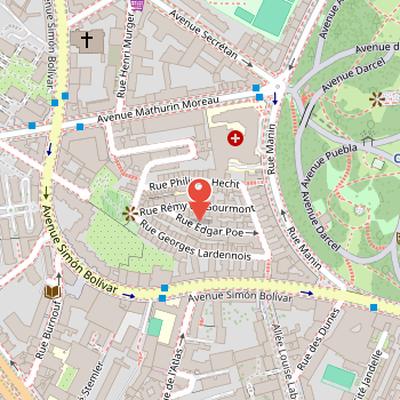
Nearby Objects
-
 French Communist Party headquarters 400 m away
 -
 Parc des Buttes-Chaumont 550 m away
 -
 Hôpital Saint-Louis 700 m away
 -
 Cours Florent 800 m away
 -
 Place de la Bataille-de-Stalingrad 900 m away
Origins and Wartime Creation
Stade Bergeyre emerged from the Sporting Club de Vaugirard's search for a new sports site after its stadium at Parc d Issy-les-Moulineaux was requisitioned by military authorities near the time of World War I. The club moved temporarily to Stade de Port Aviation in Juvisy-sur-Orge, then identified an isolated hill at Buttes-Chaumont for a new ground. Construction began there, but the war slowed progress. The stadium was financed by Gaston Francois-Sigrand, an ex-teammate and businessman, and it was named Robert Bergeyre in memory of the club's first rugby player, who had fallen at the front.
The stadium's first event was the international athletics meeting Meeting des champions allies. At that inaugural meeting, Jim Duncan won the discus throw, while Geo Andre won both the 110 meters hurdles and the high jump. During this period, the club also suffered losses in the Paris championship between 1911 and 1914. Even so, it continued competing during the war through agreements with Sporting club universitaire de France and British players in 1917 to 1919. The club later merged with the Olympique de Pantin football club and changed its name to Olympique de Paris. Paul Souchon described the club poetically as a clear and quiet grassy plateau amidst the city.