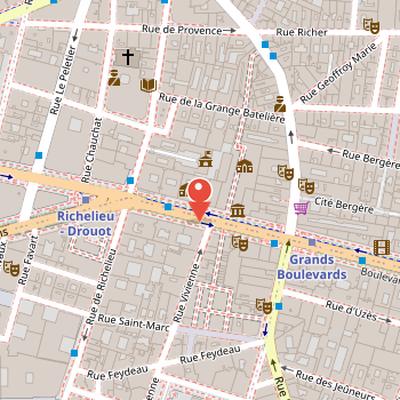
Boulevard Montmartre is a boulevard in Paris located at the border of the 2nd and 9th arrondissements. It is part of the Grands Boulevards, which run from west to east through central Paris and include boulevard de la Madeleine, boulevard des Capucines, boulevard des Italiens, boulevard Montmartre, boulevard Poissonnière, boulevard Bonne-Nouvelle, boulevard Saint-Denis, boulevard Saint-Martin, boulevard du Temple, boulevard des Filles-du-Calvaire, and boulevard Beaumarchais.
The boulevard was created after the suppression of the Louis XIII enceinte in 1679. It was laid out before the old rampart across agricultural land called gardens maraichers, and it was formed by road letters patent, ending in 1705. The area between boulevard Montmartre and the old enceinte near rue Feydeau later urbanized with hotel particuliers, while the northern terrains developed from the mid-18th century with the construction of the hôtel d'Augny.
Boulevard Montmartre also appears in historical and artistic contexts. In 1851, the gold ingot of the gold ingots lottery was exhibited there. The boulevard was depicted in artworks from around 1820 to 1897, including works by Christophe Civeton and Camille Pissarro. Pissarro lived in Parisian hotels and painted views from windows near boulevard Montmartre late in his career, creating thirteen paintings of urban life from his window there. The boulevard was also hit during a German aircraft raid on 11 October 1914 during World War I.
Nearby Objects
-
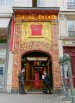 Musée Grévin 60 m away
 -
 Académie Julian 70 m away
 -
 Théâtre des Variétés 70 m away
 -
 Salle Le Peletier 250 m away
 -
 Boulevard des Italiens 300 m away
Place in the Grands Boulevards
Boulevard Montmartre is located at the border of the 2nd and 9th arrondissements of Paris. It is part of the Grands Boulevards, a sequence of major streets that runs from west to east. Within this group, boulevard Montmartre appears between boulevard des Italiens and boulevard Poissonniere. The full west to east order of the Grands Boulevards includes boulevard de la Madeleine, boulevard des Capucines, boulevard des Italiens, boulevard Montmartre, boulevard Poissonniere, boulevard Bonne-Nouvelle, boulevard Saint-Denis, boulevard Saint-Martin, boulevard du Temple, boulevard des Filles-du-Calvaire, and boulevard Beaumarchais.
Historical Development and Cultural Depictions
Boulevard Montmartre was created after the 1679 suppression of the Louis XIII enceinte. It was laid out before the old rampart across agricultural land described as gardens maraichers, and it was formed by road letters patent, ending in 1705. The space between the boulevard and the old enceinte near rue Feydeau urbanized with hotel particuliers, while the northern terrains developed from the mid 18th century with the construction of the hotel d'Augny.
The boulevard also appears in several historical and artistic contexts. In 1851, the gold ingot of the gold ingots lottery was exhibited there. It was depicted in artworks from around 1820 to 1897, including works by Christophe Civeton and Camille Pissarro. In his late career, Pissarro lived in Parisian hotels and painted from windows near boulevard Montmartre, and from the Grand Hotel de Russie he observed and painted views for thirteen paintings showing urban life. The boulevard was also hit during a German aircraft raid on 11 October 1914 in World War I.