The International Theatre Institute is an international theatre network founded in 1948 under the auspices of UNESCO. It was established to support the mutual exchange of theatre professionals and to promote better cultural understanding worldwide. The organisation operates national centres in 86 countries and maintains a General Secretariat in Paris and Shanghai. Its leadership has included Ivan Nagel of Germany, who served as president from 1977 to 1979, and Manfred Beilharz of Germany, who served from 2002 to 2008. Since 2024, the president has been Jessica Kaahwa from Uganda, and Tobias Biancone from Switzerland serves as General Director. The German centre of the network was founded in 1955 in Bonn and has been an active member since 1957. After German reunification in 1991, it merged with the former DDR-Zentrum, which had been founded in 1959. The German centre is based in Kunstquartier Bethanien in Berlin and works on projects in theatre, dance, music theatre, and related fields.
International Theatre Institute
The International Theatre Institute is an international theater network founded in 1948 under the auspices of UNESCO. It was established to support the mutual exchange of theater professionals and to promote better cultural understanding worldwide. The organization operates national centers in 86 countries, giving it a broad international presence.
Its General Secretariat is located in Paris and Shanghai. The institute is led by a president and a General Director. Jessica Kaahwa of Uganda became president in 2024. Earlier presidents included Ivan Nagel of Germany, who served from 1977 to 1979, and Manfred Beilharz of Germany, who served from 2002 to 2008. The General Director is Tobias Biancone from Switzerland.
History and Activities of the German ITI Center
The Deutsches Zentrum des ITI was founded in 1955 in Bonn as the Deutsche Sektion des ITI, with Carl Ebert as its first president. It became an active member of the international network in 1957. A separate DDR-Zentrum was founded in 1959 and was also admitted to the ITI, with Wolfgang Langhoff as its first president. The two centers worked in parallel within the ITI until 1991, when the Deutsches Zentrum des ITI merged with the DDR-Zentrum through the addition of DDR theater people after German reunification.
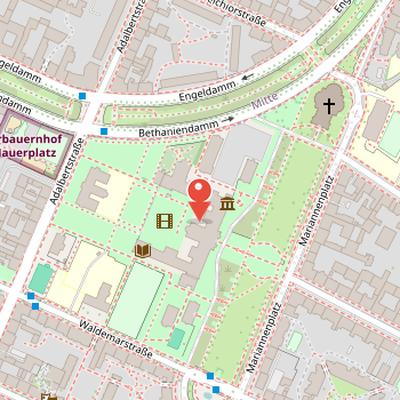
Today, the Deutsches Zentrum des ITI has about 200 members, including theater artists, directors, choreographers, journalists, and representatives of associations from many fields of the performing arts. Its office is located in Kunstquartier Bethanien in Berlin. The center carries out its own projects and takes part in cooperative projects within the world association. It also organizes the Festival Theater der Welt every three years in a different German city.
Its work includes projects in international contemporary theater, dance, and music theater. Together with Mime Centrum Berlin, it serves as an information and documentation center for performing arts in Germany. From 2013 to 2018, it acted as a promoter with the Robert Bosch Stiftung in the joint program Szenenwechsel. It also develops further projects in cultural education, cultural heritage, and the cultural and creative industries, and supports international ITI committees in project trips and work meetings.
Projects and Public Programs
Deutsches Zentrum des ITI has been involved in a range of international theater and performance initiatives. It supports the international meeting Music Theatre Now of the Music Theatre NOW Network and the workshop series My Unknown Enemy of the Cultural Identity and Development Committee. In 2006, it established the Centre for Theatre in Conflict Zones in Khartum, Sudan, in cooperation with ITI Sudan. The organization also created the project series Bewegungsmelder, which links choreographic research, workshops, and theater projects on democracy and control in public space.
Its work at Theater der Welt has included several themed projects. In 2008, it produced the artistic project Escalators. The ITI project in 2010 was dedicated to intergenerational theater work, while the 2014 project focused on the preservation and development of archives of contemporary theater in Africa. In 2017, it presented Access Points about Arts & Activism at Theater der Welt in Hamburg Harbor. Since 2021, Deutsches Zentrum des ITI has organized an international theater academy within Theater der Welt.
International Exchange and Theatre Policy
The Deutsches Zentrum des ITI supports international exchange at the level of cultural policy and advises artists, organizers, producers, and government institutions on international cultural cooperation. Since 2013, it has operated the counseling portal Touring Artists together with IGBK, on the initiative of BKM. The center also participates in international committees and in the Executive Council of ITI, and it represents the global association at UNESCO in the Intergovernmental Committee for the Protection of the Diversity of Cultural Expressions.
Its activities include support for projects in emerging and transformation countries, with a focus on exchange and consulting. The Deutsches Zentrum des ITI also awards the ITI Prize, which recognizes cross-border theater work and exemplary achievements on World Theatre Day, March 27, a practice it has maintained since 1984.
In addition to its international role, the center is represented in several European networks, including the Informal European Theatre Meeting, Culture Action Europe, and the European Network of Information Centres for the Performing Arts. It is also a member of the German UNESCO Commission, the nationwide coalition Kulturelle Vielfalt, the Deutscher Kulturrat, the Fonds Darstellende Kuenste, and the Dramaturgische Gesellschaft.
Funding and Support
Deutsches Zentrum des ITI: Geschichte und Struktur is financed by the Federal Government Commissioner for Culture and the Media. It also receives support from the Culture Foundation of the Federal States (KSL), which uses funds from the State of Berlin and the Länder community. In addition, the organization receives project funding from the Federal Foreign Office. Further project support comes from additional domestic and international funders and project partners.