Sainte-Anne Church of Montpellier is an ancient parish church in Montpellier, France. First mentioned in 1237, it was initially built in the 15th century during a period of demographic growth in the city. The church was destroyed in 1568 during the Wars of Religion and rebuilt in 1665 at the request of Montpellier bishop François du Bosquet, following plans by Antoine Armand.
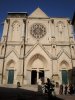
The building was destroyed again in 1865 because of safety concerns and rebuilt in 1869 or 1872 by the architect Jean Cassan. Designed in the neo-Gothic style, it rises to 57 meters and is the tallest monument in Montpellier’s city center. After being deconsecrated in 1986, it became a cultural venue in 1991 under the name Carré Sainte-Anne, dedicated to contemporary art and local artists. It was closed to the public in 2017 for safety reasons, and major renovation work took place from 2023 to 2025.

Nearby Objects
-
 Hôtel Richer de Belleval 150 m away
 -
 Place de la Canourgue 200 m away
 -
 Arc de Triomphe of Montpellier 200 m away
 -
 Saint-Roch Church 200 m away
 -
 Equestrian statue of Louis XIV 300 m away
History and Architecture of St. Anne of Montpellier
The church of St. Anne of Montpellier is an ancient parish church in Montpellier, France. Originally constructed in the 15th century, it was destroyed once during the Wars of Religion in the 16th century and then rebuilt in 1665. The building was destroyed again in 1865 because it was considered dangerous, after which it was rebuilt in 1869 or 1872 by the architect Jean Cassan. It was deconsecrated in 1986 and later transformed into a cultural venue named Carré Sainte-Anne in 1991. The site was closed to the public in 2017 and underwent major renovation work from 2023 to 2025. Architecturally, it is built in the neo-Gothic style and reaches a height of 57 meters, making it the tallest monument in Montpellier's city center.
History and Later Reuse of Sainte-Anne Church
The Sainte-Anne church of Montpellier was built during a period of significant demographic growth in the city. It is first mentioned in 1237, but little information is available about its architecture before its destruction in 1568 during the religious wars. The church was reconstructed in 1665 and regained parish status at the request of Montpellier bishop Francois du Bosquet. This reconstruction followed plans by Antoine Armand.
During the French Revolution, the church was deconsecrated and sold to a private individual. After the Revolution, city architect Jean Cassan drew up plans for the building, and Auguste Baussan was responsible for the sculptures. The church was deconsecrated again in 1986, and in 1991 it became a cultural space dedicated to contemporary art and the promotion of local artists under the name Carré Sainte-Anne.
In 2017, the building was closed to the public for safety because structural defects caused by inadequate construction methods had been identified. Studies were carried out in 2021 and 2022 on its condition, and Montpellier city undertook restoration work in 2023. After these renovations, the church was reopened to the public.
Architectural Features and Bell Tower
The church St. Anne of Montpellier is described as a neo-Gothic building inspired by Gothic style and by the Saint-Eugene-Sainte-Cecile Church of Paris (1854-1855). It is constructed with limestone, cut stone, and brick. Its elongated plan organizes nine bays in three vessels, covered by a false rib vault and separated by large arcades. Slender monolithic columns in Crussol stone from Ard e che rise through the interior, while the exterior is marked by a long-pitched roof covered with hollow tiles.
A major feature of the building is its bell tower, set above a porch that forms a three-level anterior mass. The tower is dominated by a polygonal spire with pinnacles and is identified as the tallest monument in Montpellier city center, making it a visual marker of the Montpellier landscape. Its upper elements recall the towers of Notre-Dame de Senlis, including spires and dormers that illuminate the attic of the spire.
The apse has a pentagonal shape. The church also features sculpted decoration and stained glass windows with iconography including the thurifer angel figure. This iconography is inspired by 13th-century French art, especially Notre-Dame de Reims Cathedral.