L’Hôtel Richer de Belleval is a private mansion on Place de la Canourgue in Montpellier, Hérault. Also known as hôtel de Belleval (ancien), hôtel de Boulhaco, or ancien hôtel de ville, it is registered as a historic monument. The building was erected between 1669 and 1682 by Charles de Boulhac on the foundations of an ancient canon residence destroyed in the 16th century. It was enlarged in 1709 after the marriage of Gaspard de Belleval and Élisabeth de Fressieux, and underwent major interior decoration works in 1751 by Joseph-Philibert de Belleval. The house later inherited the name of Pierre Richer de Belleval, king’s physician and botanist. After a rehabilitation program adopted in 2006, the building was put up for sale in 2011, selected for an art hotel project in 2012, and entirely listed as a historical monument in 2015. Reopened to the public after major rehabilitation works, it now houses a luxury hotel, a gastronomic restaurant, and a corporate foundation dedicated to contemporary art.
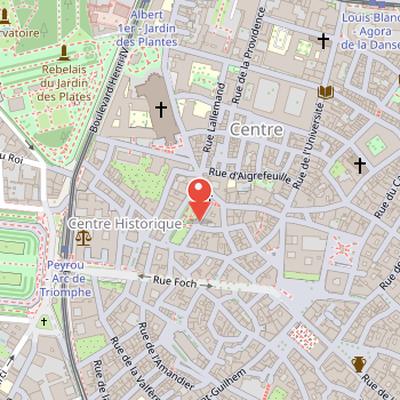
Nearby Objects
-
 Place de la Canourgue 20 m away
 -
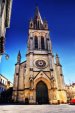 Sainte-Anne Church 150 m away
 -
 Montpellier Cathedral 200 m away
 -
 Arc de Triomphe of Montpellier 200 m away
 -
 Equestrian statue of Louis XIV 300 m away
Belleval Hotel and Its Reuse
L'Hotel Richer de Belleval, also known as hotel de Belleval (ancien), hotel de Boulhaco, or ancien hotel de ville, is located on Place de la Canourgue in Montpellier, Herault. The building is registered as a historic monument. After major rehabilitation works, it reopened to the public and now includes a luxury hotel, a gastronomic restaurant, and a corporate foundation dedicated to contemporary art.
Historical Development of the Belleval Hotel
The Belleval hotel was built on the foundations of an ancient canon residence destroyed in the 16th century. It was infefeed in 1615 and 1643 by Etienne de Bolhaco or de Boulhac, and later erected between 1669 and 1682 by Charles de Boulhac, a conseiller at Montpellier. The building was enlarged in 1709 after the marriage of Gaspard de Belleval and Elisabeth de Fressieux. In 1751, it underwent major works, including interior decorations, carried out by Joseph-Philibert de Belleval. The hotel also inherited the house of Pierre Richer de Belleval, the king's physician and botanist.
Rehabilitation and New Use
A rehabilitation program for the Historique was written and adopted in 2006 by the court of appeal. The historic services were then moved elsewhere without works by the Ministry of Justice. The building was put up for sale by the city in 2011, and in 2012 it was selected for an Art hotel project by Jerome Asius. It was also declassified as an hotel particulier, as reported by Helene Mandroux. In 2015, the building was entirely listed as a historical monument, then sold to Helenis, a subsidiary of the GGL group, for an undisclosed amount. The rehabilitation was led by architect Philippe Prost, while the historic decorations were restored by Atelier de Ricou. The renovation was documented in a collective work directed by the Ministry of Culture. The opening, initially planned for 2020, was postponed to 2021. The building now houses a Relais & Chateaux hotel with five suites and fifteen rooms, with interiors designed in a contemporary style by Christian Collot. It also contains the gastronomic restaurant Le Jardin des Sens of the Pourcel brothers, a bistro in the former honor courtyard, and the GGL-Helenis corporate foundation for contemporary art directed by Numa Hambursin.
Contemporary Art at Hotel Richer de Belleval
The Fondation d'art contemporain is located at the hotel Richer de Belleval, where the setting is designed to combine heritage and contemporary art. The foundation's site includes five permanent in-situ artistic interventions, commissioned by GGL-Helenis under the direction of Numa Hambursin. In addition to these installations, the ground floor exhibition space opened with the foundation's first exhibition, featuring works by Jim Dine. This debut presentation included paintings, lithographs, and sculptures, establishing the hotel as a venue for both permanent artistic interventions and temporary exhibitions.