Fondation Bemberg is an art foundation located in Toulouse in the Hôtel d'Assézat. It presents the private art collection of collector Georges Bemberg, which was lent to the municipality of Toulouse for 99 years in 1994. The museum aims to make this collection accessible to the general public and also offers cultural activities related to art history and knowledge.
The collection includes paintings, sculptures, and ancient and modern art objects. It displays three quarters of the Bemberg collection in the Hôtel d'Assézat, with works by major painters from several European painting schools, from the Renaissance to the modern period. The holdings include paintings and drawings, among them more than thirty canvases by Pierre Bonnard. The museum has also added important works over time, including pieces by Nicolas Tournier, Francisco de Zurbarán, Mattia Preti, Alexandre-François Desportes, and Mary Cassatt. The site has undergone renovation, including new exhibition spaces, updated museography, and accessibility improvements.
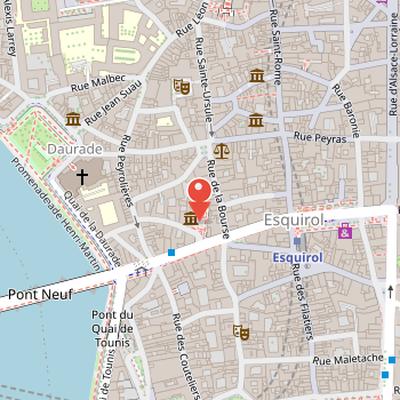
Nearby Objects
-
 Hôtel d'Assézat 0 m away
 -
 Place de la Trinité 150 m away
 -
 Notre-Dame de la Daurade 200 m away
 -
 Étienne-Esquirol Square 200 m away
 -
 Quai de la Daurade 250 m away
Fondation Bemberg in the Hotel d'Assezat
The Fondation Bemberg is an art foundation located in Toulouse in the Hotel d'Assezat. It presents the private art collection of collector Georges Bemberg, which includes paintings, sculptures, and ancient and modern art objects. Georges Bemberg lent this collection to the municipality of Toulouse through the foundation. Its purpose is to make the collection accessible to the general public. The Fondation Bemberg functions as a museum and also offers cultural activities related to art history and knowledge.
Collection, Exhibitions, and Recent Developments
In 1994, Georges Bemberg made a 99 year loan of his collection to the municipality. The Fondation Bemberg, housed in the Hotel d'Assezat, displays three quarters of the collection there. Its holdings include paintings and drawings, with more than thirty canvases by Pierre Bonnard, as well as works by major painters from different European schools, ranging from the Renaissance to the Modern period.
The institution has also expanded its collection over time through notable acquisitions. These include Nicolas Tournier's The Fruits of Autumn in 2014, the pendant The Fruits of Summer in 2015, Francisco de Zurbaran's The Child Jesus Wounded in 2018, Mattia Preti's Saint Sebastian in 2019, Alexandre-Francois Desportes' Still Life with Hunting Trophy, Fruits, and Parrot in 2020, and Mary Cassatt's Portrait of a Young Woman in a White Hat in 2023.
Beyond its permanent displays, the foundation organized a 2016 exhibition on the German goldsmithing collection of Rudolf-August Oetker. That exhibition drew public criticism over a lack of provenance details and the collector's Nazi connections, but the foundation rejected the allegations after expert analysis and reference to previous exhibitions. In 2020, the institution closed for renovation for three years before a planned reopening. The work included temporary exhibition spaces, new museography, and accessibility upgrades for disabled persons. At the same time, a labor dispute arose from Collectif Bemberg over alleged non-compliance with a rehiring clause at reopening.
Old Painting Rooms
The Fondation Bemberg includes a section devoted to old painting, with works that reflect a strong Venetian presence alongside pieces from other European traditions. Among the Venetian paintings and related objects is an 18th century Venetian painting presented with Venetian furniture. The gallery also displays Le Rapt de Proserpine by Paris Bordone, Vue de Dolo and Le Grand Canal a Sainte Lucie by Canaletto, Angeliique et Medor by Andrea Casali, L'automne by Rosalba Carriera, Paysage avec figures by Francesco Guardi, Le Charlatan by Pietro Longhi, La Bautta by Alessandro Longhi, Le triomphe d'Hercule by Giandomenico Tiepolo, created in Venice between 1760 and 1762, La Voluptueuse after Francois Boucher, and Fete champetre by Francesco Zuccarelli. In addition to these works, the collection includes a portrait of Miss Frances Elisabeth Sage by the English painter George Romney. The same section also presents Salle Louis XVI, which showcases collections from the same period, including French creations and Chinese porcelains. Together, these rooms suggest an arrangement that combines painting with period furnishings and decorative objects, emphasizing historical context as well as artistic display.
Old Master Paintings at Fondation Bemberg
The Fondation Bemberg includes a group of old master paintings that spans portraiture, genre scenes, landscapes, and mythological subjects. Among the portraits are Portrait de la comtesse Kagenek en Flore by Elisabeth Vigee Le Brun, Portrait de gentilhomme by Nicolas de Largillierre, Portrait de Louis Jean Marie de Bourbon, Duc de Penthiere by Jean-Marc Nattier, and Portrait du Prince Auguste Frederick by Henri-Pierre Danloux from 1794. The collection also contains La Princesse de Montlear, possibly by Adelaide Labille-Guiard.
Several works depict everyday or courtly scenes, including Personnages sous une tente by Jean-Baptiste Pater, Fete galante representant une dame dansant avec Pulcinella by Nicolas Lancret, Le Cadeau delicat and La lettre by Louis-Leopold Boilly, both around 1787, and La cuisiniere by Boilly. Mythological painting is represented by Acis et Galatee by Luca Giordano, circa 1685, while the Rococo tradition appears in Les Amours eveilles and Les Amours endormis by Francois Boucher.
Landscape and marine subjects are also present. These include Vue du port de Nimegue by Jan Van Goyen between 1638 and 1653, Vue d'une plage by Jan van Goyen around 1652, Le depart pour la chasse au faucon and Le Relais by Philips Wouwerman, and several compositions by Hubert Robert such as Paysage au pont, Bergers sous une grotte, and Chateau en ruine sur un rivage. Together, these works show the breadth of the old painting holdings at the Fondation Bemberg through a range of subjects and artistic approaches.
Ancient Painting in the Salle de l'Europe
The ancient painting section at Fondation Bemberg in Toulouse brings together several art objects that illustrate Renaissance humanist conceptions. The group includes works displayed in the Salle de l'Europe, among them Couple playing music by Pieter de Hooch, Inn scene by Pieter Brueghel the Younger, and Saint Jerome by Bruzzi, an oil on copper dating from around 1580. The collection also includes Les Fruits de l'ete and Les Fruits de l'automne by Nicolas Tournier, as well as Vierge a l'Enfant by Adriaen Isenbrant, an oil on panel, and Portrait de gentilhomme by Bartholomaeus Bruyn the Younger, also painted on panel. Other works listed in the section are Etude de tete trois magistrats francais by Frans Pourbus the Younger, around 1610, and Portrait of a young woman by Andrea Della Robbia, a glazed terracotta from 15th century Florence. Together, these works show the range of materials and subjects represented in the ancient painting holdings.
Peinture ancienne in the Renaissance Gallery
Peinture ancienne occupies the Renaissance gallery extending along the north wing of the building. This section brings together Flemish, Italian, and French paintings, along with several bronze statues and other decorative objects. Its sculpture collection includes Hercules and Cacus by Willem van Tetrode, Apollo and Cupid by Francois Duquesnoy, a 17th century bronze and porphyry work, and an Apollo in terracotta by Domenico Pio. The gallery also presents bronzes and old bindings, showing a display that combines painting, sculpture, and book-related objects within the same historic setting.
The paintings on view include a portrait of Cardinal de Sens Jean de Bertrand attributed to Jean Clouet, a portrait of Louise de Savoie by the school of Jean Clouet, and a portrait of Charles IX by Francois Clouet. Other portraits include Sebastien de Luxembourg-Martigues by Marc Duval of the Fontainebleau school, and Sibylle de Cleves by Lucas Cranach the Elder. The collection also owns five paintings by Lucas Cranach the Elder, and displays works by Giovanni Battista Carlone and Evaristo Baschenis.
Among the other highlighted works are a caravaggistic portrait of a man by Pietro Paolini, and paintings by Andrea Previtali, Jacopo Bassano, Paul Veronese, Jacopo Tintoretto, and Vittore Carpaccio. The section also includes a room named Les Anciens, Salle de la Coursiere, reinforcing the structured presentation of the collection within the Renaissance gallery.
Peinture moderne
The Peinture moderne section presents a broad survey of modern painting through works by many artists associated with French art in the late 19th and early 20th centuries. The French collection includes paintings by Eugene Boudin, Claude Monet, Auguste Renoir, Alfred Sisley, Berthe Morisot, Camille Pissarro, Gustave Caillebotte, Henri Fantin-Latour, Henri de Toulouse-Lautrec, Edgar Degas, Edouard Vuillard, Odilon Redon, Paul Serusier, Paul Gauguin, Louis Valtat, Paul Cezanne, Maximilien Luce, and Stanislas Lepine.
The visit concludes with artists representing modern art trends in France during the early decades of the century, including Georges Rouault, Andre Derain, Henri Matisse, Raoul Dufy, Albert Marquet, Maurice de Vlaminck, Charles Camoin, Kees van Dongen, Pablo Picasso, Georges Braque, Othon Friesz, Amedeo Modigliani, and Maurice Utrillo. A dedicated room is given to Pierre Bonnard and approximately thirty of his paintings.
The section also includes a Pointillist room representing two movements: the art nabi group led by Edouard Vuillard and divisionism or pointillism. Among the works mentioned are Le Clocher de Saint-Tropez by Paul Signac from 1896, Arbres (amandiers) en fleurs by Paul Signac from 1896, Un canal a Venise by Henri-Edmond Cross from 1899, La Chaine des Maures by Henri-Edmond Cross from 1906 to 1907, Homme a la barque by Henri-Edmond Cross, Mignonne, allons voir si la rose by Paul Serusier, Les Ramasseuses de fougeres au Bois d'Amour by Paul Serusier from 1910, Baigneur by Maximilien Luce, La Table de la mer by Henri Le Sidaner from 1920, Madame Hessel a sa fenetre by Edouard Vuillard, and Le couple ou La Remontrance by Edouard Vuillard.
Walter Sickert in the Peinture Moderne Collection
The Peinture moderne collection at Fondation Bemberg includes a group of paintings by Walter Sickert, showing the range of his work across several years. Among the listed works are Le mont de Neuville Dieppe - Blue Sky (paire), The Pit at the Old Bedford, La cathedrale de Milan, Dieppe, les arcades et la Darse, and La gare de Dieppe. The collection also includes La rue Ste Catherine et les vieilles arcades, Dieppe, created between 1900 and 1902, as well as Le chale venetien (La Carolina), Maestoso con Sentimento, and Chopin. The dated works span from 1889 to 1914, with several pieces connected to Dieppe and others referring to different subjects and places. Together, these entries indicate that Walter Sickert is represented by multiple paintings within the modern painting section of the Fondation Bemberg.
Peinture moderne and the Salle Henri Fantin-Latour
Peinture moderne presents the Salle Henri Fantin-Latour as a grouping of intimate scenes and portraits. The room brings together works by contemporaries of Henri Fantin-Latour, while also including several paintings by Fantin-Latour himself. He is identified as a realist and intimate painter, as well as a French lithographer. The facts note that he studied under his father, Theodore Fantin-Latour, and later in Paris under Louis-Alexandre Peron and Horace Lecoq de Boisbaudran. He was married to Victoria Dubourg, who was also a painter.
Among the works listed in this section are Self-portrait from 1860, Fruits from 1872, and La chaise a la fenetre from 1861 by Henri Fantin-Latour. The room also includes Portrait of a little boy by Paul Gauguin from 1888, Les collectionneurs d'estampes by Honore Daumier, L'acteur Coquelin aine accoude by Jean Beraud, Jardin fleuri by Egon Schiele, and L'enlevement de Ganymede by Odilon Redon. Together, these works define the room as a display of intimate subjects and portraits by several artists associated with Fantin-Latour's period.
The Salle Fauve and Fauvism
In the Peinture moderne section, the Salle fauve presents works illustrating the Fauvism painting movement. The material identifies Fauvism as having emerged in France around 1905, and notes that it coincided with Expressionism in Germany in the same year. It also states that the movement ended approximately in 1910. The salle therefore frames Fauvism as a short-lived but distinct artistic phase within the museum's modern painting displays.
Peinture moderne Collection
The Peinture moderne section brings together a wide range of works that illustrate late 19th and early 20th century French painting, with impressionism presented as a very important theme. The collection includes numerous landscapes and portraits associated with the movement, as well as a very complete set of works by Pierre Bonnard, covering his career from the nabi period to his last years.
Among the impressionist and related works are several paintings by Albert Marquet, including La seine (environs de Rouen), Le theatre en plein air, Alger, and Vue de la Seine, l'embarcadere or Paysage, all from 1942. Albert Lebourg is represented by Port de Dieppe from 1893 and Le Pont Neuf et la Seine from 1905. Other landscape painters appear through Othon Friesz with Jardins a Honfleur from 1902 and Paysage sur la terrasse from 1909, and Henri Lebasque with Le Jardin. Henri Manguin is included through Le Golfe.
The section also features works by Alfred Sisley, described as an English painter and engraver associated with impressionism, including Les Bords du Loing vers Moret from 1883 and Le canal du Loing from 1884. Camille Pissarro is present with Portrait de Felix en jupe from 1883, Bois de chataigniers en hiver, Louveciennes from 1872, and Dulwich College, Londres from 1871. Other paintings include Rotterdam, Le Pont de la Bourse by Eugene Boudin from 1876, Crinolines sur la plage by Eugene Boudin from 1863, La seine a Charenton by Armand Guillaumin circa 1885, Portrait de son fils Jean en bonnet a pompon by Claude Monet from 1869, Bateaux sur la plage a Etretat by Claude Monet from 1883, Femme au jardin (Villa Arnulphi a Nice) by Berthe Morisot from 1882, Le petit bras de la Seine en automne by Gustave Caillebotte circa 1890, and two views by Stanislas Lepine, Vue de la Seine et du Trocadero - Le pont de Grenelle and Paris, le pont des Arts, both from 1878-1883.
Alongside the paintings, the collection includes Eve a la pomme, a green patinated bronze from 1899 by Aristide Maillol, who is identified as a French painter, engraver, and sculptor and as a student of Jean-Leon Gerome and Alexandre Cabanel. Pierre Bonnard is represented by works spanning several decades, including Scene de rue from 1894, L'omnibus and Le concert Lamoureux from 1895, Au cafe and La femme au restaurant from 1900, Nu au tub from 1903, Le soir de Noel from 1904, Les pechers from 1907, En Bateau from 1910-1913, Le Pont des Saints-Peres around 1910, Voiliers au sec painted in Cannes in 1914, Paysage du Midi and Nature morte aux citrons from 1917, La grange from 1919, Iris et Lilas and Les Pommes jaunes et rouges from 1920, La foret de pins from 1922, Paysage du Cannet from 1923, two self-portraits, the last titled Portrait de l'artiste par lui-meme from 1945, as well as L'etable and Montmartre.
Modern Paintings in the Collection
Fondation Bemberg includes a group of modern paintings that spans several decades, from the late 19th century to the mid 20th century. The collection features Scene de rue, created in 1894, and Le concert Lamoureux, made around 1895, alongside L Omnibus Pantheon-Courcelles, circa 1890, and later works such as La femme au restaurant around 1900 and Au cafe in 1900. It also includes Nu au tub from 1903, Le soir de Noel from 1904, Intérieur from 1905, and Les pecheurs from 1907.
The early 1910s are represented by En bateau, made between 1910 and 1913, Marine from 1910, and Le Pont des Saints-Peres around 1910. This period is followed by Voiliers au sec in 1914, Femme au peignoir rouge in 1916, Paysage du Midi between 1917 and 1918, and Nature morte aux citrons in 1917. The collection continues with La grange and La promenade au bord de la riviere in 1919, Iris et Lilas and Les Pommes jaunes et rouges in 1920, La foret de pins in 1922, Paysage du Canet in 1923, and Le Cannet in 1930. Later works include Autoportrait sur fond blanc, chemise col ouvert in 1933 and Portrait de l artiste par lui meme in 1945.
Additional modern paintings listed for the Fondation Bemberg are L etable, Montmartre, Misia Sert sur le navire d Edwards, and La fillette au chat. Taken together, these works show a sustained interest in modern painting across changing subjects, including street scenes, interiors, still lifes, landscapes, portraits, and maritime scenes.
Modern Painting and Drawing Rooms
The Peinture moderne section at the Fondation Bemberg in Toulouse brings together several bronze works and paintings by contemporaries. Among the works displayed are Elegante a la robe bleu by Giovanni Boldini, Sur le Boulevard (1893) by Louis Valtat, Grand Nu by Roger de La Fresnaye, and Jeune fille retirant sa chemise by Roger de La Fresnaye, both dated around 1911. The section also includes L'Age d'Airain (1875-1876) and Pierre de Wiessant, Nude Study 1885 by Auguste Rodin, as well as Apollon et Cupidon by Francois Duquesnoy from the 17th century.
A group of drawings is shown in the Salle des dessins. These include Etude de deux chevaux tritons by Luca Giordano, Hercule et Antee and Caricature d'un homme de profil by Giandomenico Tiepolo, and Etude by Giambattista Tiepolo. Other works in the same room are Promenade des Remparts de Paris by Charles Nicolas Cochin, Portrait de jeune fille by Auguste Renoir, La Tahitienne by Paul Gauguin, Maison de la rue des Moulins, Rolande by Henri de Toulouse-Lautrec, and three works by Edgar Degas: Femme a la coiffeuse, L'arlequin jaune, and Danseuse rajustant son epaulette. The section also includes Jeune fille lisant by Berthe Morisot.