Hôtel Louvre et Paix, also known as Le Grand Hôtel Louvre et Paix, was inaugurated in Marseille and was described as the most beautiful hotel in the city. Built by Jean-Charles Pot on La Canebière, it was a large luxury establishment spread over six floors. Its original layout included 150 rooms, 20 salons, and two restaurants; later, it had 250 rooms. The hotel was equipped with hydraulic elevators, telephones, and electric lighting, reflecting its modern facilities. It also had cultural associations: the Lumière brothers’ film Arrivée d’un train à la Ciotat was projected there, and Apollon Caillat served as head chef. The hotel was also the site of the marriage of Nancy Wake and the Marseille industrialist Henri Fiocca. During the war, it was requisitioned by the Marine Nationale, occupied by the Kriegsmarine, taken back by the Marine Nationale, and finally sold to a department store. Its facades and roofs on La Canebière, Rue des Récollettes, and Rue Vincent-Scotto, along with the staircase and its railing, and the officer’s messroom and conference room on the ground floor, were classified as historical monuments.
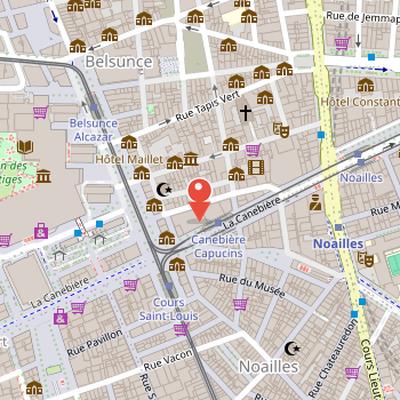
Nearby Objects
-
 Église de la Mission de France 200 m away
 -
 Musée d'Histoire de Marseille 250 m away
 -
 Alcazar 300 m away
 -
 Place du Général-de-Gaulle 300 m away
 -
 Jardin des Vestiges 300 m away
The Hotel on La Canebiere
Le Grand Hotel Louvre et Paix was inaugurated as a luxury establishment on La Canebiere and was described in Histoire as the most beautiful hotel in Marseille. It was built by Jean-Charles Pot and originally contained 20 salons, 2 restaurants, and 150 rooms. The building was spread over 6 floors and was equipped with hydraulic elevators, telephones, and electric lighting, all of which point to its position as a modern high-end hotel.
The hotel also appears in cultural and social history. The Lumiere brothers' film Arrivee d'un train a la Ciotat was projected there, and Apollon Caillat served as head chef. Nancy Wake married the Marseille industrialist Henri Fiocca at the hotel du Louvre. Over time, the hotel expanded to 250 rooms.
Its later history reflects the upheavals of the 20th century. It was requisitioned by the Marine Nationale by decree, then occupied by the Kriegsmarine, before being taken back by the Marine Nationale. The property was finally sold to a department store. Several parts of the building were classified as historical monuments, including the facades and roofs on La Canebiere, Rue des Recollettes, and Rue Vincent-Scotto, the staircase with its railing, and the officers messroom and conference room on the ground floor.