Hôtel Ritz Paris is a palace hotel in central Paris overlooking Place Vendôme in the 1st arrondissement. Founded in 1898 by Swiss hotelier César Ritz and French chef Auguste Escoffier, it was constructed behind the façade of an eighteenth-century townhouse. The hotel was among the first in Europe to offer en suite bathrooms, electricity, and telephones in each room, helping establish its early reputation for luxury.
Over time, the hotel attracted royalty, politicians, writers, film stars, and singers, and it remains associated with high society. Some suites are named after guests, including Coco Chanel, and the Bar Hemingway pays tribute to Ernest Hemingway. The hotel was renovated from 1980 to 1987 after its purchase by Mohamed Al-Fayed, and again from 2012 to 2016. It is a member of The Leading Hotels of the World and is ranked among the most luxurious hotels in the world. The Suite Impériale is listed by the French government as a national monument. The hotel appears in novels, plays, and films, including works by F. Scott Fitzgerald, Ernest Hemingway, Noël Coward, Billy Wilder, and William Wyler.
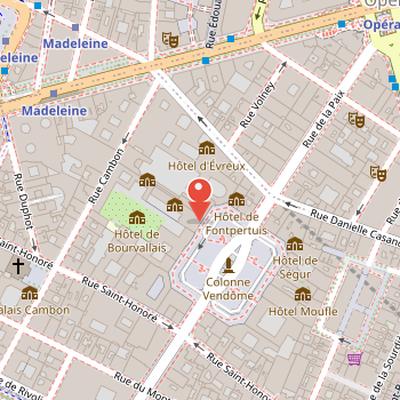
Nearby Objects
-
 Place Vendôme 70 m away
 -
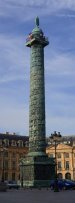 Vendôme Column 70 m away
 -
 Hôtel Costes 150 m away
 -
 Couvent des Jacobins 250 m away
 -
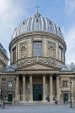 Notre-Dame-de-l'Assomption Church 250 m away
Luxury Hotel History and Cultural Presence
The Hotel Ritz Paris is a hotel in central Paris overlooking the Place Vendome in the 1st arrondissement. Founded in 1898 by Swiss hotelier Cesar Ritz and French chef Auguste Escoffier, it was constructed behind the facade of an eighteenth-century townhouse. The hotel was among the first in Europe to provide en suite bathrooms, electricity, and telephones in each room, helping to establish its reputation for luxury. Over time, it attracted royalty, politicians, writers, film stars, and singers, and it is ranked among the most luxurious hotels in the world. It is also a member of The Leading Hotels of the World marketing group.
The hotel has been renovated several times, including work carried out from 1980 to 1987 after its purchase by Mohamed Al-Fayed, and again from 2012 to 2016. Some of its suites are named after guests, including Coco Chanel, and the cocktail lounge Bar Hemingway pays tribute to writer Ernest Hemingway. Suite Imperiale is listed by the French government as a national monument. The hotel has not applied for the Palace distinction from the French ministry of economy, industry and employment.
The Hotel Ritz Paris has also become a recurring cultural reference, appearing in novels, plays, and films as a symbol of high society and luxury. It appears in F. Scott Fitzgerald's Tender Is the Night, Ernest Hemingway's The Sun Also Rises, Noel Coward's Semi-Monde, Billy Wilder's 1957 comedy Love in the Afternoon, and William Wyler's 1966 comedy How to Steal a Million.
Place Vendome Site and Early Ownership
The site occupied by the Hotel Ritz Paris has a long history tied to the early development of Place Vendome. The project was first started by the Marquis de Louvois, but it was abandoned because of a lack of funds. After Louvois' death, King Louis XIV bought the Place Vendome site, and the project was later bought and completed by John Law during a period of low finances. In 1705, Antoine Bitaut de Vaillie, advisor to the Grand Council, purchased lot number 15 on the site as nominee of Jeanne Baillet de La Cour, widow of Nicolas Baillet de La Cour, acting on behalf of her daughter Anne. Jeanne Baillet de La Cour bequeathed the lot to Anne in 1710. Anne, who is identified as the wife of Duke Antoine de Gramont and also as a chambermaid to Daquin and to Louis Sanguin, Marquis de Livry, later married Duke Antoine Charles IV of Gramont. A building known as the Hotel de Gramont was then built on the site and named after the duke.
The property changed hands several times in the following decades. In 1721, the widowed Duchesse de Gramont sold it to Daniel Francois de Gelas of Voisin, described as knight of Amber and count of Lautrec, who lived there for thirty years. The site was sold again in 1750 to Charles de la Villette, treasurer of the extraordinary wars, and it was also rented to the Prince of Andorra, the Spanish ambassador. From 1775, the site belonged to Claude Darras, secretary of the king. It was occupied from 1788 by the Direction of the liquidation of the public debt and from 1792 by the Mortgage credit. The facade of the site was designed by the royal architect Jules Hardouin-Mansart. In 1854, the Pereire brothers acquired the property and made it the head office of their bank, the Credit Mobilier.
From Grand Hotel to Paris Landmark
The Hotel Ritz Paris was created from the former Hotel de Gramont, which César Ritz and Alexandre Marnier-Lapostolle purchased and transformed into a 210-room hotel designed by architect Charles Mewes. Its design reflected Ritz's emphasis on comfort and modern standards: each suite had its own bathroom, and the layout was planned to allow maximum sunlight with minimum curtains. The furnishings were chosen to resemble an English or French gentleman's house, reinforcing the idea of a private and elegant setting for guests. Ritz also worked with Auguste Escoffier to establish the hotel as a place associated with opulence, service, and fine dining.
Ritz's earlier career helped shape this identity. In 1888 he opened a restaurant in Baden-Baden with Escoffier, and in 1889 Richard D'Oyly Carte invited Ritz and Escoffier to London to manage the Savoy Hotel until 1897. There they served as manager and chef, attracted a distinguished clientele including the Prince of Wales, and achieved immediate success. Ritz and Escoffier were later dismissed from the Savoy in 1897 after Ritz's implication in theft of wine and spirits.
The Hotel Ritz Paris quickly became fashionable with Parisian socialites and hosted figures such as Marcel Proust, F. Scott Fitzgerald, Ernest Hemingway, King Edward VII, and Coco Chanel. Many suites were named after famous patrons. The hotel was painted by Pierre-Georges Jeanniot in 1904 and 1908 at the garden cafe, and it was a place where Marcel Proust wrote parts of Remembrance of Things Past around 1909. A building extension followed in 1910, and after Ritz's death in 1918 his son Charles Ritz succeeded him.
The hotel continued to receive prominent guests, including Queen Marie of Romania and her daughters Elisabeth and Maria in 1919 during the Paris Peace Conference, as well as many royal figures and heads of state over the years. It later underwent a complete renovation by Al-Fayed over several years without closing, and was extended again by annexing two townhouses joined by an arcade with Paris's leading boutiques.
Renovation, Fire, and Modern Reputation
In the 21st century, Hotel Ritz Paris has been ranked among the most luxurious hotels in the world, and it has been described as the most expensive hotel in Paris. It has also been called the best hotel in Europe and one of the world s most famous hotels. The hotel is one of The Leading Hotels of the World. After a major four-year, multimillion-dollar renovation, it was scheduled to reopen in late 2015, with that date later changed to March 2016. A major fire broke out at 07:00 local time on 19 January 2016, and the response involved fifteen fire engines and 60 firefighters. The hotel reopened on 6 June 2016.
Historical Events at the Hotel
The Ritz Paris has been associated with a series of notable historical occurrences across the 20th and 21st centuries. In the summer of 1940, the Luftwaffe established its headquarters at the hotel, with Hermann Goring serving as the chief of the Luftwaffe there. After World War II, Ernest Hemingway stayed at the hotel many times, and one reported episode there involved his learning of Martha Gellhorn's wish for a divorce. Accounts of that event also describe Hemingway throwing Gellhorn's photograph into a Ritz toilet and shooting both with his pistol.
Other events at the hotel included the death of Dorothy Gibson from a stroke on 16 February 1946. On 22 April 1955, the Duke and Duchess of Parma hosted a coming out ball for Princess Cecile Marie of Bourbon-Parma at the hotel. More recently, on 30 August 1997, Diana, Princess of Wales, Dodi Al-Fayed, and chauffeur Henri Paul dined in the Imperial Suite, and they left the hotel with bodyguard Trevor Rees-Jones before the fatal car accident in the Pont de l'Alma underpass early the next day.
The hotel was also the scene of a major theft on 10 January 2018, when five men stole jewelry worth millions of euros from inside the building. Three of the five men were later caught after the theft, though they escaped.
Architecture and Interior Design
The Hotel Ritz Paris is closely associated with the architecture of Place Vendome, whose palace and square were designed as masterpieces of classical architecture from the end of the reign of Louis XIV. The facade was designed by the royal architect Mansart in the late 17th century, while the plot was bought and construction began in 1705. The hotel itself comprises the Vendome and the Cambon buildings, with rooms overlooking Place Vendome. It is four floors high, including the mansard roof, and as of 2024 offers 140 rooms.
The Ritz was among the first hotels in Europe to provide an en suite bathroom, a telephone, and electricity in each room. Its public salons are furnished with museum-calibre antiques, and its guest rooms are uniquely decorated, most with Louis XIV or Louis XV reproductions. Many rooms include fine rugs, marble fireplaces, tapestries, and brass beds, and the tubs have been described as deep and big since the time of Edward VII. Several rooms have fifteen-foot-high ceilings and views over Place Vendome.
The hotel also includes a two-Michelin-starred restaurant, two bars, and a casual dining restaurant. Its position in the city market is reflected in its pricing, with suites starting at EUR 3,650 and the most lavish reaching up to EUR 20,000 a night, including Suite Imperiale. The ten Prestige suites include the Vendome Suite, with Louis XIV furnishings and a red and ivory theme; the Cesar Ritz Suite, with Louis XV furniture, a portrait of Ritz, and green and light yellow decoration; the Elton John Suite, in strawberry pink and cream; the Windsor Suite, with Louis XVI furniture, tapestries, and portraits of the Duke and Duchess of Windsor; and the Coco Chanel Suite, which has two bedrooms, a living room, Coromandel lacquers, Chinese furniture, baroque mirrors, oversized sofas, French art, bas-reliefs, and 18th-century paneling protected under historic monument status. Its bathroom is a former boudoir overlooking the Vendome garden, and the suite also includes a personal wine cellar.
Dining and Bar Culture at the Ritz Paris
The hotel's dining spaces reflect a long connection to French gastronomy and hospitality. L'Espadon, the current hotel restaurant, was established in 1956 by Charles Ritz and was named after a fish. It was inspired by chef Auguste Escoffier and served traditional French culinary style with contemporary overtones. Escoffier remained the executive chef until the restaurant closed on 1 August 2012, while Guy Legay served as head chef from at least 1986 to beyond 1999. The restaurant's decor included trompe-l'oeil ceilings, swagged drapes, and views of the garden. One of the best-known cocktails associated with the hotel was the Rainbow, made with anisette, mint, yellow chartreuse, cherry brandy, kummel, green chartreuse, and cognac.
The Ritz Bar may have been the world's first hotel bar, adding to the hotel's reputation as a social destination. Another dining venue, Bar Vendome, is popular with wealthy Parisians for afternoon tea and features wood furnishings and a grand piano. During summer months, its doors open onto the garden and terrace, linking the interior space to the hotel's outdoor setting.
The hotel also includes a school whose ethos is based on Escoffier's words, "Good cuisine is the foundation of true happiness." It offers training and workshops for amateur and professional cooks, and its entrance is located at the back of the hotel.
Pool and Spa
The hotel pool and spa includes a swimming pool described as the largest in all of the Parisian hotel palaces. The Ritz bills it as the finest indoor pool in Paris. Its construction was inspired by the baths of Ancient Greece and Ancient Rome, and the pool area includes reliefs on the ceilings. The pool also features jet streams and underwater sounds. In addition to the pool, the health club offers hi-tech facilities and a range of health treatments, including reflexology, Swedish massage, and shiatsu.
The Ritz in Fiction and Film
The Hotel Ritz Paris has appeared frequently in fiction and film, where it is often associated with elite social life, romance, and dramatic events. Many novels of the Lost Generation include scenes at the hotel, including F. Scott Fitzgerald's Tender Is the Night and Ernest Hemingway's The Sun Also Rises. Noe l Coward's play Semi-Monde also covers the Ritz in detail, following the escapades of an extravagant fictional Paris elite between 1924 and 1926. Later fiction continued to use the hotel as a setting for high-profile characters and plotlines, such as Bret Easton Ellis's Glamorama, in which supermodels turned terrorists plant a bomb that destroys the Ritz, and Dan Brown's The Da Vinci Code, where the protagonist Robert Langdon stays there.
The hotel also appears in works by Lauren Weisberger, Ian Fleming, and Julian Fellowes. In The Devil Wears Prada, Andrea Sachs and Miranda Priestly stay at the Ritz. In From Russia, with Love, the final chapter is set at the hotel, and the villain Rosa Klebb stays in room 204 before her battle with James Bond ends in her death. In Snobs, attendees of Earl Broughton's bachelor party are accommodated at the Ritz.
Film has reinforced this association. Several films feature the hotel, including three starring Audrey Hepburn. In Stanley Donen's Funny Face, Kay Thompson dances in the Ritz's entry driveway and in front of the hotel, accompanied during Bonjour, Paris! by dancers dressed as Ritz bellhops. Billy Wilder's Love in the Afternoon is set largely at the Ritz and includes a scene in which Hepburn begins a romance with Gary Cooper in his suite. In How to Steal a Million, Hepburn and Peter O'Toole share a romantic scene in the hotel's bar. The hotel also appears in Jhoom Barabar Jhoom and in The Crown, which includes the story of the Al-Fayeds and the acquisition of the Ritz Hotel.
External References and Classification
The external links connected with the Hotel Ritz Paris include an interview with Colin Field, head barman of the Ritz's Hemingway Bar, published on hotelmanagement-network.com, as well as a link to the Ritz Paris itself. The listed categories place the hotel within several contextual groupings: buildings and structures in the 1st arrondissement of Paris, 1705 establishments in France, 2016 fires in Europe, fires in Paris, and Michelin-keyed hotels. These references and classifications indicate how the hotel is documented in relation to its location, history, and notable events.