Musée lapidaire d'Avignon is an archaeological museum in Avignon, France, operated as one of the cultural institutes maintained by Fondation Calvet. It is dedicated to preserving the foundation’s archaeological collection, which began with the holdings of Esprit Calvet, born in Avignon in 1728. The collection was first installed in Hôtel de Villeneuve-Martignan in the nineteenth century and later expanded through acquisitions and donations from Esprit Requien, including works from the Nani collection. As the collection grew, a new location was needed. Since 1933, the museum has been housed in the old chapel of the Jesuit College of Avignon, an example of Baroque architecture built by Etienne Martelange and François de Royers de la Valfenière between 1575 and 1667. The museum’s holdings include works from Greek, Etruscan, Roman, Gallo-Roman, and early Christian cultures, as well as prehistoric items such as statues, inscriptions, tombstones, vases, reliefs, and sarcophagi, many from the Avignon region.
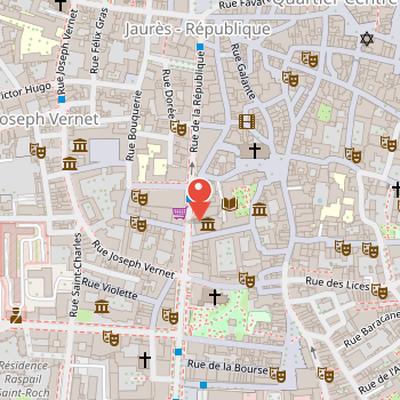
Nearby Objects
-
 Musée Angladon 90 m away
 -
 Collection Lambert 150 m away
 -
 Calvet Museum 250 m away
 -
 Palais du Roure 250 m away
 -
 Church of the Célestins of Avignon 300 m away
Collection and Setting
The Musee lapidaire d'Avignon is one of the cultural institutes maintained by Fondation Calvet, and it is dedicated to preserving the archaeological collection of the foundation. It is located in Avignon, France. The collection began with the holdings of Esprit Calvet, who was born in Avignon on 24 November 1728. His collection included sculptures from Antiquity and the Middle Ages, and it was first installed in the Hotel de Villeneuve-Martignan in the nineteenth century. Later, numerous acquisitions and donations from Esprit Requien enlarged the collection with classical works from the Nani collection, making a new location necessary.
Since 1933, the museum has been based in the old chapel of the Jesuit College of Avignon. This building is an example of Baroque architecture and was built by Etienne Martelange and François de Royers de la Valfeniere between 1575 and 1667. The museum now houses works from Greek, Etruscan, Roman, Gallo-Roman, and early Christian cultures. Its holdings include prehistoric items such as statues, inscriptions, tombstones, vases, reliefs, and sarcophagi. Many of these items come from the Avignon region.