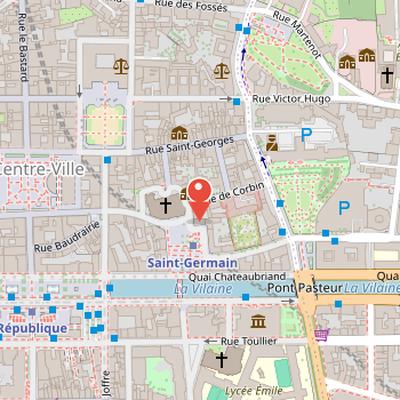
Place Saint-Germain is a square in Rennes with an approximately rectangular shape. It is bordered to the north by Saint-Germain church and to the south by Quai Chateaubriand, which runs along the Vilaine river. The square takes its name from the Saint-Germain church and is served by the Saint-Germain metro station.
Archaeological excavations have shown that the area was occupied around a meander of the Vilaine and revealed traces of a wooden bridge over the river. These excavations, carried out before construction of metro line B, also increased understanding of Rennes’ medieval past and provided information on the bombardment of August 22, 1944. That bombing destroyed the eastern block near the square; the block was not rebuilt, allowing the public space to remain in its current form. A bomb discovered during excavations on August 10, 2004, led to a defusing operation the next day and the evacuation of the area, with a safety perimeter established in the city center.
Nearby Objects
-
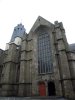 Église Saint-Germain de Rennes 50 m away
 -
 Saint George Palace 150 m away
 -
 Musée des Beaux-Arts de Rennes 150 m away
 -
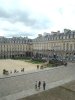 Place du Parlement-de-Bretagne 200 m away
 -
 Rennes Opera House 200 m away
Location and Access
Place Saint-Germain is approximately rectangular in shape. It takes its name from the Saint-Germain church, which borders it to the north. To the south, it is bordered by Quai Chateaubriand, which runs along the Vilaine river. The area is also served by the Saint-Germain metro station.
Archaeology and Wartime History
Archaeological excavations before the construction of metro line B revealed occupation organized around a meander of the Vilaine river, as well as traces of a wooden bridge over the river. These investigations increased understanding of Rennes medieval past and also provided information about the bombing of 1944. The area was affected by the bombardment of Rennes on August 22, 1944, when the eastern block near the square was destroyed. That block was not rebuilt, in order to enlarge the public space in its current form.
The excavations also uncovered a bomb dropped in 1944 on August 10, 2004. Its discovery led to a defusing operation on August 11, 2004, in Rennes city center, with an evacuation and the establishment of a safety perimeter.