The Château du Suquet is an ancient monastery-castle on the historic mount Suquet in Cannes, in the Alpes-Maritimes, Provence-Alpes-Côte d'Azur. Its built complex includes the Suquet tower, the Sainte-Anne chapel, and the 16th-century Notre-Dame-de-l'Espérance church. Classified as a historical monument in 1919, the site has also housed the museum of World Explorations since that year.
Its history is linked to the medieval development of Cannes and the former castellum Marcellini. Around 1080, the abbot of Lérins built a fortified wall and the tower of Suquet on the site, and in 1178 the abbots renamed the place Castellum Francum and developed it into a feudal fortified monastery. The medieval enclosure included defensive walls, living quarters, the fortified church Notre-Dame-du-Puy, a hospital, and a monastic garden. Notre-Dame-du-Puy partly retains Romanesque elements and is now the Sainte-Anne chapel. The château was repeatedly modified, abandoned, restored, damaged, and partially destroyed over time, and later experienced further changes through 19th-century works and uses.
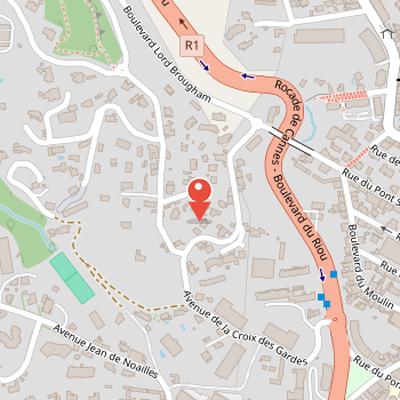
Nearby Objects
-
 Cimetière du Grand Jas 500 m away
 -
 Église Notre-Dame-de-l'Espérance 750 m away
 -
 Marché Forville 800 m away
 -
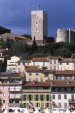 Musée des Explorations du Monde 800 m away
 -
 Palais des Festivals et des Congrès 1200 m away
Ancient Monastery-Castle on Mount Suquet
The château du Suquet is an ancient monastery-castle located on the historic mount Suquet in Cannes, in the Alpes-Maritimes department of Provence-Alpes-Cote d'Azur. The site includes the Suquet tower, the Sainte-Anne chapel, and the Notre-Dame-de-l'Espérance church, which dates from the 16th century. It was classified as a historical monument in 1919. Since the same year, it has housed the museum of World Explorations. The ensemble combines religious and defensive elements and remains an important part of the historic fabric of the area.
Early Fortification of the Suquet Site
The site of the château du Suquet was already linked to local power in 960, when Guillaume Ier and Rotboald Ier de Provence granted the castellum Marcellini antique du Suquet to seigneur Rodoard de Grasse and d'Antibes. Rodoard was a vassal and head of a branch of the house of Grasse, and the fief of Antibes included Cannes. Around 1030, Guillaume-Gruette, son of Rodoard, entered religious orders and ceded part of his lands to the abbaye de Lerins, a donation that later led to the creation of the commune of Cannes. Around 1080, the abbot of Lerins built a fortified wall and the tower of Suquet on the castellum site. The tower stands 22 meters high and offers a 360 degree panoramic view. Its function was to monitor the bay of Cannes and defend against corsairs and Saracens. In 1327, a signal fire system was installed between the tower of Suquet and the fortified monastery of the abbaye de Lerins.
From Fortified Monastery to Museum
In 1178, the abbots renamed Castellum Marcellini as Castellum Francum and developed it into a feudal fortified monastery with a square plan. The medieval fortified town included defensive walls, living quarters, the fortified church Notre-Dame-du-Puy, a hospital, and a medieval monastic garden. Notre-Dame-du-Puy partly retains Romanesque elements and is now the Sainte-Anne chapel. Over time, the château was repeatedly modified, abandoned, and restored, including a restoration by abbot Augustin Grimaldi in 1512. In 1521, the church Notre-Dame-d'Espérance de Cannes was founded and integrated within the fortified castle enclosure. The site was damaged at the end of the 16th century and was partially destroyed on the order of the bishop of Grasse. Further losses occurred in the 19th century, when sanitation and road works destroyed part of the castle walls. After being sold as national property in 1791 during the French Revolution to the future mayor Jean-Charles Hibert, the partially destroyed château later became the manufacture La faience d'art Leon Castel du Mont-Chevalier in 1878. In 1919, the municipality of Cannes purchased it from Hibert's heirs to establish the musee de la Castre.