Fontaine Roesselmann is a monument erected in 1888 in Colmar, Haut-Rhin, by the French sculptor Auguste Bartholdi. The fountain is made of white stone and is decorated with four bronze fish that function as spillways. Its design is inspired by the polylobed shape of Gothic fountains, and it includes a bronze statue.
The monument represents provost Jean Roesselmann, who died defending Colmar at the Porte de Bâle in 1262. It also recalls his defense of the city against the bishop of Strasbourg's ambitions and after the incursion of Bishop Walter de Geroldseck. The statue's facial features are those of Mayor Hercule Jean-Baptiste de Peyerimhoff of Colmar. This figure was associated with opposition to the annexation of Alsace after the French defeat of 1871. The statue was toppled in 1943 for melting down, later found severely damaged at the port of the Rhine, restored, and reinstalled in 1945.
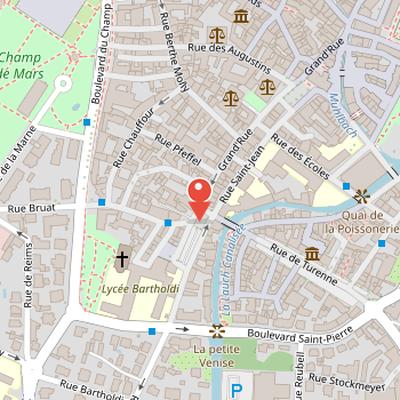
Nearby Objects
-
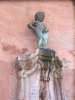 Manneken-Pis de Colmar 250 m away
 -
 Musée Bartholdi 300 m away
 -
 St Martin's Church 400 m away
 -
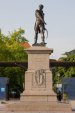 Statue of Jean Rapp 400 m away
 -
 Dominikanerkirche 500 m away
Monument Erected in Colmar
Fontaine Roesselmann is a monument erected in 1888 by the French sculptor Auguste Bartholdi in Colmar, Haut-Rhin. The work is identified primarily through its date, creator, and location, placing it within Bartholdi's sculptural production in the city of Colmar. Its significance in this context lies in its status as a public monument associated with a named artist and a specific place and year of construction.
Historical Meaning of the Statue
The historical figure represented by the statue is Jean Roesselmann, provost of Colmar, who died defending the city at the Porte de Bale in 1262. The monument also refers to his defense of Colmar against the ambitions of the bishop of Strasbourg and after the incursion of Bishop Walter de Geroldseck. The facial features of the figure are those of Mayor Hercule Jean-Baptiste de Peyerimhoff of Colmar, whose statue is said to depict him as someone who opposed the annexation of Alsace after the French defeat of 1871. In 1943, the statue was toppled in order to be melted down, but it was later found severely damaged at the port of the Rhine. It was restored and reinstalled in 1945.
Design and Monumental Form
Fontaine Roesselmann was erected by Bartholdi in 1888 as a monument in white stone. Its design is decorated with four bronze fish that serve as spillways, while the statue itself is constructed in bronze. The composition is inspired by the polylobed shape of Gothic fountains, linking the work to older fountain forms through its overall arrangement and detailing.