The Monument aux morts de l'île du Souvenir is a monument dedicated to the victims of the First World War in Lyon, France. It stands on the Île du Souvenir in the parc de la Tête-d'Or. The monument was designed by architect Tony Garnier, with the cenotaph sculpted by Jean-Baptiste Larrivé. The bas-reliefs titled Le Départ and La Guerre were sculpted by Louis Bertola, while La Paix and La Victoire were sculpted by Claude Grange.
The project emerged from a competition launched by the city of Lyon for a new war memorial. After an initial selection of ten projects, including five by Tony Garnier, the second round was won by his project Athéna. That design was abandoned because of its high cost, and the later Philae project, developed with Jean-Baptiste Larrivé, was chosen instead. The design was modified several times before completion. The memorial’s composition includes a cenotaph representing six bearers of a funerary slab wrapped in a shroud, and the names of the dead are engraved on the lower walls in honor of those who died fighting for France during the First World War.
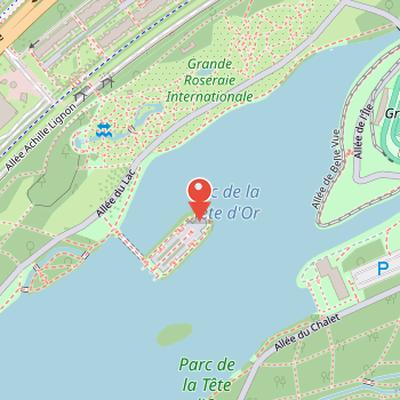
Nearby Objects
-
 Parc de la Tête d'Or 150 m away
 -
 Vélodrome Georges-Préveral 350 m away
 -
 Museum of Contemporary Art of Lyon 400 m away
 -
 Lyon Zoological Park 450 m away
 -
 Lyon 25 500 m away
Design and Artistic Contributors
The Monument aux morts de l ile du Souvenir is a memorial dedicated to the victims of the First World War, located on the ile du Souvenir in the parc de la Tete-d Or in Lyon, France. Tony Garnier designed the monument as architect. The cenotaph was sculpted by Jean-Baptiste Larrive. Its bas-reliefs were created by different artists: Louis Bertola made Le Depart and La Guerre, while Claude Grange made La Paix and La Victoire. Together, these works define the monument as a commemorative ensemble in a major public park setting.
Design Competition and Construction History
The city of Lyon launched a competition to create a new war memorial, and the first round selected ten projects, including five submitted by Tony Garnier. Garnier won the second round with a project called Athena, which proposed a huge temple with a double colonnade on La Croix Rousse hill. That design was abandoned because it was too expensive. A later project, Philae, developed with Jean Baptiste Larrive, was then chosen. The design was revised several times before completion.
One early version included a group of six columns with statues on top, but in 1922 this was replaced by two fluted shafts rising from water. These shafts were also later abandoned. The project also included a perimeter wall with a frieze, topped with small colonnettes carrying a vegetal garland. Stairs at the back of the cenotaph were planned but never built.
Tony Garnier worked with sculptor Jean Baptiste Larrive on the cenotaph, and with Louis Bertola and Claude Grange on the bas reliefs. The first stone was laid on an unspecified date, and the monument was inaugurated after seven years of work. The island itself was created and developed between 1924 and 1930.
Design and Memorial Program
The monument's design is inspired by L'ile des morts by Arnold Bocklin. Its main element is a cenotaph showing six bearers of a funerary slab wrapped in a shroud. The names of those who died fighting for France during the First World War are engraved on the lower walls. After the death of sculptor Jean-Baptiste Larrive, Auguste Larrive completed the work. Four bas-reliefs were made by Louis Bertola, who created Le Depart and La Guerre, and Claude Grange, who created La Paix and La Victoire. The monument was built using blocks from the Cruchaud quarry in Buxy and the Goulot quarry in Montagny-les-Buxy.
2013 Renovation and Reopening
The monument was renovated and cleaned in 2013, which made it possible to read the inscriptions on the cenotaph. The renovation also led to the island being closed for several consecutive years. The island reopened to the public at the beginning of 2017.