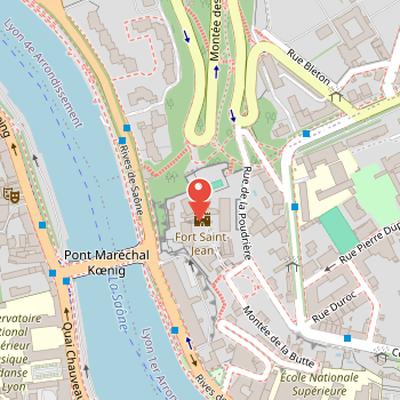
Fort Saint-Jean is a fort in Lyon on the left bank, on the eastern side of the Saône River. Originally called bastion Saint-Jean, it is part of the first belt of Lyon. A bastion was built at the beginning of the 17th century as part of the Croix-Rousse enclosure to help protect the city from the Duchy of Savoy. In 1639, the Porte d’Halincourt, described as the northern gate of Lyon, was built to block the quay at the corner of Fort Saint-Jean. The fort was completed in the 18th century, and the current buildings were begun in 1834. Covering 3 hectares, it overlooks the Saône from a height difference of 40 meters at the top of its walls. Over time, the site has had military and institutional uses. It housed the regional pharmacy of the Army Health Service in 1932, later hosted a group of volunteers on September 23, 1944, and was occupied by the Army Veterinary Service in 1984. Rehabilitated in 2001 by architect Pierre Vurpas, it has housed the École nationale du Trésor public since 2004 and occasionally hosts cultural events.
Nearby Objects
-
 Les Subsistances 300 m away
 -
 Institution des Chartreux 500 m away
 -
 Villa Gillet 550 m away
 -
 Church of Saint-Bruno des Chartreux 550 m away
 -
 Parc de la Cerisaie 600 m away
Fort Saint-Jean in Lyon
Fort Saint-Jean is a fort located in Lyon on the left bank, on the east side of the Saone River. It was originally called bastion Saint-Jean. The site is part of the first belt of Lyon, placing it within the city's defensive urban landscape.
Fort Saint-Jean: Growth from City Defense to Military Use
Fort Saint-Jean began as a bastion built at the start of the 17th century as part of the Croix-Rousse enclosure, intended to protect the city from the Duchy of Savoy. In 1639, the Porte d'Halincourt, also called the northern gate of Lyon, was built to block the quay at the corner of the fort. The fort itself was completed in the 18th century, and the current buildings began construction in 1834.
The site covers 3 hectares and overlooks the Saone with a height difference of 40 meters at the top of its walls. Its later history reflects repeated military and administrative use. In 1932, it housed the regional pharmacy of the Army Health Service. On September 23, 1944, it hosted a group of volunteers who met to prevent the German occupiers from destroying the Saone bridges. In 1984, it was occupied by the Army Veterinary Service.
Contemporary Use and Rehabilitation
The contemporary period of Fort Saint-Jean was rehabilitated in 2001 by architect Pierre Vurpas. Since 2004, it has housed the Ecole nationale du Tresor public, which became the Ecole nationale des finances publiques by decree. The site is used to train public finance controllers at the Ecole nationale des finances publiques. It also occasionally hosts cultural events, adding a public and cultural function to its administrative role.